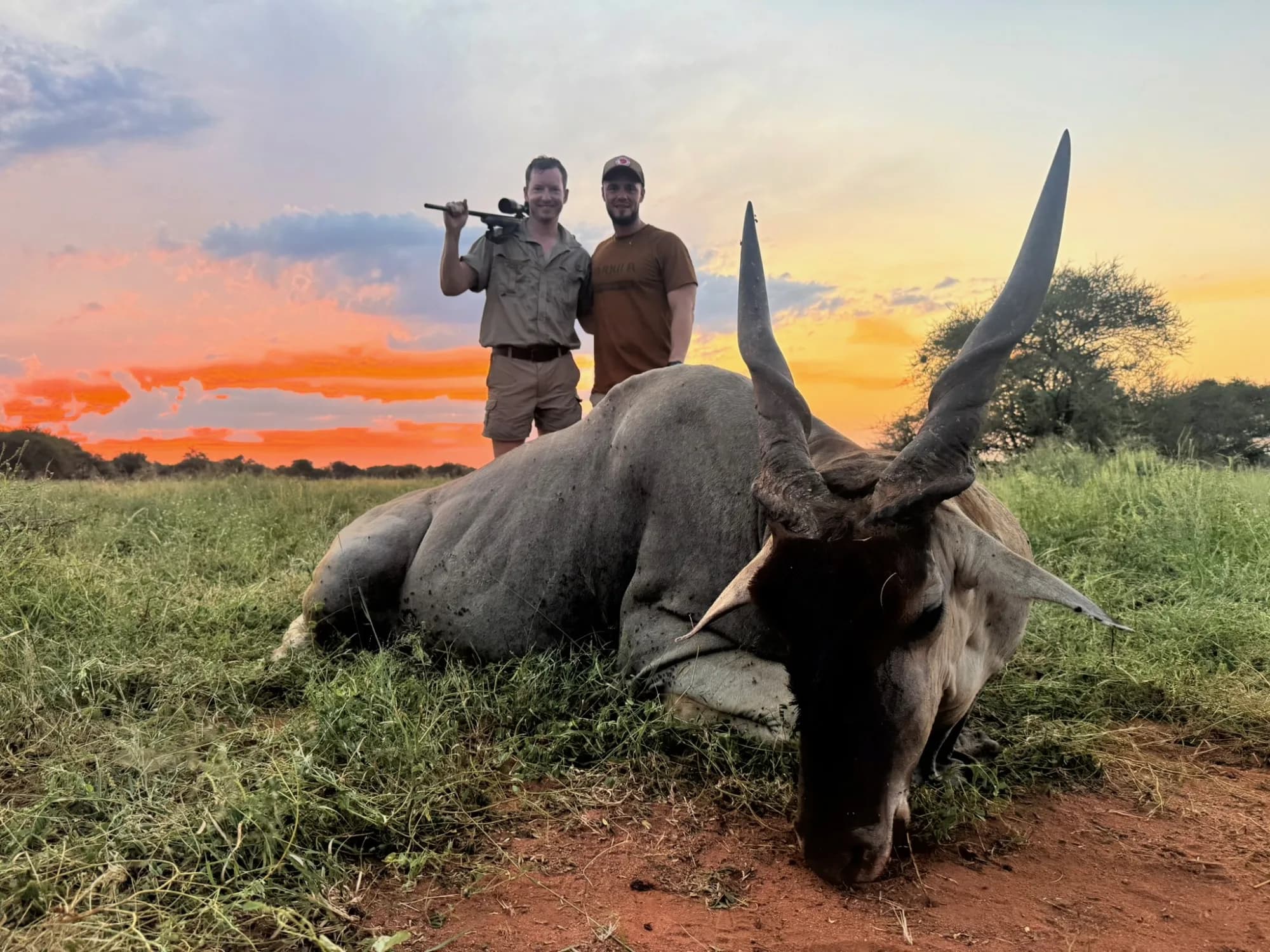
Sable antelope hunting in South Africa is a spot-and-stalk pursuit of the southern (common) sable (Hippotragus niger niger), widely regarded as the most striking antelope trophy on the African continent. A mature sable bull is jet black with a white belly, a white facial mask, and a heavy, ringed pair of scimitar horns that sweep back over his shoulders — horns of 40 inches mark a genuine trophy, and 41-45 inches is the benchmark a serious sable hunter targets. Sable are hunted on managed game ranches in Limpopo and the Northern Cape, where Huntica hosts on its Magersfontein ground. The season runs March through October. Sable is a premium-fee species: trophy fees typically run $4,500 to $9,000 or more depending on horn length, on top of daily rates of $350-$550. All-in, a hosted sable hunt sits well above a standard plains game safari — and there is a clear reason why, which I will break down below.
I am a seventh-generation South African and a licensed Professional Hunter, and I have hosted sable hunters on this ground for years. No antelope stops a hunter mid-stalk the way a black bull sable does when he turns broadside in morning light. He looks carved. This is the guide I wish every hunter had before coming for one.
Why is sable a bucket-list trophy?
Ask ten experienced African hunters to name the most beautiful animal on the continent and most will say sable. A fully mature bull carries a coat of deep, glossy black against a bright white belly and a boldly marked white-and-black face. He stands 1.3 to 1.4 metres at the shoulder, weighs 230 to 270 kg, and carries an erect mane. Cows and young bulls are chestnut to reddish-brown — the jet-black coat is the mark of an old, dominant bull and takes years to develop. By the time a bull is black, he is a trophy.
Then there are the horns. Both sexes carry them, but a bull's are massive — long, heavily ringed, and curving back in a clean scimitar arc that can sweep past his shoulders. No other plains game silhouette is as instantly recognisable on a wall.
But sable earn their bucket-list status on temperament as much as looks. They are territorial, combative, and famously willing to fight. A cornered or wounded sable drops to its knees and scythes with its horns, and there are well-documented accounts of sable fending off and even fatally goring lions. Hunting one is not dangerous the way a buffalo is, but it demands respect at the shot and after it in a way an impala never will. That mix of rarity, beauty, and edge puts sable near the top of nearly every African wish list.
Where to hunt sable in South Africa
Sable in South Africa are hunted on well-managed game ranches rather than vast open wilderness, and that is simply the reality of the species in this country. Sable were the flagship animal of South Africa's game-ranching era, and the best populations today live on properties that breed, manage, and protect them carefully across thousands of hectares of bushveld. Fair chase on this ground means glassing, stalking, and walking a bull up on foot — on properties large enough that the animals behave as wild grazers, water-dependent and wary.
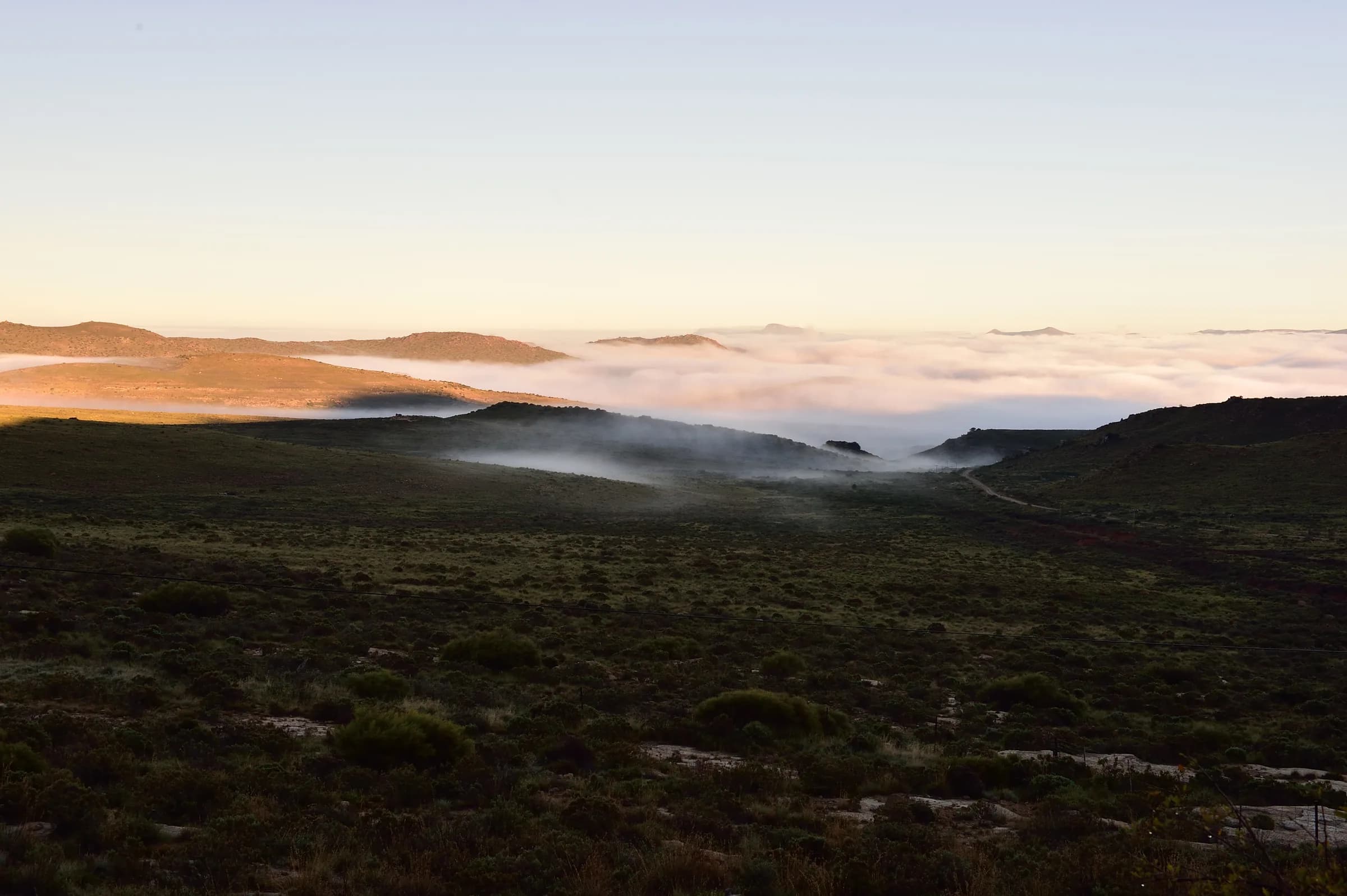
Limpopo is the heartland of South African sable. The province's mixed bushveld holds the highest concentration of sable-producing ground in the country, with strong genetics and a long history of breeding for horn length. Shots tend to be closer here — 80 to 150 metres — in denser cover.
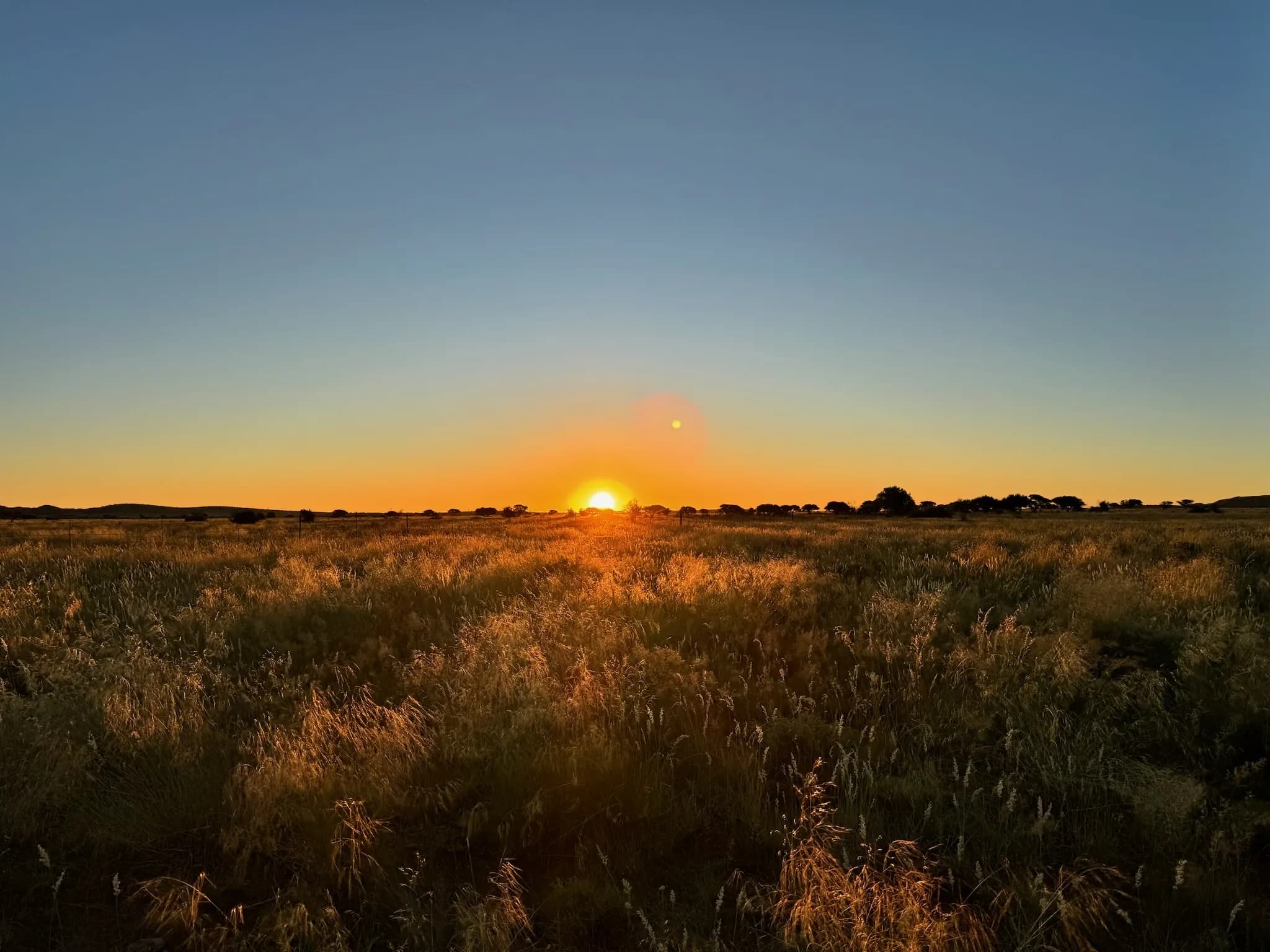
The Northern Cape is where Huntica hosts every sable hunter. On Huntica Approved Ground at Magersfontein, near Kimberley, sable are actively bred and well-represented across roughly 7,000 hectares of open bushveld and rocky outcrops, alongside roan, buffalo, and a deep plains game list. The open terrain suits glassing and stalking — you spot a bull from a vantage point, read the wind, and close on foot. Sightlines are longer, with shots commonly 120 to 220 metres.
What matters more than the province is the ground itself — the management, the genetics, the age of the bulls, the ethics of the operation. A property that holds well-aged bulls and limits its hunter numbers produces a more honest hunt than a bigger name on a map. That vetting, boots on the ground, is the point of how we work.
When is sable hunting season?
South Africa's hunting season runs from March through October, spanning the Southern Hemisphere's autumn, winter, and early spring. Sable can be hunted across this whole window, but the timing changes the experience.
March-April (early season): The bush is still green from summer rains, and sable are well-fed and relaxed. Coats are at their glossiest and bulls are in prime condition. Cover is thicker, which makes glassing harder but lets you close distance more easily. Daytime temperatures run 18-28°C, dropping to 10-15°C overnight.
May-August (peak season): This is when I bring most sable hunters. As winter dries the bush, grass thins and sightlines open dramatically, which suits the glass-and-stalk approach that sable demand. Animals concentrate around water and the better grazing, making a resident herd easier to locate and pattern. A dominant bull holding a nursery herd, or a bachelor group of old bulls, becomes far more findable. Temperatures are comfortable in the day (15-24°C) and cold at first light (2-10°C) — bring layers. Visibility, animal movement, and stalking conditions are all at their best.
September-October (late season): The bush is at its driest and game concentrates hard on remaining water and feed, which can make locating a particular bull straightforward. The trade-off is heat building toward October and bulls that have seen pressure. Late-season hunts produce excellent sable, but reward patience and earlier starts.
For a focused sable hunt, target June or July. The combination of open country, predictable water-dependent movement, and cool walking conditions tips the odds in your favour without taking the challenge out of it.
What caliber for sable?
Sable are heavy-boned, deep-chested, and extraordinarily tenacious for their size. A bull that is hit marginally will not simply tip over — he will run, and if he is wounded and cornered, he will turn and fight. For that reason, sable is not a species to under-gun. The working rule among Professional Hunters is a .300 magnum or larger, paired with a premium controlled-expansion or monolithic bullet.
Minimum: .30-06 Springfield or .308 Winchester with 180-grain premium bonded or monolithic bullets, kept to sensible ranges. These work in skilled hands, but they leave little margin on a quartering animal and less authority for a fast follow-up.
Recommended: .300 Winchester Magnum. This is the sable rifle I reach for most often. Loaded with 180-grain Barnes TTSX, Swift A-Frame, or Nosler Partition, it delivers the penetration and energy to drive through heavy shoulder bone and put a bull down hard — which is exactly what you want with an animal this determined. The .300 Win Mag's flatter trajectory also suits the longer Northern Cape shots.
Excellent: .338 Winchester Magnum (225-250 grain) for hunters who want more authority, and the .375 H&H Magnum — my preferred choice when sable shares the species list with buffalo or roan. With 300-grain Swift A-Frames or Barnes TSX, the .375 anchors sable decisively and lets you carry one rifle for the whole trip.
Bullet selection matters more than caliber. A sable's shoulder is thick and the animal absorbs punishment. Avoid thin-jacketed deer bullets that fragment on heavy bone. Stick to controlled-expansion or monolithic projectiles — Barnes TTSX, Swift A-Frame, Nosler Partition, or Federal Trophy Bonded Tip — that penetrate deep.
Typical shot distances: 80-150 metres in Limpopo bushveld, and 120-220 metres on the open Northern Cape. Know your point of impact at 200 metres before you arrive, and practise from sticks — standing, kneeling, and sitting.
Shot placement on sable (and why a wounded bull demands respect)
Shot placement on sable matters more than on almost any plains game animal, because the cost of a poor hit is not just a long tracking job — it is a genuinely dangerous one.
The heart/lung shot (broadside): This is the shot you wait for. Place the crosshair on the vertical shoulder crease, one-third of the way up from the brisket. That puts the bullet through both lungs and the top of the heart. A sable hit cleanly here will run a short distance and go down. Take this shot and no other if you can help it.
Quartering away: Acceptable with a .300-class or larger rifle and a premium bullet — aim for the off-shoulder so the bullet drives forward through the vitals. Sable carry their vitals well forward, so do not aim too far back.
Quartering toward and frontal shots: Pass on them. The heavy shoulder bone and the narrow margin to the vitals make these high-risk on an animal that fights back when wounded. Reposition and wait for broadside.
After the shot — this is the part hunters underestimate. Never walk straight up to a downed sable. A bull that looks dead can still be alive enough to drive a horn through your thigh. Approach from behind and above, watch the eyes and chest, and put in an immediate insurance shot if there is any doubt. A wounded sable drops to its front knees and uses its horns with intent — trackers, dogs, and hunters have all been hurt by bulls treated as finished too soon. Anchor the animal first, admire it second. Your host and PH manage this, but every hunter should understand it.
Judging a trophy sable
Sable horns are measured along the front curve of the horn from base to tip. The Rowland Ward method records the longer horn; Safari Club International (SCI) combines both horn lengths with circumference measurements. In the field, though, sable are talked about in inches of horn length — and the benchmarks for southern sable are worth knowing.
What the numbers mean (southern sable, longer horn):
- 38-40 inches: A mature, representative bull and a genuine trophy. A first-time sable hunter should be more than satisfied here.
- 40-42 inches: A good bull — older, with developed mass and a clean sweep.
- 42-45 inches: Excellent. This is the benchmark range a serious sable hunter targets, and it represents an old bull with strong genetics on well-managed ground.
- 45-47 inches: Exceptional. Top-end genetics and real age. These bulls exist on quality ground but are not common, and finding one can take days of focused hunting.
- 48 inches and up: Record-class. The very best southern sable approach and occasionally exceed 50 inches. A bull like this is a once-in-a-career animal.
What separates a 40-inch bull from a 45-plus. Length is the headline, but it never travels alone. The extra five inches come from age and genetics together — and they show up as a deeper backward sweep, heavier and more sharply ringed bases, a higher ring count, and tips that drop well past the line of the shoulder when the bull lifts his head. A 45-inch bull simply looks more massive and more swept than a 40-inch bull, not just longer.
How to field-judge. On a strong bull the horns curve back so the tips reach toward the mid-back; compare horn length to the bull's ear and face. Then read maturity — a jet-black coat and a full white facial mask mark an old bull worth taking, while a chestnut or brown-tinged coat means a younger animal that should walk. Heavy, deeply ringed bases confirm age. Trust your PH's eye over your own; he has judged hundreds.
What does a sable hunt cost?
Sable is a premium-fee species, and the numbers are meaningfully higher than for common plains game. Here is a transparent breakdown.
Daily rates: $350-$550 per day in Limpopo and the Northern Cape, covering accommodation, meals, PH services, trackers, and field vehicles. A focused sable hunt needs a minimum of 5 days; 7 days is the norm when sable is the centrepiece of a wider trip. Daily-rate subtotal: roughly $2,450-$3,850 for a 7-day hunt.
Sable trophy fee: $4,500-$9,000 or more, frequently tiered by horn length. A representative structure might run a bull under 40 inches at the lower end, 40-42 inches in the middle, 42-45 inches higher, and 45 inches and above at the top — with exceptional bulls priced individually. This single fee is usually the largest line item on a sable hunt, and it is why the trip costs what it does.
Why are sable fees so much higher than other antelope? Two reasons, both real. First, breeding economics: sable were the prize species of South Africa's game-ranching boom, when live breeding animals changed hands at extraordinary prices. The market has cooled, but quality sable remain valuable breeding stock, and the cost of holding and protecting them flows into the trophy fee. Second, slow maturity: a bull takes six to eight years to grow trophy horns and earn his black coat, so a property carries him for years before he is ever hunted. Scarcity, time, and careful management add up — you are paying for a mature, genuinely impressive animal, not a common one.
Adding roan and plains game: Roan antelope, sable's close cousin, carries a comparable or higher trophy fee — commonly $6,000-$12,000-plus. Plains game added alongside sable is far more modest: springbok ($350-$600), gemsbok ($1,200-$1,800), blue wildebeest ($800-$1,200), and impala ($400-$600).
Total trip cost (self-booked): A 7-day sable-focused hunt with daily rates, the sable trophy fee, and a couple of plains game animals typically lands between $9,000 and $18,000 per hunter before flights, taxidermy, and shipping.
With Huntica hosting: A Huntica Hosted trip with sable on the species list is quoted as one written all-in figure per hunter, depending on group size, the rest of the species list, and the calibre of bull you are after. A Huntica Bespoke private hunt for one to four guests sits at the upper end and is the way most dedicated sable hunters travel. That range includes daily rates, hosting, the trophy fee for the agreed sable and species list, all transfers, accommodation, meals, and drinks at the lodge.
What is not included: International flights (€800-€2,500 from Europe, $1,200-$3,000 from the US), taxidermy and shipping (covered next), firearm import permits, travel insurance (€200-€500), and gratuities (industry standard: 8-10% of daily rate and trophy fees for the PH; €15-€25/day for trackers and camp staff).
Combining sable with roan and plains game
Few hunters travel all the way to Africa for a single animal, and sable combines beautifully with the rest of a southern African species list. The natural companion is roan antelope (Hippotragus equinus) — sable's larger, greyer cousin and the second-biggest antelope in Africa after eland. Roan carry a black-and-white face mask and long, tasselled ears, and like sable they are a premium, intensively managed species. Taking both on one trip is the classic pairing of Africa's two great horse-antelopes, and Magersfontein holds them.
Beyond the pair, the Northern Cape offers a deep supporting list: gemsbok, several springbok colour variants, blue and black wildebeest, red hartebeest, blesbok, impala, and warthog. Magersfontein also holds special colour variants such as golden gemsbok and black impala. For those building toward dangerous game, Cape buffalo is on the same ground — though it requires a .375 H&H minimum and a separate approach.
A sensible structure is the 10-day itinerary the destination is built around: five or six days for plains game across the property and nearby concessions, then three or four focused on sable, roan, and the colour variants. Sable anchors the trip; everything else fills the days around the bull you came for.
Taxidermy and getting your sable home
A sable shoulder mount is one of the most dramatic trophies you can hang — the jet-black cape, the white face mask, and those sweeping ringed horns make it the centrepiece of any trophy room. Getting it from the skinning shed to your wall follows the same path as any African trophy, and we walk through the full process in our trophy shipping and taxidermy guide.
Mount options: A shoulder mount is by far the most popular choice for sable and shows the bull at his best — expect $900-$2,200 in South Africa depending on the taxidermist and turnaround. A skull (European) mount of the cleaned skull plate and horns is simpler and lighter at $150-$400. A flat-packed cape and horns shipped raw for mounting by your home taxidermist is the most economical export at $100-$250 for dip-and-pack, but requires a taxidermist experienced with African game.
Dip-and-pack: Before any trophy leaves South Africa it must be treated and packed for export — a standard, regulated process handled by the operation's skinning team or a dedicated facility. Cost: $80-$150 per trophy. Magersfontein has its own skinning shed, cooler, and salting facilities on site, so trophies are handled professionally from the field straight into the export process.
Shipping: Trophies travel by sea freight in custom wooden crates — roughly 4-6 months to Europe, 6-8 months to the US; air freight cuts that to 2-4 weeks at about three times the cost. A crate holding several trophies including a sable shoulder mount runs $1,500-$3,500 to Europe and $2,000-$4,500 to the US.
Import permits: The southern (common) sable is not listed on CITES, so no CITES permit is required to import into the EU, US, or most markets — you will need a standard South African veterinary export certificate and your home-country paperwork. US hunters complete a straightforward USFWS Form 3-177. (Note that the giant sable of Angola is a different, fully protected subspecies that is not hunted at all.) On a Huntica trip, your host coordinates the whole taxidermy-to-shipping chain with our favoured partners and follows it through until the crate reaches your door.
What a hosted sable hunt looks like with Huntica
A sable hunt with Huntica is a glass-and-stalk affair on foot. We glass from vantage points at first light, locate a herd or a bachelor group, judge the bulls, then close the distance with the wind in our faces. No driving up on animals. No shortcuts to the shot. Sable are water-dependent grazers, so we hunt the rhythm of their movement between feed, water, and shade.
Sable share the Magersfontein ground with the plains game herds — the operation breeds and holds them on the same roughly 7,000 hectares where, on a recent Huntica Hosted week on this exact ground, six friends from Denmark and the United States took twelve trophies between them. That trip was built around plains game, but the sable were there in the same bushveld, for anyone who came for them — and it is a fair picture of how a week here actually feels: hunting out the back door of the lodge, no long transfers, sundowners on a kopje, and a braai of your own game at the end of the day.
What separates a hosted sable hunt from a self-booked one is the layer above the PH. A Huntica founder is on the ground for the full trip — coordinating which bulls to prioritise, adjusting the plan by the hour, managing the moment after the shot, and handling everything from the rifle permit at the airport to the crate that ships home. When the wind blows wrong for three days, or a bull is wounded and the follow-up turns serious, that is when a host who owns the experience matters most. First trip to Africa? Our first African safari guide walks through firearms, flights, and what to expect on the ground.
Frequently Asked Questions
Why are sable trophy fees higher than other antelope?
Two reasons. First, breeding economics: sable were the flagship species of South Africa's game-ranching era and remain valuable breeding stock, and the cost of holding and protecting them is built into the fee. Second, slow maturity — a bull needs six to eight years to grow trophy horns and develop his black coat, so a property carries him for years before he is ever hunted. You are paying for a mature, carefully managed, genuinely scarce animal, which is why fees typically run $4,500 to $9,000 or more rather than the few thousand a common plains game animal costs.
Can I hunt sable with a bow?
Yes. Bow hunting sable is legal and most often done from elevated blinds over water during the dry winter months (June-August), when sable come to drink predictably. Effective range is 20-40 metres. Because sable are heavy-boned and tenacious, use a minimum draw weight of around 70 lbs, a heavy arrow over 450 grains, and a strong fixed-blade broadhead for reliable penetration. Shot discipline matters even more with a bow — wait for the broadside, and let your PH manage the recovery, because a wounded sable is dangerous on the ground.
Is a wounded sable really dangerous?
Yes, and it should be taken seriously. A wounded or cornered sable drops to its front knees and scythes with its horns, and there are documented cases of sable fending off and even fatally goring lions and hunting dogs. The danger is not in hunting one — it is in approaching a downed bull too soon. Never walk straight up to a sable that looks dead. Approach from behind and above, watch the eyes and chest, and put in an immediate insurance shot if there is any doubt. Anchor the animal first, admire it second.
What is the difference between southern, Zambian, and giant sable?
The southern (common) sable is the subspecies hunted in South Africa and across much of southern Africa — the bull most hunters picture, with horns reaching the mid-40-inch range and occasionally near 50. The Zambian (or West Zambian) sable is a separate subspecies known for longer horns on average and is hunted further north. The giant (or royal) sable of Angola is a critically endangered subspecies that is fully protected and not hunted at all. When this guide refers to sable hunting in South Africa, it means the southern sable.
Do I need a .375 to hunt sable?
No, but you should not go lighter than a .300 magnum. A .300 Winchester Magnum with premium 180-grain bullets is the most popular and effective sable choice and handles the animal cleanly. A .375 H&H is excellent and makes sense if your trip also includes buffalo or roan, since you can carry one rifle for everything — but it is not required for sable alone. What matters most is a controlled-expansion or monolithic bullet that penetrates heavy shoulder bone, regardless of which of these calibers you bring.
Is sable meat good to eat?
Yes. Sable is a grazer, and the meat is lean, dark, and well-flavoured — comparable to the better plains game venison. The loin and fillet grilled over coals are excellent, and most operations will prepare biltong from your animal to take home. Like all African game, it is high in protein, very low in fat, and free of hormones and antibiotics. Nothing is wasted: the meat from your bull feeds the camp and the surrounding community.
Tell us where you want to go
If sable has been on your list — the black bull, the swept horns, the moment he turns broadside in the morning light — the next step is a conversation. Tell us where you want to go, and I will walk you through what a hosted sable hunt looks like on Magersfontein, the Northern Cape ground where Huntica hosts every sable hunter. No brochures, no price lists. Just a straight conversation between hunters about the most striking animal in Africa and the ground he lives on.