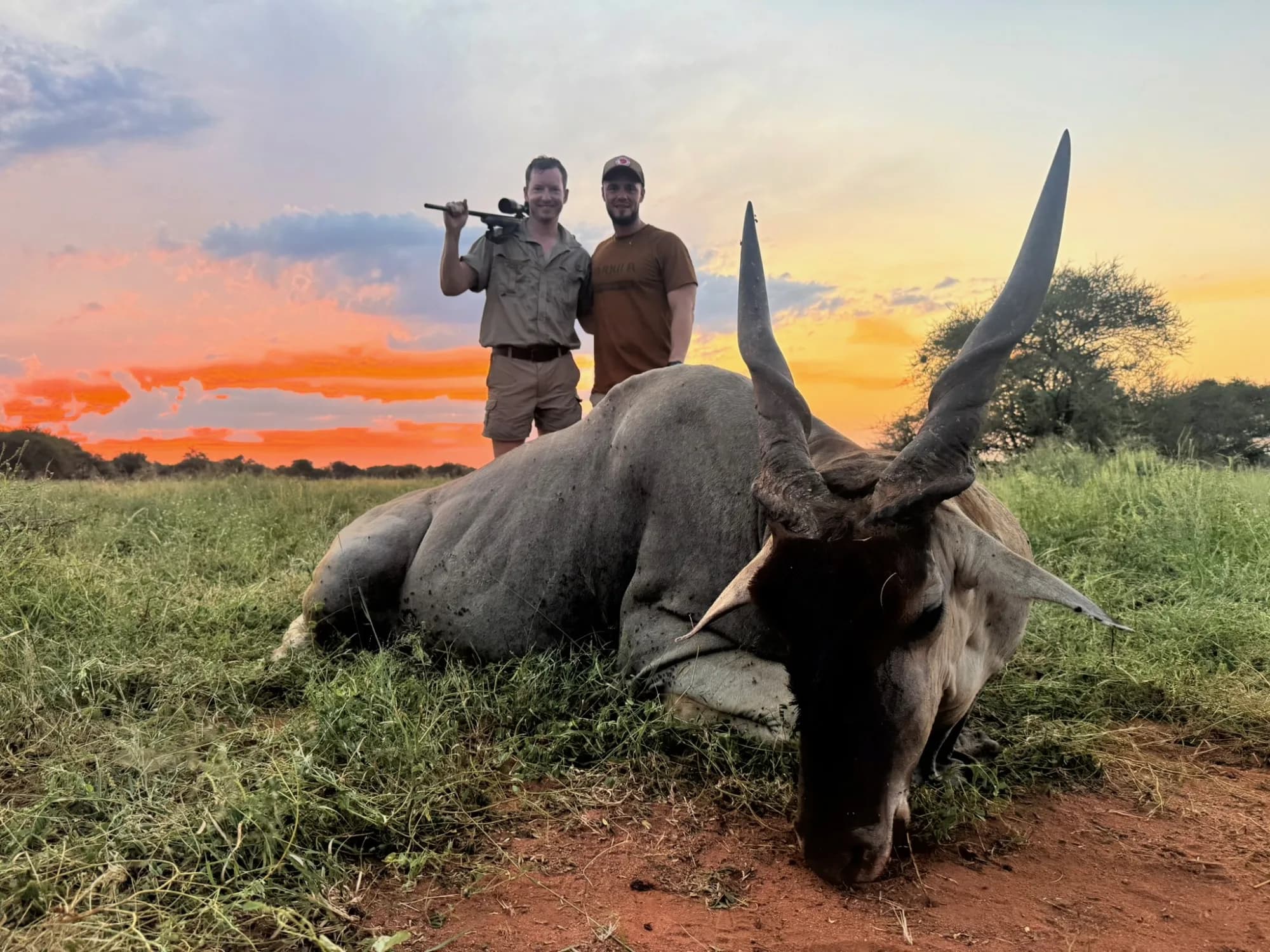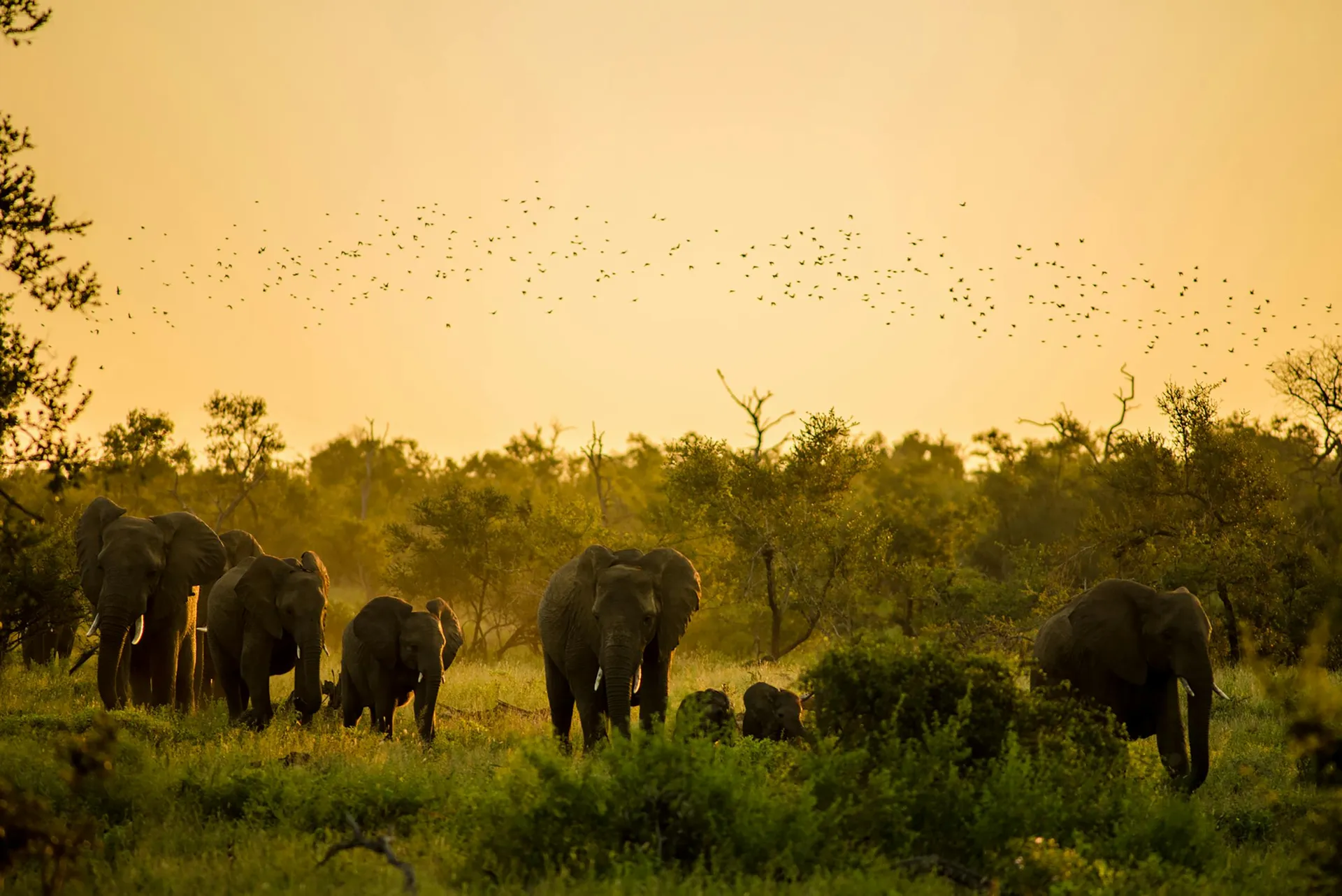
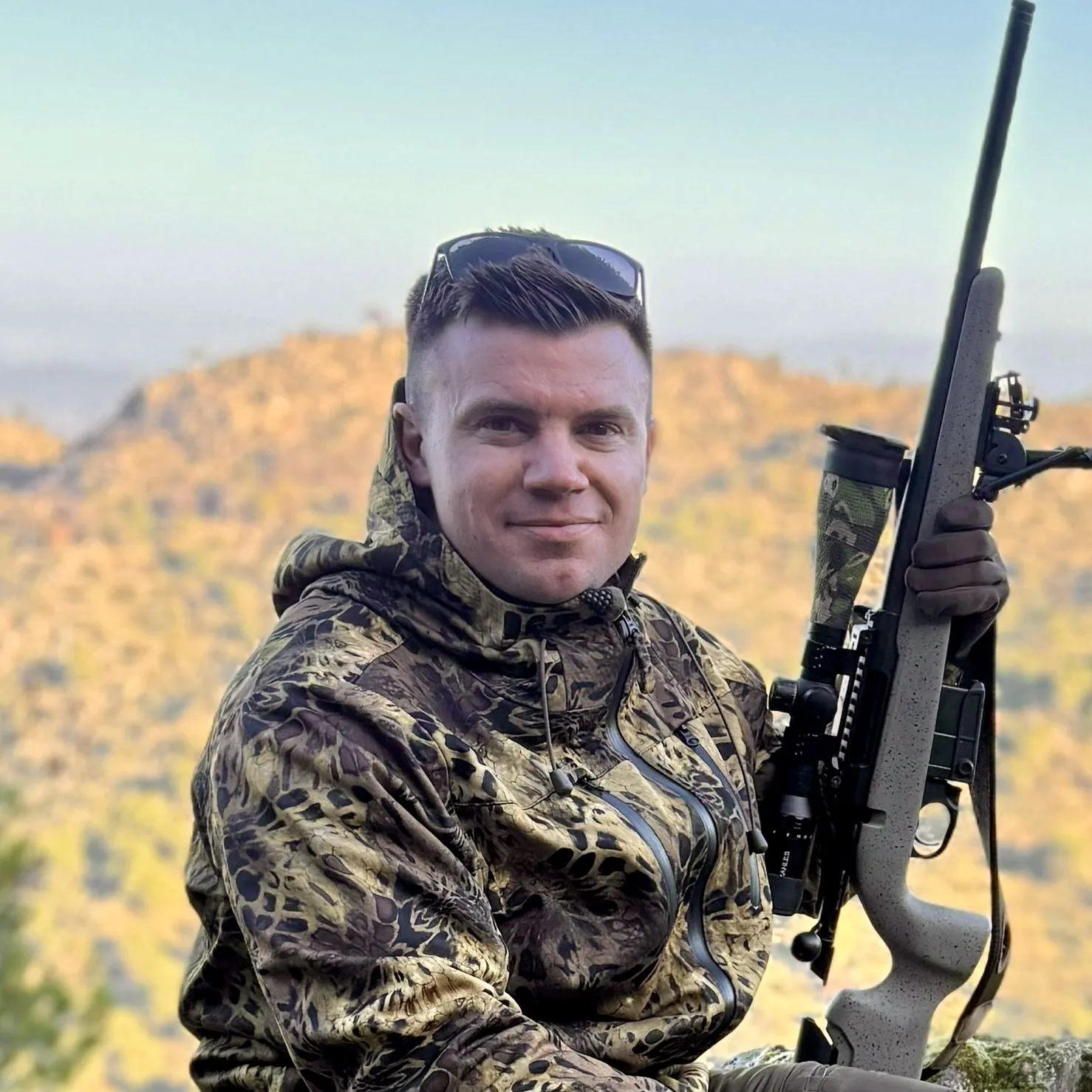
Your first African hunting safari will be one part physical challenge, one part sensory overload, and entirely unlike anything you have experienced in the field before. Expect early mornings in cool bushveld air, long glassing sessions across valleys you could fit a European county inside, and evenings around a fire with people who were strangers a week ago but will not stay that way. A typical first-timer plains game hunt in South Africa runs 7-10 days, covers species like kudu, impala, blue wildebeest, and warthog, and costs between €8,000 and €15,000 depending on group size, species list, and how the trip is structured.
I grew up hearing these stories. My grandfather hunted in East Africa in the 1950s, my father continued that tradition, and I spent my childhood listening to the details — not the animals taken, but the mornings, the waiting, the people. When I co-founded Huntica with Alex Hohne, a 7th-generation South African with a Professional Hunter's license and an existing outfitting operation across South Africa and Spain, the goal was simple: make sure first-timers walk into the African bush with the same confidence and support that seasoned hunters take for granted.
This guide covers everything you need to know before your boots hit red dirt.
How do you get there — and what happens when you land?
Most first-time African hunters with Huntica fly into Kimberley (KIM) via Johannesburg's O.R. Tambo International Airport. From Kimberley, the transfer to Magersfontein is under 30 minutes — the lodge sits just outside town.
On a Huntica Hosted trip, your host meets you at the airport or arranges a direct transfer to the lodge. Alex Hohne, our co-founder and lead host in South Africa, personally coordinates arrivals so that your rifles clear SAPS (South African Police Service) firearms control, your bags reach the right vehicle, and you are on the ground at camp before dark. That first evening at the lodge — cold drink in hand, fire already going, briefing from the PH over dinner — sets the tone for the entire trip. Most hunters say the jet lag disappears the moment they smell woodsmoke.
What does a typical hunting day actually look like?
A hunting day at Magersfontein starts before sunrise — usually around 5:00 AM — with coffee and rusks (a traditional South African dried biscuit) on the stoep. You are in the field by first light, roughly 5:30 to 6:00 depending on the season, because the first two hours are when plains game moves most actively between feeding and bedding areas.
The morning hunt runs until about 10:00 AM. You will cover 5-10 kilometres on foot through mixed bushveld terrain — thornveld, river valleys, open ridgelines — glassing for kudu bulls on hillsides and impala rams in the clearings. After the morning block, you return to the lodge for a full brunch and a rest period during the heat of the day (temperatures in the Northern Cape range from 15°C to 30°C during the March-October hunting season). The afternoon hunt picks up around 3:00 PM and runs until last light, often ending at a sundowner spot — a rocky kopje or riverbank where the group watches the sun drop behind the valley. Dinner is communal and long: grilled game from the day, local wines from the Western Cape, and stories from the morning.
How do you get your rifle into South Africa?
Firearms logistics are the single biggest source of anxiety for first-time African hunters, and the process is more straightforward than most people expect. South Africa requires a temporary firearm import permit, issued through SAPS at your port of entry. You will need your passport, your home country's firearm license, a completed SAP 520 form, and a letter of invitation from your outfitter or host confirming the purpose and duration of your visit.
On a Huntica trip, we handle the paperwork before you leave home. Alex's team prepares your invitation letter, pre-fills the SAP 520 documentation, and briefs you on airline-specific firearm transport rules (most carriers — Emirates, Qatar Airways, KLM, British Airways, Lufthansa — accept firearms in locked hard cases with ammunition packed separately, though each has specific weight and declaration requirements). At O.R. Tambo or Port Elizabeth, the SAPS desk processes your permit on arrival — allow 30-60 minutes. Your rifle is tagged, logged, and returned to you before you leave the airport. On departure, the process reverses. We have never had a client's firearm delayed when the paperwork was done correctly in advance.
For first-timers who prefer not to travel with a rifle, most outfitters in the Eastern Cape offer quality rental firearms — typically a Sako or Tikka in .300 Winchester Magnum, which covers every plains game species comfortably from impala to eland.
What caliber should you bring for plains game?
The .300 Winchester Magnum is the most recommended all-round caliber for a first African plains game safari, and for good reason. It handles everything from impala (60 kg) to blue wildebeest (250 kg) and kudu (270 kg) with appropriate bullet selection. Load 180-grain bonded or monolithic bullets — Barnes TTSX, Swift A-Frame, or Federal Trophy Bonded Tip are all proven performers in the Eastern Cape bush.
If you already shoot a .308 Winchester, .30-06 Springfield, or 7mm Remington Magnum accurately, bring it. Shot placement matters more than caliber for plains game. The Professional Hunters Association of South Africa (PHASA) and most experienced PHs agree: a well-placed 165-grain bullet from a .308 at 150 metres will do its job cleanly on a kudu bull. What you want to avoid is showing up with a rifle you bought for this trip but have not shot enough. Zero your rifle at 100 metres before you leave home, confirm it at the range on arrival (most lodges have a shooting bench), and know your holdover at 200 and 250 metres. Most shots in the Eastern Cape bushveld happen between 80 and 200 metres.
If your trip includes dangerous game — Cape buffalo, for example — the legal minimum in South Africa is .375 H&H Magnum. But that is a different conversation and a different trip.
What should you pack — and what can you leave behind?
Pack for the bush, not for a catalog. The Eastern Cape hunting season (March-October) spans autumn through early spring in the Southern Hemisphere, so mornings and evenings are cool (8-15°C) and midday is warm (20-30°C). Layering is everything.
Essentials:
- 2-3 pairs of quiet, durable hunting pants (avoid anything that rustles; soft-shell or cotton canvas is ideal)
- 4-5 moisture-wicking shirts in neutral earth tones (olive, khaki, brown — no camouflage; camo is restricted in several South African provinces)
- A warm fleece or softshell jacket for morning and evening sits
- Broken-in ankle-high hunting boots with proper support (you will walk 8-15 kilometres a day on uneven terrain)
- A wide-brimmed hat and quality sunglasses (the African sun at 33° latitude is no joke)
- SPF 50 sunscreen and lip balm
- Binoculars — 10x42 is the standard. Swarovski, Leica, or Zeiss if you have them, but even a quality Vortex will serve you well
- A headlamp for pre-dawn mornings
- A small daypack for water, snacks, and extra layers in the field
Leave behind:
- Full camouflage kits (unnecessary and sometimes restricted)
- Heavy cold-weather gear (unless hunting in July-August, the coldest months)
- Formal clothing (lodge life on a hosted trip is relaxed — no one dresses for dinner)
Your PH will have a shooting sticks, a rangefinder, and a first-aid kit in the field. You do not need to bring your own unless you have a strong preference.
What is the difference between a host, a PH, and a tracker?
This is one of the most common questions first-timers ask, and the answer matters more than most realize. On a standard booked safari — the kind you find on marketplace websites — you are handed off to a Professional Hunter (PH) employed by the outfitter. That PH is skilled, licensed, and knows the ground. But his job starts when you arrive and ends when you leave. There is no one looking at the bigger picture of your trip.
A Professional Hunter (PH) is a licensed guide under South African law (regulated by the provincial nature conservation authority — in the Eastern Cape, that is DEDEAT). The PH walks with you in the field, spots game, judges trophy quality, positions you for the shot, and manages safety. Most PHs in the Eastern Cape are highly experienced — many hold PHASA membership — and their bush knowledge is genuinely world-class.
A tracker works alongside the PH, reading spoor (animal tracks), cutting sign in the sand, and often spotting game before anyone else. On Magersfontein and across the Northern Cape, trackers carry generational knowledge of the terrain — local San, Tswana, and Afrikaans-speaking trackers with intimate familiarity with the ground and animal behavior that no formal qualification can replicate.
A Huntica host operates above both. Alex, as our lead host in South Africa, is not replacing the PH — he is managing your entire trip experience. He rotates hunting pairs in group hunts so that everyone gets time with different companions. He reads the group's energy and adjusts the pace — longer morning in the field when the game is moving, earlier sundowner when someone needs a slower afternoon. He handles the outfitter relationship, the lodge coordination, and the dozens of small decisions that turn a good hunt into a story. This is what we mean when we say we host where we hunt.
What wildlife will you see beyond your quarry?
The Eastern Cape bushveld is one of the most biodiverse hunting regions on the African continent, and your experience in the field goes far beyond the species on your permit. On a typical 7-day plains game hunt, you will encounter 15-25 different mammal species and 100+ bird species without trying.
While stalking kudu on a hillside above the Great Fish River valley, you will walk past troops of vervet monkeys, spot grey duiker freezing in the scrub, and hear the distinctive bark of a bushbuck ram in the river thickets below. Warthog families trot across the paths with their tails straight up like antennae. On rocky outcrops, dassies (rock hyraxes — the elephant's closest living relative, improbably) bask in the morning sun. Jackals call at dusk. If you are lucky, you may spot a caracal slipping through the long grass or an aardvark burrow freshly dug overnight.
The birdlife is extraordinary. Jackal buzzards riding thermals above the ridgelines, crowned plovers nesting in the open ground, and the unmistakable call of the African fish eagle along waterways. Several Northern Cape properties border or overlap with conservation areas, and the ecological management on Huntica Approved Ground ensures the bush feels genuinely alive — not stripped down to a handful of huntable species.
Bring a camera. Not for posed grip-and-grin shots, but for the moments between — the giraffe browsing at sunset, the secretary bird stalking through the grass, the light at 6:00 AM when the valley fills with gold.
What happens around the fire — the social side of a safari?
The hunting is the reason you come. The evenings are the reason you come back. This is something no website or brochure can fully prepare you for, and it is arguably the most important part of a first African safari.
On a Huntica Hosted trip, the social architecture is deliberate. Alex designs every trip by the hour, and that includes the time after the rifles are put away. Sundowners happen at a chosen spot — not just the lodge veranda, but a kopje with a 360-degree view, or a dry riverbed where you watch the sun set through acacia canopy. Dinner is communal: a traditional South African braai (barbecue) with game from the week — kudu loin, warthog ribs, impala steak — alongside local Pinotage and Chenin Blanc from estates like Kanonkop and Rust en Vrede.
The friendships formed around a hunting fire in Africa are different from anything else in the sport. I have watched groups of strangers — a Danish businessman, an American surgeon, a retired Scandinavian military officer — arrive on day one making polite conversation and leave on day seven exchanging phone numbers and planning the next trip together. In our March 2026 Magersfontein hunt, two first-timers who had never met before the trip are now planning a Huntica Bespoke private hunt for 2027. That is not an accident. That is what hosted means in practice.
How much does a first African hunting safari cost — and what is included?
A first-timer Huntica plains game safari at Magersfontein in South Africa's Northern Cape is quoted as one written all-in figure for a 7-day trip. The number depends on group size, species list, accommodation standard, and whether you are joining a Huntica Hosted group trip or booking a private Huntica Bespoke experience.
Typically included:
- Accommodation and all meals at the lodge (full board)
- Daily guided hunting with a licensed PH and tracker
- Field preparation and initial processing of trophies
- Ground transfers from the nearest airport to the lodge
- Drinks at the lodge (policies vary, but most Northern Cape lodges, including Magersfontein, include house wines, beer, and spirits)
- Use of the lodge's shooting range for rifle zeroing
Typically not included:
- International flights (expect €800-€2,500 return from Europe or the US, depending on routing and season)
- Firearm import permits and fees (approximately ZAR 200 / ~€10 per firearm)
- Trophy fees for animals taken (these are per-species and vary; kudu €1,200-€2,000, impala €350-€500, blue wildebeest €800-€1,200, warthog €250-€400)
- Taxidermy and shipping of trophies to your home country (€1,500-€4,000 depending on number of mounts and destination)
- Gratuities for PH, tracker, and lodge staff (industry standard: 8-10% of the daily rate or approximately $100-$150/day total)
- Travel insurance (required — we will not host without it)
On a Huntica trip, your host walks you through every line of this before you commit. Transparent pricing is one of our six standards — you will never discover a cost on the invoice that was not discussed in advance.
How should you prepare physically and mentally?
You do not need to be an elite athlete to hunt plains game at Magersfontein, but you do need to be honest about your fitness. A typical hunting day involves 8-15 kilometres of walking on uneven terrain — rocky ridgelines, sandy riverbeds, thornveld slopes — with elevation changes of 100-300 metres. If you can hike comfortably for 3-4 hours with a light pack at home, you will manage fine in the field.
Start preparing 8-12 weeks before your trip. Walk with a daypack three to four times a week, building up to 10-15 kilometre hikes. Practice shooting from sticks at the range — standing, sitting, kneeling — because most shots in the Eastern Cape happen off shooting sticks, not from a bench. If you have not shot past 150 metres regularly, spend time at the range building confidence at 200 and 250 metres.
Mentally, prepare to slow down. African hunting operates on African time. You may spend an entire morning glassing a valley and not fire a shot. You may walk for four hours and pass on three animals before the right one appears. The PH will tell you when to shoot and when to wait — trust that judgment. The hunters who enjoy Africa most are the ones who surrender to the pace, not the ones who fight it. You came here for a story, not a scoreboard.
Frequently Asked Questions
Is Africa safe for first-time international hunters?
South Africa is the most established hunting tourism destination on the continent, with a well-regulated firearms import process and a Professional Hunter licensing system overseen by provincial authorities and PHASA. On Huntica Approved Ground, your host and PH manage safety in the field at all times. Standard travel precautions apply in cities, but once you are on the ground at the lodge, you are in one of the safest environments in the country.
Do I need any vaccinations for South Africa?
The Northern Cape, including Magersfontein, is malaria-free, which is one reason it is ideal for first-time African hunters. No mandatory vaccinations are required for entry from most countries, though your travel clinic may recommend Hepatitis A, typhoid, and a routine tetanus booster. Check the South African Department of Health guidelines and consult your doctor 6-8 weeks before departure.
Can non-hunters join the trip?
Yes. Most Northern Cape lodges, including Magersfontein, welcome non-hunting guests, and Huntica Hosted trips are designed to accommodate partners or family members who want to experience the bush without hunting. Activities for non-hunters typically include guided game drives, birding walks, visits to Kimberley (Big Hole, McGregor Museum) or Cape Town extensions, and simply enjoying the lodge. The daily rate for non-hunters is significantly lower than for hunting guests.
What is the best time of year for a first African plains game hunt?
The Eastern Cape hunting season runs March through October. March-May (autumn) offers warm days, cooler evenings, and green bush with good visibility. June-August (winter) provides the best conditions for tracking — dry ground, sparse vegetation, and animals concentrating near water sources — but mornings can be cold (5-10°C). We recommend April-June for first-timers: moderate temperatures, reliable game movement, and long enough daylight for comfortable morning and afternoon hunting blocks.
How far in advance should I book?
For Huntica Hosted group trips, 6-9 months is ideal — popular dates in the April-June window fill quickly, and group trips require coordination of multiple schedules. For a Huntica Bespoke private trip, 4-6 months gives us time to design the itinerary properly and secure the best Approved Ground for your dates. Last-minute bookings (under 3 months) are sometimes possible but limit your options.
What happens to the meat from animals taken on safari?
Nothing is wasted. On Huntica Approved Ground at Magersfontein, all game meat is processed and distributed locally — to lodge kitchens, farm workers, and nearby communities. You will eat some of it yourself during the trip (kudu fillet and warthog ribs are highlights). Trophy preparation is handled by the outfitter's skinning shed, and your PH will photograph the process so you know exactly how your trophies are being cared for before they reach the taxidermist.
Tell us where you want to go
If you have been thinking about Africa for a while — reading articles, watching videos, asking friends who have been — the best next step is a conversation, not another browser tab. Tell us where you want to go, and we will walk you through what a first trip looks like with a Huntica host on the ground beside you. No brochures. No price lists. Just an honest conversation between hunters.