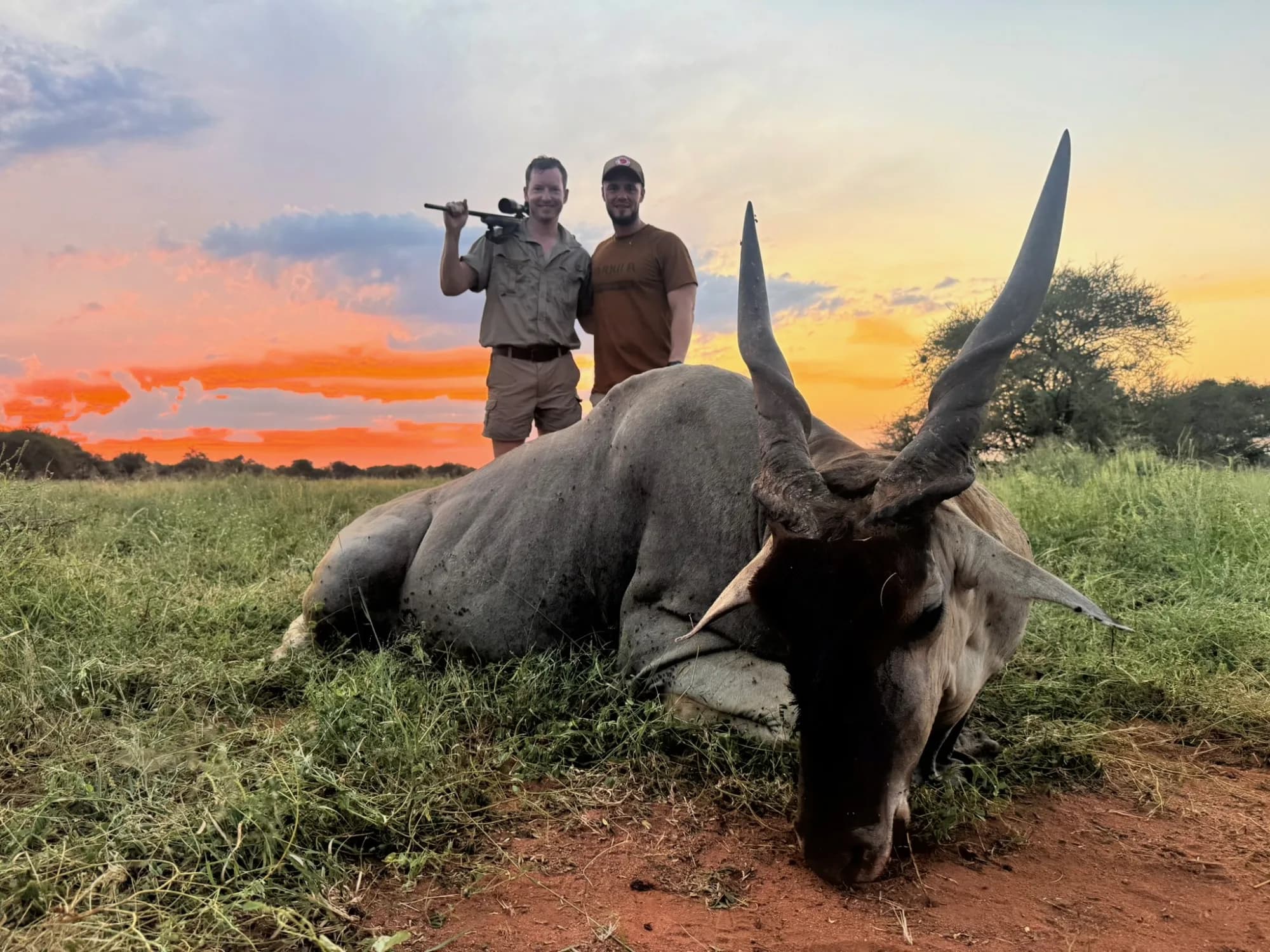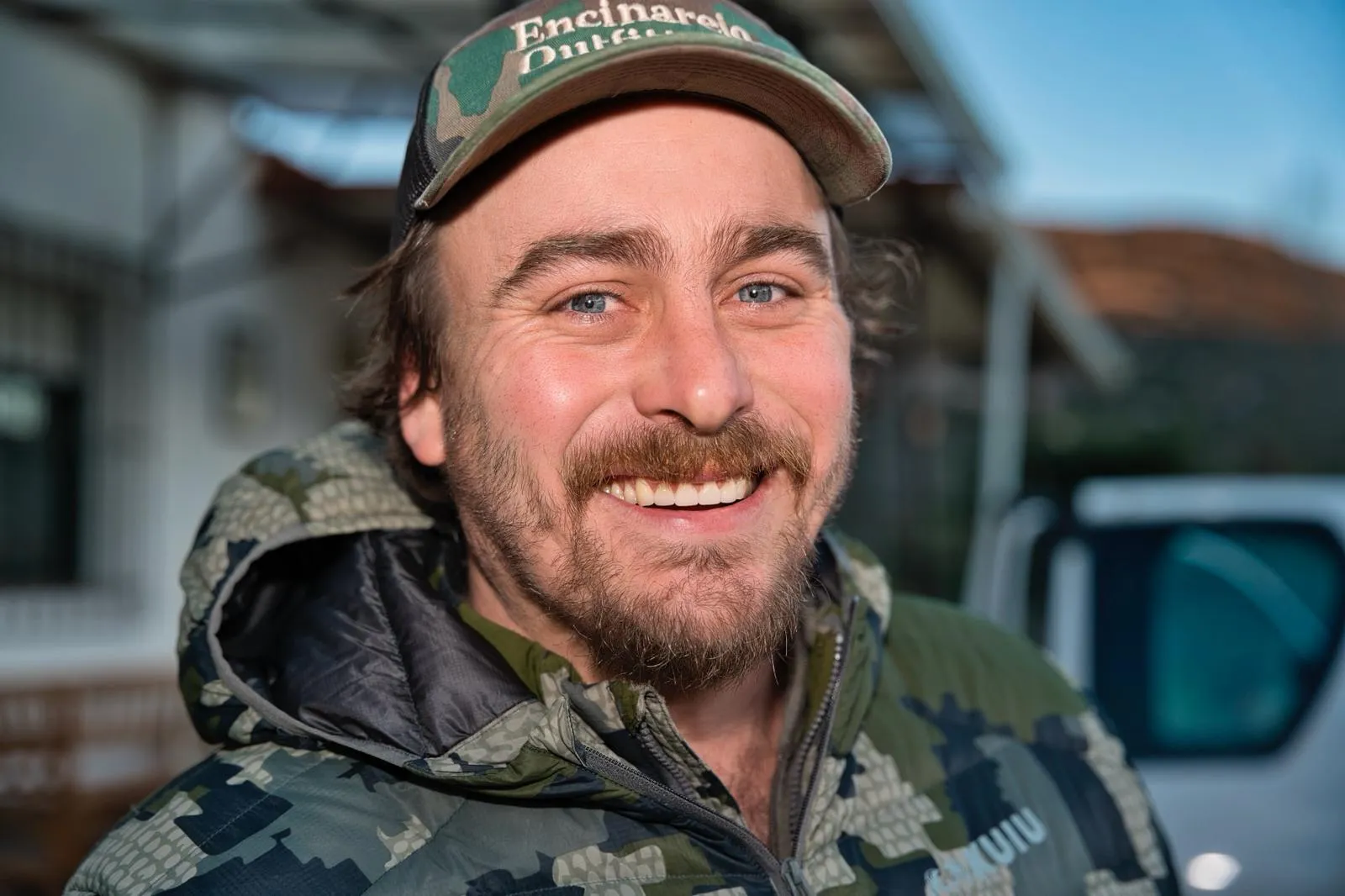
A traditional hunting agent connects you to an outfitter, helps with logistics like permits and flights, and steps back when you reach the lodge. A hosted hunting agency does the same connection work and stays on the ground with you for the entire trip — a representative of the agency hunts with you, handles the relationship with the outfitter in real time, and takes responsibility for the experience from arrival to departure. The two models charge differently, manage risk differently, and produce different outcomes when the trip goes sideways. They are often confused in casual conversation because both are "agencies" and both put a layer between the hunter and the outfitter, but the structural difference is significant and worth understanding before you book your first international hunt.
I'm Alex Hohne, co-founder of Huntica and a Professional Hunter (PH) by training. I've spent the last fifteen years working both sides of this equation — guiding clients booked through traditional agents in South Africa, and now hosting clients on the ground myself across Spain, South Africa, and Huntica's other destinations. This guide walks through how the two models actually differ, and where one is genuinely the right choice and the other isn't.
What does a traditional hunting agent do?
A traditional hunting agent is a broker. They maintain a network of outfitter relationships across multiple countries, learn each outfitter's strengths and quirks, and match clients to outfitters based on the species, season, and budget the client has in mind. The good ones — and Hunting Consortium, founded in 1985 in Virginia, is the canonical example — have spent decades building this network and have intimate knowledge of which outfitter handles which species best, which lodges are well-run, which PHs are reliable.
The agent's deliverables, in roughly the order they happen:
Pre-trip. Conversation with the client to understand the trip they want. Recommendation of one or two outfitters that match. Coordination of dates, pricing, deposit. Coordination of firearms permits, hunting licenses, sometimes flights. Issuance of a final itinerary.
During the trip. Available by phone or email if there's an issue. Not on the ground.
Post-trip. Coordination of trophy export documentation with the outfitter. Sometimes an after-action conversation to keep the relationship for next time.
The agent earns a commission from the outfitter — typically 10 to 25% of the outfitter's daily rate and trophy fees. The client doesn't write the agent a separate check in most cases; the agent's fee is built into the outfitter's pricing. This is sometimes presented as "no cost to the client" — that's not technically wrong, but it's worth understanding that the 10 to 25% comes from somewhere, and ultimately it's part of what the client pays.
The agent model has been the backbone of international hunting for forty-plus years and has produced a lot of good trips. It works particularly well when the agent has deep specialization in a destination the client is interested in, when the client is experienced enough to manage the on-ground experience themselves, and when the outfitter at the chosen destination is well-run enough that the agent's absence doesn't matter.
What does a hosted hunting agency do differently?
A hosted hunting agency does the agent's full job — the outfitter network, the booking, the permits, the logistics — and then adds the on-ground hosting layer. A representative of the agency, typically a co-founder or senior host, is physically present from the moment the hunter arrives at the airport to the moment they depart.
What the host actually does on the ground:
Coordinates with the outfitter and PH team in real time. The PH is focused on the hunt. The host is focused on the trip. When a vehicle is late, when a meal needs adjusting for a dietary requirement that wasn't communicated clearly, when a hunter is struggling with the elevation or the weather, the host is the one who handles it before the issue compounds.
Maintains the standard. Every outfitter has good days and bad days. A hosted agency catches the bad days while they're happening and corrects them — sometimes by re-routing the day, sometimes by escalating with the outfitter directly, sometimes by simply being present in a way that prevents the bad day from happening at all. The host is also the eyes and ears for the next group: trip-level debrief notes are detailed, and the next time a Huntica trip runs at that property, the host knows exactly which PH to pair with which hunter and which lodge staff member to thank by name.
Handles disputes. When something goes sideways — a wounded animal that isn't followed up properly, a trophy that's mis-tagged in the skinning shed, a billing dispute on the final day — the host handles it on the spot, in person, with the outfitter. The hunter doesn't have to fight that battle. The hunter is having dinner; the host is at the skinning shed sorting it out.
Frames the social experience. On a group trip in particular, the host's job is partly to make sure the group's own conversation finds its rhythm. Sundowners are organized. Dinners are paced. The trip's social architecture is held lightly but deliberately.
Manages the post-trip arc. The trophy logistics, the photo album, the client's relationship with Huntica over years rather than weeks. This is the part of the model that compounds — repeat clients book new trips because the host became a real friend, not because of a marketing email.
The hosted model charges differently. At Huntica we charge a hosting fee that's stated explicitly in the Trip Proposal — the percentage varies by tier, lowest on Hosted group trips and highest on Brotherhood corporate trips. The client knows exactly what they're paying for the host's presence. The outfitter's wholesale rate is on the same page. There's no commission baked into the outfitter price that we don't show.
Which model costs more?
The honest answer is that the two models often cost the client about the same total amount, but the structure and transparency differ.
A traditional agent's commission of 15 to 25% is built into the outfitter's pricing. The client sees one number — say, $12,000 for a 7-day plains game safari — and that number includes the agent's cut. The agent's role and value is real but not itemized.
A hosted agency states the hosting fee separately. A 7-day Hosted plains game trip at Magersfontein, Northern Cape, with a Huntica founder on the ground from start to finish, comes with one written quote — the outfitter wholesale cost, the hosting fee, and any additional services are all visible in the Trip Proposal as separate line items. There's no wholesale price hidden behind the final number; the client can see what each element costs.
The total trip cost ends up roughly in the same band. What changes is what the additional hosting fee buys: an actual host on the ground, a different risk profile, and a different relationship with the agency over time.
For some clients this is worth it. For some it isn't. A hunter who has spent twenty years booking trips through a traditional agent and has the relationships and savvy to manage on-ground issues themselves often doesn't need a host. A first-time international hunter, a group trip where one weak link in logistics affects everyone, a Brotherhood corporate trip where relationship capital is the real product — these almost always benefit from a host being present.
Where the two models diverge most: when something goes wrong
This is the test case that separates the two models. Most hunting trips go well. The 10 to 15% that don't are where the model differences matter.
Common things that go wrong on international hunts:
The outfitter's PH is not what was promised. Sometimes the outfitter assigns a junior PH to a serious hunter, sometimes the senior PH is sick or has family issues, sometimes the personality match is wrong. With a traditional agent, the hunter has to recognize the issue, bring it up with the outfitter directly, and negotiate a solution while still trying to enjoy their trip. With a host on the ground, the host catches the mismatch in the first 24 hours and re-pairs the hunter with a different PH before the trip's momentum is lost.
The lodge is underperforming. The food isn't what was described, the room is below standard, the lodge staff is short-handed during the hunter's stay. With a traditional agent, the hunter raises this in the post-trip survey or, worst case, complains directly. With a host, the lodge is approached in real time by someone with standing — the host is the long-term client of the lodge, not the hunter — and the issue is resolved that day.
A trophy is mishandled. The skinning shed gets busy, capes get mis-tagged, hair slips on a poorly salted hide. With a traditional agent, the hunter often doesn't discover the problem until the trophies arrive at home in a damaged state, months later. With a host on the ground, every trophy is verified, photographed, and signed off before the hunter leaves the country.
Travel disrupts the trip. Weather grounds an internal flight, a road is washed out, a charter is delayed by 12 hours. With a traditional agent, the hunter is on the phone with the agent's office in another country, trying to coordinate from inside the disruption. With a host, the host is in the disruption with them, often with relationships to a backup operator, an alternative pickup, an extra night at a partner lodge.
The hunter has a personal issue mid-trip. A medical concern, a family emergency at home, a piece of news that derails their focus. With a traditional agent, the hunter manages this alone in a foreign country. With a host, there's someone present whose job is to help — coordinating logistics, escalating to medical or travel resources, keeping the rest of the group moving while the affected hunter handles their situation.
None of this is to say a traditional agent can't help with these issues — they often do, by phone. The difference is structural. By-phone help from a different time zone is materially different from in-person help on the ground at the moment of need.
When is a traditional agent the right choice?
I'd genuinely recommend a traditional agent over a hosted agency in three cases.
Niche destinations or species we don't host. If you want a Marco Polo argali in Tajikistan, the right call is to talk to Hunting Consortium — they've been building Central Asia for decades and we don't compete in that region. If you want a markhor in Pakistan, same answer. The hosted model only works at destinations the agency hosts personally, and no agency hosts everywhere.
You're an experienced international hunter. If you've done ten or more international trips, you know how to read a lodge, how to communicate with a PH whose first language isn't yours, how to fix a small logistical problem yourself. The hosting layer adds real value, but the marginal value to you is lower. A traditional agent gets you the network access at a slightly lower total price.
Pure budget pressure. If the difference between a $12,000 hosted trip and a $9,500 self-managed trip booked through an agent is the difference between going and not going — go through the agent. A trip happened is better than a trip you couldn't afford. We will never be the cheapest way to hunt internationally, and we don't try to be.
In every other case — first-time international hunter, group trip, family-office or corporate trip, a buyer for whom risk removal and relationship continuity matter more than saving 15% — the hosted model is structurally a better fit.
How do you tell which one a given agency actually is?
The labels in this industry are loose. Some traditional agents have started calling themselves "hosted" because the term has cachet. Some hosted agencies still describe themselves as "agents" out of habit. Three diagnostic questions cut through the marketing language quickly.
Will a representative of your agency physically be on the trip with me, from arrival to departure, for every trip in every tier? A hosted agency answers yes without qualification. A traditional agent answers no, or "we can on request, for an additional fee, on premium trips."
Have your founders personally hunted every destination you sell? A hosted agency answers yes — by definition, since the host has to know the ground. A traditional agent often has good knowledge but typically can't say they've personally hunted every property they book.
Show me where the hosting fee is broken out on the Trip Proposal. A hosted agency itemizes the hosting fee as a distinct line. A traditional agent typically doesn't, because the commission is structured into the outfitter's wholesale price.
If the agency you're talking to passes those three tests, you're talking to a hosted agency. If they pass two of three, you're talking to an agency that's transitioning from traditional to hosted (which can be excellent, but ask carefully which destinations are actually hosted and which aren't). If they pass one of three, you're talking to a traditional agent regardless of how the marketing reads.
Frequently asked questions
What's the difference between a hosted hunting agency and a traditional hunting agent?
A traditional hunting agent connects clients to outfitters and steps back at the lodge — they're brokers. A hosted hunting agency does the same connection work and adds an on-ground hosting layer: a founder or senior representative of the agency is physically present for the entire trip, coordinating with the outfitter in real time, handling disputes, and managing the experience from arrival to departure.
Do hosted agencies cost more than traditional agents?
The total cost is often roughly the same, but the pricing structure is more transparent. A traditional agent earns a 10 to 25% commission built into the outfitter's pricing — the client sees one final number. A hosted agency states the hosting fee as an explicit line item in the Trip Proposal. For comparable trips the two clients end up in a similar zone, but the hosted client knows exactly what each component costs and gets a representative on the ground.
Is the hosting fee in addition to the outfitter's price?
Yes — but the outfitter's wholesale price (without the agent commission) is what the hosting fee is added to. With a traditional agent, the client pays the outfitter's retail price, which already contains the agent's commission. With a hosted agency, the client pays the outfitter's wholesale price plus the explicit hosting fee. Total trip cost ends up comparable; transparency differs.
Can I just hire a hosting service separately from my hunting agent?
In theory yes, in practice rarely well. The hosting model works because the agency has the long-term relationship with the outfitter, knows the property, and carries authority on the ground. A separately-hired host without a pre-existing relationship to the outfitter can't replicate that authority. The hosted model is a unified offering.
Are hosted agencies new?
The category is newer than traditional agency work but the underlying practice — hunters being personally hosted by experienced friends — is as old as international hunting. What's new is treating "hosted" as the central business model rather than a premium add-on. Huntica was founded in 2025 to do exactly that.
Is Huntica a hunting agent?
Huntica is a hosted hunting agency. We do the network and booking work that a traditional agent does — every trip starts with the same conversation, the same Trip Proposal, the same outfitter selection — and a Huntica founder is on the ground with you for the entire trip. We are not a traditional broker, and we don't claim to be the right answer for every client. Where another agency or a direct outfitter relationship is the right call, we'll say so.
Should I use multiple hunting agencies, or stick with one?
Most experienced international hunters use multiple agencies over time, matching the agency to the destination. The same hunter might book Marco Polo with Hunting Consortium, Spanish Ibex with Huntica, and a US whitetail trip directly with an outfitter. There's no industry norm requiring exclusivity. Pick the agency whose strength matches the trip you want, and switch when the trip you want is in someone else's territory.
Tell us where you want to go. Hunts that become stories.