If you've passed your jagtprøven, hunted roe deer through a Scandinavian autumn, or stood in a pheasant line with friends on a Danish estate, you already have something most international hunters take years to develop: discipline, respect for the animal, and the patience to hunt the right way. These aren't just values in Nordic hunting—they're how the tradition has survived and thrived for generations.
But after five seasons of the same forests and familiar faces, you might find yourself wondering: what's next? How do I take what I've learned in Jutland or Västermanland and apply it elsewhere? The answer is simpler than you think, and it doesn't require abandoning the principles that make Nordic hunting special.
The Nordic Hunting Tradition: More Than Sport
What defines Scandinavian hunting isn't just the game or the landscape—it's the philosophy. From Denmark's Danmarks Jægerforbund (Danish Hunters' Association) to Sweden's Jägarförbundet and Norway's Norges Jegerlag, Nordic hunting culture is built on heritage, responsibility, and community.
The jagtprøven (the Danish hunting exam) isn't a rubber-stamp test. It covers firearms safety, game biology, ethics, and law. It's designed to produce thoughtful hunters, not just people who pull triggers. That standard—that expectation of knowledge and restraint—is rare globally. It's also exactly what makes a Nordic hunter valuable when they venture internationally.
When you arrive at an approved ground in South Africa or the Sierra de Andújar in Spain, your reputation precedes you. You know how to handle a rifle safely. You understand wind, patience, and stalking technique. You won't panic or make a rushed shot. That's a gift in international hunting, where outfitters and hosts know immediately whether they're working with someone who respects the animal and the experience.
From Roe Deer to Kudu: The Natural Progression
Most Danish hunters begin with roe deer on small holdings across Zealand or Funen. It's intimate, technical hunting—reading sign, understanding deer behavior, making the precise shot. After a few seasons, some move up to red stag or mouflon on larger estates in Scandinavia. Others take the next logical step: international hunting.
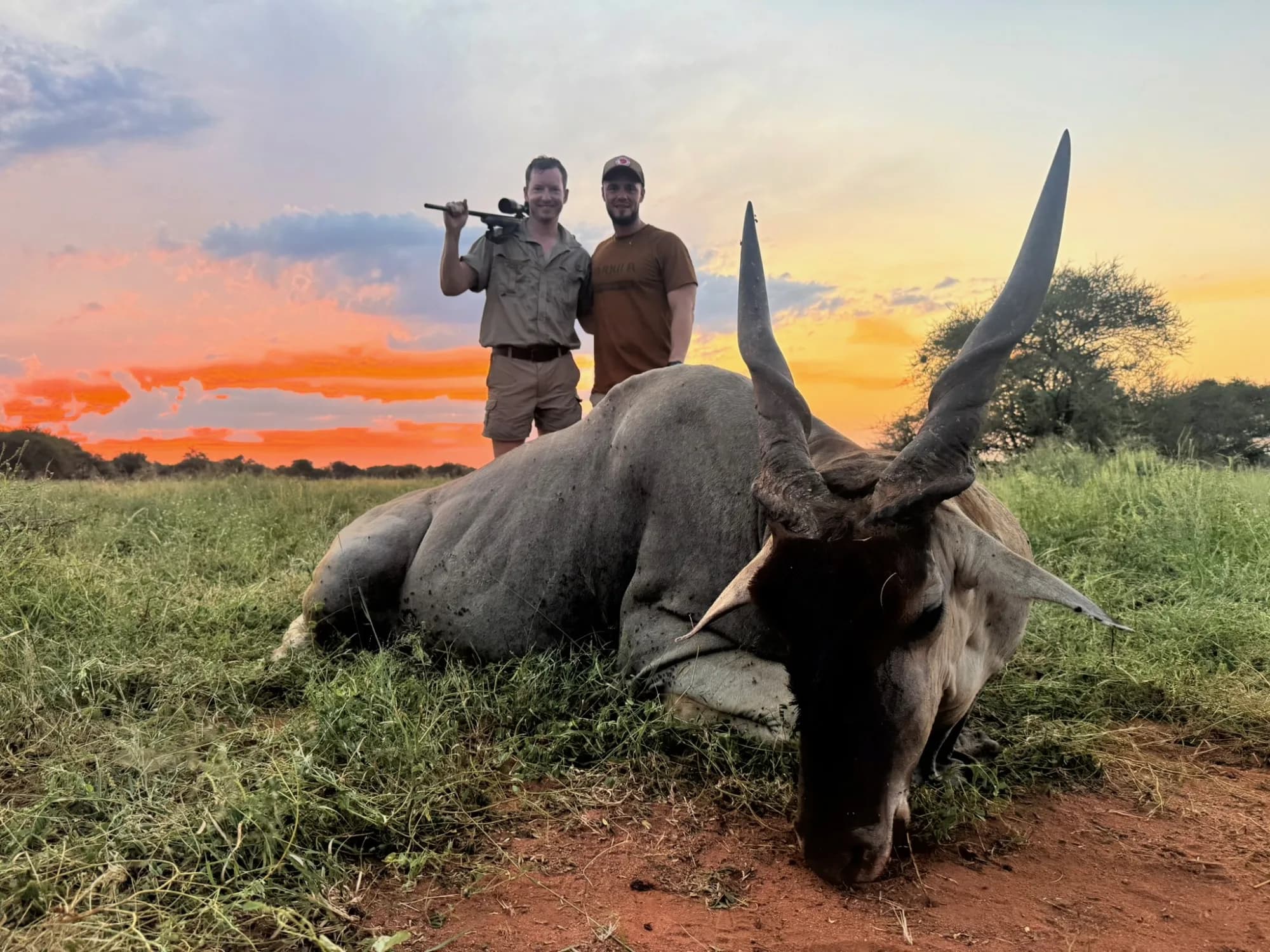
The species change, but the methodology doesn't. Stalking kudu in the Eastern Cape uses the same discipline as stalking roe in Denmark. You read the wind, move slowly, understand the animal's behavior, and wait for the right moment. The distance might be longer, the landscape entirely different, but the fundamentals remain Nordic.
This is why so many Scandinavian hunters transition smoothly to international trips. You've already done the hard mental work. You know how to be patient. You don't expect everything handed to you. These qualities are gold in international hunting.
Where Do Nordic Hunters Go?
South Africa: The Direct Route from Copenhagen
The most popular destination for Danish and Nordic hunters is South Africa's Eastern Cape province. From Copenhagen to Johannesburg, it's 11–12 hours direct with flights on South African Airways or Lufthansa. Once you clear customs in Johannesburg, it's another 90 minutes inland to the hunting grounds.
The Eastern Cape offers everything a Nordic hunter expects: enormous variety of game (kudu, impala, bushbuck, warthog, and plains game), skilled professional hunters with international credentials, and outfitters who understand European hunters' expectations. The hunting season runs February to November, which aligns well with European calendars. And practically speaking, it's straightforward to navigate as a first international trip.
Species like kudu demand the same stalking skill and patience as Nordic red stag hunting. Bushbuck—smaller, elusive, and dangerous when wounded—require absolute precision. These are hunts that reward discipline and punish carelessness. A Nordic hunter with solid technique will find them deeply satisfying.
Spain: Three Hours by Air, Centuries of Tradition
For hunters who want to stay closer to home, Spain's Sierra de Andújar national hunting reserve sits just 90 minutes from Madrid by car. A typical route: fly from Copenhagen to Madrid (2.5 hours), drive to Andújar (90 minutes), and you're hunting Ibex and red stag by the next morning.
The Ibex hunting in Andújar is technical and demanding. The terrain is steep, rocky, and unforgiving. The animals are wary. Sound familiar? It mirrors the challenge of Alpine chamois hunting, and Danish hunters adapt to it quickly. Spain also offers a cultural dimension—the lodges in Andújar often sit in old hunting estates with centuries of history, and many combine hunting with cultural exploration of Andalucia.
Other Nordic Favorites: Sweden, Norway, and Beyond
Some Nordic hunters expand regionally. Swedish outfitters in Dalarna or Värmland offer mouflon and wild boar on unfamiliar ground. Norwegian fjord outfitters cater to Nordic hunters seeking new mountains. The advantage is proximity and shorter logistics, though the game is familiar. It's a middle step between Danish forests and African plains.
Understanding the EU Firearms Pass
One of the biggest questions Danish hunters ask: how do I bring my rifle abroad? The answer is the EU Firearms Pass (Fællesskabspas), issued by your regional police authority. If you're a member of Danmarks Jægerforbund or another recognized Nordic hunting association, you can apply for this pass.
The EU Firearms Pass allows you to transport a registered firearm across EU member states and into Norway, Iceland, and Liechtenstein without border complications. You'll need:
- Your hunting license (jagtlicens)
- Proof of association membership (Danmarks Jægerforbund or equivalent)
- A completed application form (available from your local police station)
- A small fee (typically 300–500 DKK)
The pass is valid for five years and is recognized across the EU. Processing takes 2–4 weeks.
For destinations outside the EU—South Africa, for example—you'll work with your hunting outfitter or a specialized firearms transport company. They'll handle import permits, customs documentation, and safe transport to the lodge. Most reputable outfitters manage this entirely, so you arrive with your rifle waiting at the lodge.
The Nordic Hunter in an International Setting
There's something worth understanding about how Nordic hunters are perceived internationally. You arrive prepared, you listen, you ask intelligent questions, and you execute. You don't demand comfort; you understand that hunting involves discomfort. You respect the professional hunter's experience and follow their lead. These qualities matter immensely in international hunting circles.
Many outfitters in South Africa, Spain, and elsewhere specifically seek Nordic clients because they know what to expect: professionalism, reliability, and a genuine respect for the animal and the experience. You're not there for Instagram photos or a trophy count. You're there to hunt properly, and that reputation opens doors.
The Social Dimension: Why Huntica Hosted Trips Fit Nordic Hunters
Nordic hunting culture has always been rooted in community. You hunt with the same group year after year. You share stories, meals, and the landscape. It's not transactional; it's friendship and tradition. This is exactly why hosted trips—where your host (not an agent, but someone physically present and invested in your experience) coordinates everything—resonate so strongly with Scandinavian hunters.
A hosted trip means you're not managing logistics alone. Someone handles the outfitter communication, firearms paperwork, lodge arrangements, and on-the-ground problem-solving. You arrive, hunt, and focus on the experience. And critically, because your host knows you and the outfitter, they can troubleshoot real-time issues or customize the hunt mid-trip based on what you're seeing.
For groups of Danish hunters—three friends who hunt together at home, for example—a hosted trip transforms the international hunt into an extension of your existing friendship and tradition, not something foreign or intimidating.
Combining Hunting with Family: The Dual-Destination Model
Many Nordic hunters now structure trips to combine hunting with family tourism. You take two weeks: one week hunting kudu in South Africa, the second week on safari with your family at Kruger National Park or a private reserve. Or Spain: five days hunting Ibex and red stag, then a long weekend exploring Barcelona or Seville.
This appeals to the practical Nordic sensibility. You justify the trip length and investment because everyone benefits. Your spouse and children experience African or Spanish culture. You get your hunting. And logistics-wise, it's seamless—your host or outfitter coordinates the handoff to tourism operators, and you move as a unit.
Many lodges in South Africa and Spain actively support this model, with family-friendly accommodations nearby and guides who specialize in cultural and wildlife tourism.
Practical Logistics from Copenhagen
Visas and Entry: Denmark is EU; most Nordic hunters have visa-free access to Spain, parts of Africa (South Africa and countries with Schengen reciprocity). Check requirements 12 weeks before travel.
Firearms Transport: Book with a specialized firearms courier or work directly with your outfitter's preferred transport company. Allow 800–1,500 EUR for firearms transport to Africa. EU travel is simpler—many lodges in Spain handle rifle staging directly.
Duration: Most international hunts are 7–10 days (excluding travel). Allow 4–5 days for meaningful hunting, 1–2 for travel and acclimatization, 1–2 buffer days for weather or animal movement.
Cost: Outfitter fees in South Africa range 200–400 EUR per day; Spain 250–500 EUR per day. Add flights (600–1,200 EUR from Copenhagen to Johannesburg; 300–500 EUR to Spain), visas if required, and rifle transport.
Timing: South Africa: February–November (avoid July–August for northern Europe's hunting season). Spain: August–November for Ibex, September–February for red stag. Plan 4–6 months ahead for the best availability.
FAQ for Nordic Hunters
Do I need special insurance to hunt internationally?
Yes. Standard homeowner or car insurance won't cover hunting abroad. Organizations like Danmarks Jægerforbund often bundle international hunting insurance, or you can purchase standalone policies from providers like DEMA (Danish Hunters' Union) or European-specific brokers. Allow 100–200 EUR annually for comprehensive coverage.
Can I hunt the same animals in South Africa as Scandinavia?
Partially. There are no wild red stag or moose in South Africa, but kudu and impala offer similar technical challenges. The best comparison is kudu to Nordic red stag—both require stalking skill, patience, and precise shot placement. Many Nordic hunters find kudu more satisfying because the terrain is more demanding.
What's the advantage of a hosted trip versus booking directly with an outfitter?
A host is on the ground during your hunt, managing logistics, problem-solving in real-time, and ensuring quality. If the lodge disappoints, your host negotiates adjustments or alternatives on your behalf. They also know you personally and can customize the experience. A direct booking means you're managing communication across time zones and handling problems yourself if they arise.
How do I find a reputable outfitter?
Ask your hunting association (Danmarks Jægerforbund, Jägarförbundet, etc.). They maintain networks of verified outfitters. You can also ask other Nordic hunters who've traveled internationally—word-of-mouth is powerful. Interview potential outfitters directly; ask for references from European clients specifically.
Is it worth bringing my own rifle or renting one at the lodge?
Bringing your own is often worth it if you've hunted with that rifle for years—you know its accuracy and handling. Renting simplifies logistics and eliminates transport costs. Most outfitters provide reliable rifles. Ask your host or outfitter for recommendations; they'll tell you if your rifle is well-suited for the hunt.
What's the best first international destination for a Nordic hunter?
Spain if you want proximity and EU simplicity. South Africa if you want the full international experience and diverse game. Both work brilliantly for Scandinavian hunters.
How do I handle customs and firearms declarations?
Your outfitter or firearms transport company manages this entirely. You provide documentation (proof of license, EU Firearms Pass for European countries, etc.), and they handle customs clearance. The rifle is typically staged at the lodge before your arrival.
Your Next Hunt Awaits
The Nordic hunting tradition isn't confined to Scandinavian forests. It's a set of values—respect, discipline, patience, and genuine love for the landscape and animal—that translate anywhere. Whether you're stalking kudu across South African thornbush or Ibex along Spanish cliffsides, you're applying the same skills and carrying the same traditions your grandfather carried.
The step from domestic to international hunting is smaller than it feels. Your jagtprøven prepared you. Your years of patient stalking prepared you. The logistics are manageable, the costs predictable, and the experience waiting.
If you're ready to take that step—whether with a group of hunting friends, family in tow, or solo—we're here to help. Huntica specializes in hosting Nordic hunters on international trips, managing the logistics, coordinating with outfitters, and ensuring your experience matches the standard you expect from your home tradition.
Let's talk about your next hunt. Contact us.
Huntica hosts Nordic hunters on approved grounds across South Africa and Spain. We manage firearms logistics, outfitter coordination, and on-the-ground problem-solving so you can focus on the hunt. Reach out to discuss your trip.