An international hunting trip comes down to organizing six things: travel documents, firearm permits, insurance, medical preparation, money, and gear. The realistic timeline looks like this — book your hunt 8 to 14 months before departure, lodge firearm import applications 60 to 90 days out, and have specialist travel and evacuation insurance in place before you make your final payment. Nearly every item on the list is simple when you start early, and nearly every item becomes difficult, expensive, or impossible when you start late.
I manage trip logistics at Huntica, and I watch the same pattern every season: hunters research the destination for months — the species, the terrain, the caliber debate — and leave the paperwork to the final six weeks. The destination research is the fun part. The paperwork is the part that decides whether your rifle clears customs and whether a rolled ankle in the Southern Alps becomes an inconvenient story or a five-figure medevac bill.
Here is the complete checklist, ordered by when each item has to happen. It applies across all of our destinations — your host adjusts the specifics once you have picked your ground.
| Timeline | What has to happen |
|---|---|
| 12+ months out | Choose destination and dates, pay the deposit, check passport validity and blank pages |
| 6-9 months | Bring-vs-rent rifle decision, flights booked, vaccinations started, fitness work underway |
| 3 months | Firearm permit applications lodged, insurance bound, hunting licenses confirmed, final payment |
| 6 weeks | Gear purchased and tested, boots broken in, rifle zeroed, ammunition secured |
| 2 weeks | Currency and tipping plan ready, document wallet assembled, airline firearm approval reconfirmed |
| Wheels-up | Documents and medications on your person, rifle locked in its checked hard case |
What do you need to lock in 12 or more months out?
Destination and dates. Seasons drive everything. The red stag roar in Argentina and New Zealand peaks in March and April. South Africa's season runs March through October, with the dry winter months prized for visibility and comfortable daytime temperatures. Tahr in full winter coat means May to August in the Southern Alps. Greenland's muskox windows are short on both ends of the year and fill first. Established outfitters run small annual capacity, and the prime weeks go to repeat hunters and early bookings — which is why 8 to 14 months out is the realistic booking window, not a cautious one. If you are traveling with friends, add time: aligning four calendars is its own project. Start with our destinations, and if Africa is the front-runner, read what to expect on your first African hunting safari.
The deposit. Most operations hold dates against a deposit of 30 to 50 percent. Before you pay it, read the cancellation and postponement terms — not because anything is wrong, but because your insurance decisions later depend on what is refundable and what is not. For the full picture of what an international hunt actually costs, including the post-hunt line items most first-timers miss, see our guide to understanding hunting safari costs.
Passport. The rule across nearly every hunting destination: at least six months' validity beyond your return date, and at least two blank visa pages — South Africa checks the blank pages at the counter. Passport renewals take weeks to months depending on your country. Check tonight. It is the easiest item on this list and the one with the longest repair time.
Visas and entry authorizations. Most Western passports enter South Africa, Argentina, and New Zealand visa-free for short stays, but electronic travel authorizations are easy to forget — Canada's eTA and New Zealand's NZeTA take minutes online and are mandatory for visa-waiver travelers arriving by air. Entry systems change; confirm current requirements for your nationality when you book, then again at the three-month mark.
What should you decide 6 to 9 months before departure?
The rifle question: bring or rent. This decision gates everything downstream — permit applications, airline arrangements, even which flights you book. Bringing your own rifle means your trigger, your zero, and often your family's story in the field. Renting at $50 to $150 per day means simpler transit and no permit chain. Our international firearm import guide walks through the process country by country, including the SAPS 520 in South Africa, Argentina's RENAR authorization, and New Zealand's online visitor permit. Decide now; apply later. The hunters who struggle are the ones still weighing it at the eight-week mark.
Flights. Book once dates are firm, but if you are traveling with a firearm, favor flexible fares until your permits are approved — and route through hubs experienced with bonded firearm transfers. Build minimum three-hour layovers on any connection where a rifle changes aircraft.
Vaccinations and travel medical. See a travel clinic six months out, because some courses take months to complete. For southern Africa and rural South America: hepatitis A and B, a tetanus-diphtheria booster if yours is older than ten years, and typhoid are the standard recommendations. Yellow fever vaccination is not required for South Africa or Argentina unless you arrive from a risk country — but if you hold the certificate, carry it. Malaria prophylaxis depends on your exact ground: the Northern Cape, where our South African hunts run, is malaria-free, but extensions into malarial regions change the answer. For Greenland, New Zealand, Canada, and Spain, there is no tropical disease question — the medical preparation shifts to fitness, cold readiness, and your personal prescriptions. Two unglamorous items that experienced hunters never skip: a dental check (a cracked tooth three hours from the nearest town is misery) and a written list of your medications with their generic names.
Fitness. Six months is enough time to change what your trip feels like. A mountain hunt — tahr in New Zealand, ibex in the Sierra de Andújar — rewards every hour of hill work you put in. Even a plains game hunt means 8 to 15 kilometres a day on uneven ground. Start where you are; just start now.
What has to be done by the 3-month mark?
Firearm permits lodged. Three months out, every application should be in the system. Argentina is the gate that sets the schedule — 60 to 90 days of genuine processing time. Greenland wants eight weeks, Spain six to eight for non-EU hunters, South Africa four to eight through an embassy, New Zealand four to six online. Canada is the outlier that can be handled at the border. If you are on a hosted trip, this is the point where Huntica has already filed on your behalf and you are forwarding documents, not deciphering forms.
Travel and evacuation insurance — before final payment. This is the most misunderstood item on the entire checklist, so here is the plain version: standard travel insurance usually fails hunters. Most consumer policies list hunting under hazardous-activity exclusions, exclude anything involving firearms outright, cap medical cover below what a remote evacuation costs, and limit cancellation benefits to a fraction of what an international hunt is worth. The policy that covered your last city break will likely pay nothing when it matters.
What you want instead is specialist cover, and it comes in recognizable categories rather than one product. First, emergency medical evacuation and repatriation rated for remote terrain — either a dedicated medevac membership program or a sporting-travel policy with high evacuation limits. A helicopter off a New Zealand ridgeline or a medical flight out of Greenland runs into tens of thousands of dollars, and nobody quotes you before lifting. Second, a hazardous-activity provision that names hunting explicitly — not "adventure sports," the word hunting, in writing. Third, firearm and equipment cover for loss, theft, and transit damage; airlines compensate poorly for a damaged rifle. Fourth, trip cancellation and interruption cover sized to the real cost of your hunt, which is why you read the deposit terms back at month twelve. Cancellation benefits are strongest when the policy is bought within two to three weeks of your first deposit — and the hard deadline is before final payment, which most operations collect 60 to 90 days out. Insuring a trip after it is fully paid protects nothing that has already gone wrong.
Before you bind anything, ask the insurer one question in writing: does this policy cover hunting with firearms in [country] for the full duration of my trip? Keep the answer with the certificate.
Hunting licenses and personal data. Destination hunting licenses — the Junta de Andalucía permit in Spain, the Naalakkersuisut license in Greenland, provincial licenses elsewhere — are arranged by your host or outfitter, but they need your passport details, and sometimes certified copies, well in advance. The three-month mark is the deadline for handing those over.
What goes in the bag at 6 weeks?
Pack for the climate band, not the continent. Across our destinations, three bands cover the hard cases — the African winter, the New Zealand alpine, and the Greenland Arctic — and everything else (Spanish sierra, Argentine estancia, most Canadian autumn hunts) falls between them.
| African winter (South Africa, May-Sep) | Alpine New Zealand (Apr-Aug) | Arctic Greenland (Feb-Mar / Aug-Sep) | |
|---|---|---|---|
| Conditions | Frosty dawns near 0°C, dry 20-25°C middays | 0-15°C, wind, weather turns in an hour | -25°C winter, 0-10°C late summer, wind-driven cold |
| Base layers | Lightweight merino, 2-3 sets | Midweight merino, 3 sets | Heavyweight merino, 3+ sets |
| Insulation | Fleece or light down for mornings and sundowners | Packable down or synthetic midlayer | Expedition-grade down parka, insulated trousers |
| Outer shell | Quiet soft-shell in earth tones | Waterproof hard shell, jacket and trousers | Windproof shell over full insulation |
| Boots | Broken-in ankle-high leather | Stiff mountain boots with gaiters | Insulated expedition boots rated to -30°C |
| Hands and head | Brimmed hat, light gloves for first light | Insulated gloves, beanie, neck gaiter | Mittens over liner gloves, balaclava |
| Field extras | 10x42 binoculars, daypack, SPF 50 | Trekking poles, rangefinder for alpine distances | Hand warmers, goggles, no exposed skin |
Three notes the table cannot carry. First, skip full camouflage for South Africa — it is restricted in several provinces, and neutral olive, khaki, and brown work better anyway. Second, most safari lodges run daily laundry, so pack roughly half the shirts you think you need. Third, quiet fabric matters more than pattern: if your trousers rustle on a still morning, the kudu knew you were coming before you did.
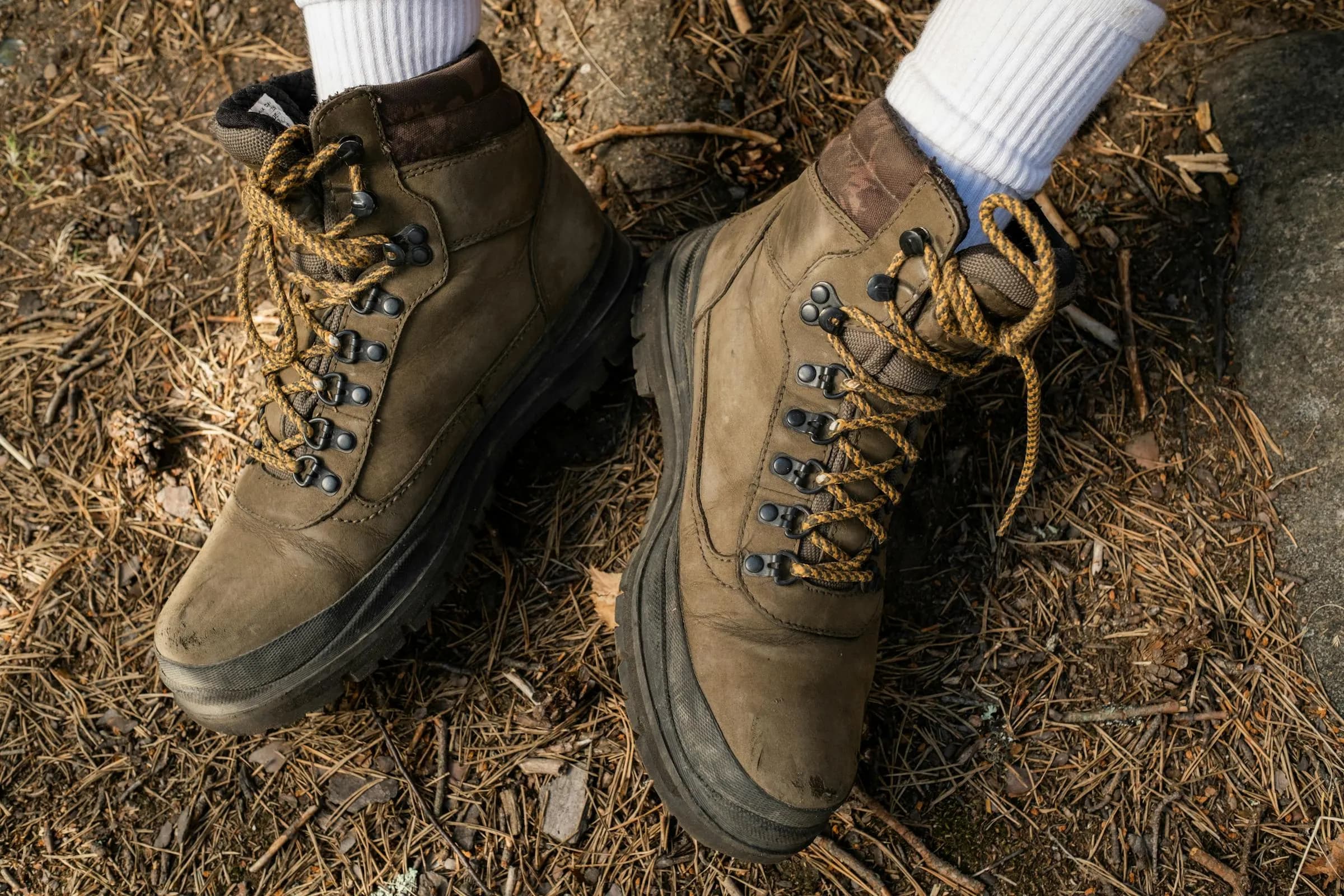
Boots are the six-week item. New boots need 40 to 60 kilometres of walking before they are trustworthy, and there is no shortcut. Wear them on stairs, on hills, with the socks you will hunt in.
Rifle and ammunition. Confirm your zero at 100 metres and know your holdovers at 200 and 250. Buy your ammunition now — your preferred load is not reliably available at destination, and Argentina and Greenland barely stock anything beyond common local calibers. Check your hard case, locks, and the 5 kg IATA ammunition limit, and remember country caps: South Africa allows 200 rounds per firearm, Argentina 100.
What do the final 2 weeks look like?
Money. Notify your bank of travel dates so a card swipe in Kimberley does not freeze your account. Then plan for cash, because cards are useless in the field. Small-denomination US dollars are the working currency for tips across southern Africa and Argentina; Greenland uses Danish kroner; New Zealand and Spain take cards almost everywhere except the moment you most need cash. For most trips, $500 to $1,500 in mixed small bills covers tips and incidentals — your host gives you the exact figure for your destination and group size.
The tipping plan. Decide it at home, calmly, rather than at the lodge on the last morning. The customary ranges: $50 to $100 per day for your PH or guide, $10 to $20 per day each for trackers and skinners, and a similar amount into the camp staff pool. Tipping is firmly expected in southern Africa and Argentina, more discretionary in New Zealand and Europe, and your host will brief you on local practice. Prepare labeled envelopes before you fly. It turns an awkward goodbye into a proper thank-you between friends.
The document wallet. Assemble one physical wallet that lives in your carry-on, plus a complete digital set saved offline on your phone and in cloud storage, plus one printed set left with someone at home.
| Document | Printed | Digital | Notes |
|---|---|---|---|
| Passport | Photo-page copy ×2 | Yes | 6+ months validity, 2+ blank pages |
| Visa / entry authorization | Yes | Yes | eTA, NZeTA, or visa as applicable |
| Firearm import permit | Yes ×2 | Yes | Plus a separate serial-number sheet |
| Home firearms license | Original + copy | Yes | Certified translation where required |
| Invitation letter from host or outfitter | Yes | Yes | Required in several permit processes |
| Hunting license(s) | Yes | Yes | Arranged by your host; carry your own copy |
| Insurance certificate + 24-hour emergency number | Yes | Yes | The medevac number on paper, not only in your phone |
| Vaccination record / yellow fever certificate | Yes | Yes | Only needed if transiting risk countries |
| Flight itinerary + airline firearm approval | Yes | Yes | Reconfirm with the airline 72 hours out |
Airline reconfirmation. Call the airline 72 hours before departure to reconfirm the firearm declaration on every leg. A confirmed booking is not the same as a confirmed rifle.
What happens on arrival day — and what must you carry yourself?
On a hosted trip, arrival day is the moment the preparation becomes visible. Your host meets you at the airport — at O.R. Tambo that means walking the SAPS firearms desk together, at Ezeiza it means the customs firearms area with the paperwork already aligned, at Auckland a dedicated lane that moves in under an hour. Transfers are arranged, the lodge knows your dietary notes, your hunting license is already in hand, and a range session to confirm your zero is on the schedule for the first morning.
But a short list can never be delegated, and it rides on your person:
- Passport and the document wallet — carry-on, never checked.
- The keys or combination to your rifle case — they stay with you; you are the one who opens the case at the firearms desk.
- Prescription medications in original packaging, in your carry-on, with a copy of the prescription.
- Binoculars and optics — carry-on, both for value and because checked baggage is where good glass goes to die.
- Cash, split between your carry-on and a money belt, never all in one place.
- Ammunition goes the other way — checked baggage only, packed separately from the rifle, per airline rules.
Then the work is done. The first evening — fire going, briefing from the PH over dinner, the particular quiet of a camp at the edge of wild ground — is what the previous twelve months were for.
What starts the moment the hunt ends?
Trophy paperwork begins in the skinning shed, not when you get home. Within days of your last animal, you will make the decisions that set the post-hunt timeline: skull mount or shoulder mount, dip-and-pack or in-country taxidermy, sea freight or air. Export permits and veterinary certificates are initiated immediately — and where CITES applies, the permit alone takes 4 to 12 weeks. The full chain, costs included, is covered in our trophy shipping and taxidermy guide; read it before the trip, not after, because the choices are easier to make when they are not new.
Two smaller items for the flight home: keep copies of your firearm permits for re-export and for your records — they make the next application faster — and write down the trip while it is fresh. The paperwork ends. The stories should not.
How does a hosted trip change this checklist?
Honestly: most of this list becomes ours, not yours. That is the point of a hosted trip: we host where we hunt, and the checklist travels with us.
On a Huntica trip, your host initiates the firearm permits, drafts the invitation letters, arranges the destination hunting licenses, coordinates the airline firearm declarations, books the ground transfers, briefs you on tipping with exact local figures, and manages the trophy chain from skinning shed to your front door. A co-founder is physically on the ground with you — at the airport firearms desk, at the range session, at the fire.
What stays yours, because it must: your passport, your vaccinations and medical preparation, your fitness, your personal gear, and your insurance purchase — we tell you precisely what cover to ask for and which questions to put to the insurer in writing, but the policy has to be in your name. Call it five items instead of forty.
We built it this way because the planning months should be spent on the good questions — which ground, which species, which friends — while someone who has filed the same forms a hundred times handles the rest.
Frequently Asked Questions
How far in advance should I book an international hunt?
Eight to fourteen months before departure is the realistic window. Established outfitters hold small annual capacity, prime weeks go to repeat hunters first, and the best dates — the stag roar, the dry African winter, Greenland's short muskox windows — sell out a year ahead. Booking early also makes everything downstream calmer and less costly: flexible flight fares, unhurried permit applications, and insurance bought within the window that maximizes cancellation benefits.
Do I need special insurance for a hunting trip?
Yes. Standard travel insurance commonly excludes hunting as a hazardous activity and excludes firearms entirely, which can void exactly the claims you would need. Specialist cover for hunters includes four categories: emergency medical evacuation rated for remote terrain, a policy that names hunting explicitly, firearm and equipment cover for transit loss or damage, and trip cancellation sized to the full cost of the hunt. Buy it before final payment — ideally within two to three weeks of your deposit — and get written confirmation that hunting with firearms at your destination is covered.
What vaccinations do I need for an international hunting trip?
For southern Africa and rural South America: hepatitis A and B, a tetanus booster if older than ten years, and typhoid are standard recommendations; yellow fever certificates only matter if you arrive from a risk country. Huntica's South African ground in the Northern Cape is malaria-free, but extensions into malarial regions change the answer. Greenland, New Zealand, Canada, and Spain require nothing beyond routine boosters. See a travel clinic six months out, because some courses run over several months.
What documents do I need for an international hunting trip?
A passport with six-plus months' validity and two blank pages, any visa or electronic travel authorization, a firearm import permit with a serial-number sheet, your home firearms license (with certified translation where required), an invitation letter from your host or outfitter, destination hunting licenses, your insurance certificate with the 24-hour emergency number, and vaccination records where applicable. Carry everything printed in duplicate plus a digital set saved offline — and leave one full copy with someone at home.
How much cash should I bring on a hunting trip?
For most trips, $500 to $1,500 in small-denomination US dollars covers tips and incidentals — toward the top of that range for longer African safaris with full camp staff, lower for New Zealand or Spain where cards work nearly everywhere. Typical tipping runs $50 to $100 per day for your PH or guide and $10 to $20 per day each for trackers, skinners, and camp staff. Split the cash between bags, and ask your host for the exact figures for your destination.
Can I plan an international hunt in under six months?
Sometimes. Canada works on short notice because the firearm declaration happens at the border, and New Zealand's online permit clears in four to six weeks. Argentina is the hard gate — RENAR authorization genuinely takes 60 to 90 days, so a spring booking for an autumn roar is already tight. Late availability exists most seasons because plans change, but you will choose from what remains rather than what is best. A host compresses the paperwork; nobody compresses the permit queues.
Tell us where you want to go
Twelve months sounds like a long runway until you watch it disappear into permits, policies, and boot leather. The hunters who enjoy the planning year are the ones who spend it thinking about the ground, not the forms — because someone who has done this a hundred times is walking beside them from the first deposit to wheels-up.
Tell us where you want to go and when, and we will hand you a timeline with your name on it.