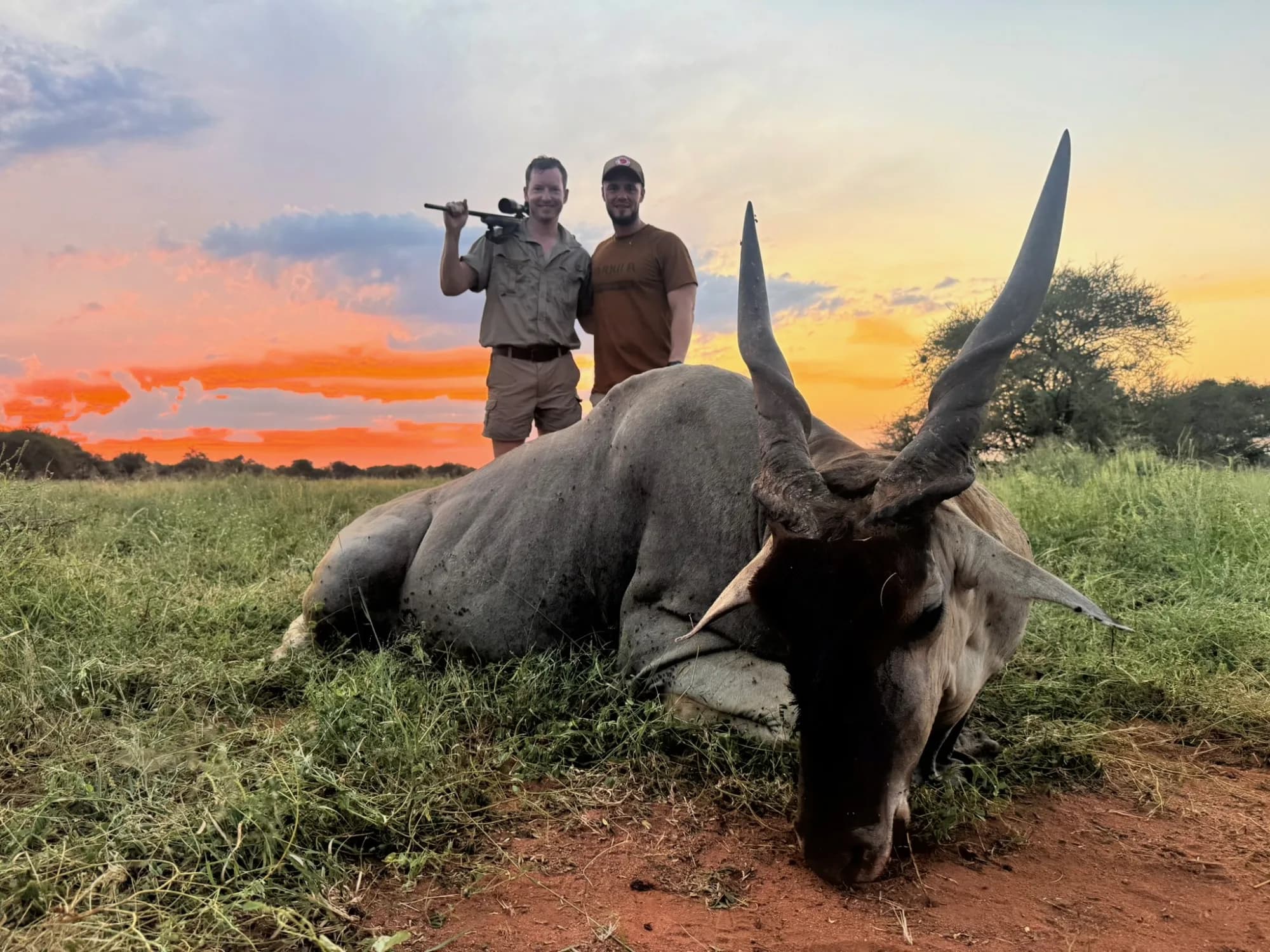
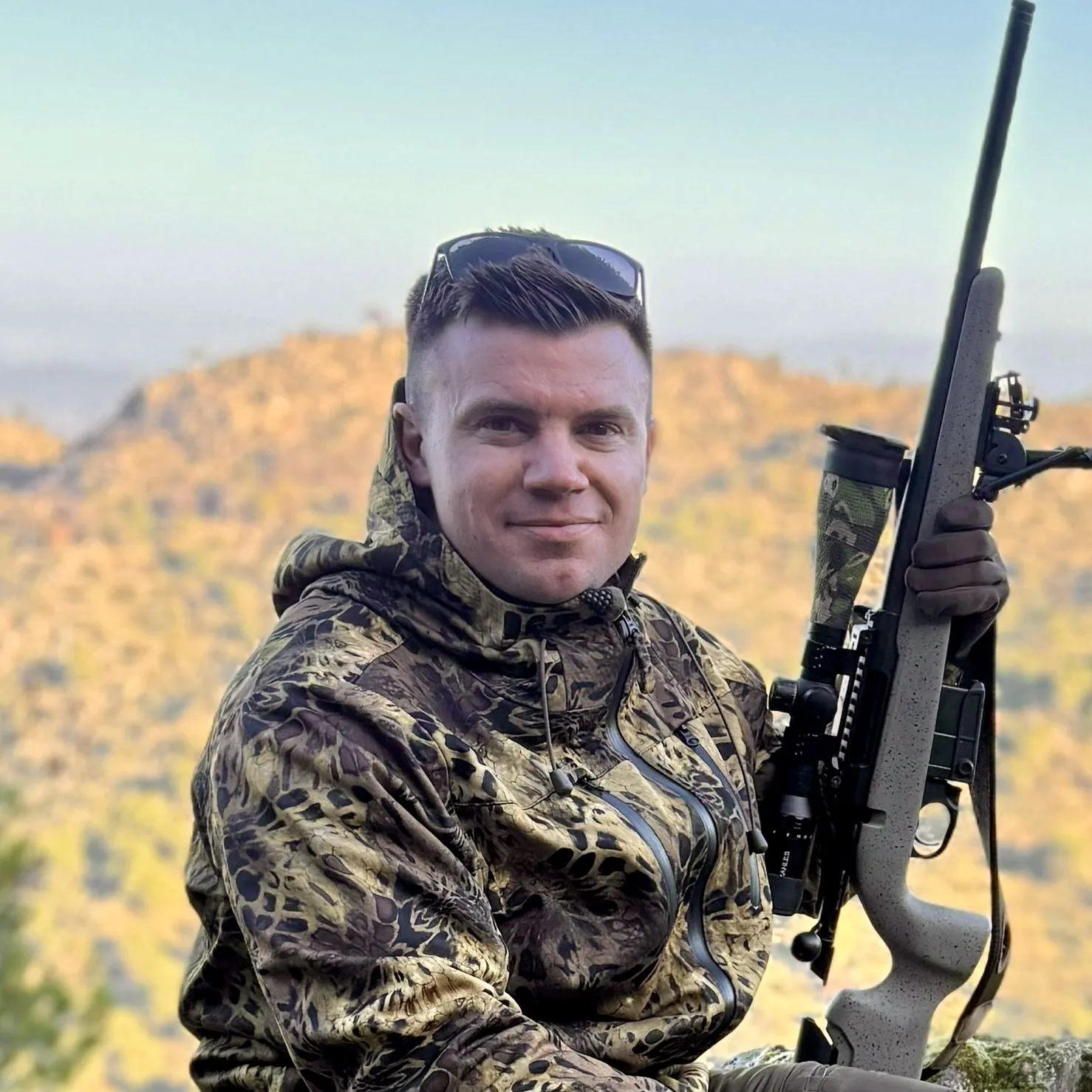
To bring your rifle to another country for hunting, you need a temporary firearm import permit issued by the destination country, a locked hard case that meets airline requirements, and your home country firearms license with copies to spare. The specific permit, application timeline, and customs process varies by destination — and getting any of it wrong means your rifle stays in a bonded storage room while you hunt with a borrowed gun or don't hunt at all.
At Huntica, firearm logistics is something our hosts manage on the ground. Alex Hohne has cleared rifles through O.R. Tambo in Johannesburg more times than he can count. Rasmus Jakobsen has navigated the Danish transit rules for hunters connecting through Copenhagen to Greenland. According to the International Council for Game and Wildlife Conservation (CIC), firearm-related delays are the most common logistical issue on international hunting trips, affecting roughly 1 in 5 hunters who travel without pre-arranged permit support.
This guide covers what you need, country by country.
How does temporary firearm import work in general?
Every country that permits hunting by foreign nationals has a mechanism for temporary firearm import — a permit or declaration that allows you to bring your personal rifle into the country for a defined period, typically 21 to 90 days. The permit is tied to your passport, your home country firearms license, and the specific serial numbers of the firearms you are declaring.
The universal requirements: a valid passport with at least six months' remaining validity, a firearms license from your country of residence, the exact make, model, caliber, and serial number of each firearm, and a stated reason for import (hunting, with supporting documentation from your outfitter or host). Most countries also require proof of return travel.
Start the process a minimum of 8-12 weeks before departure. Some countries accept applications at the port of entry, but relying on that is how stories turn into frustrations.
South Africa — SAPS 520 temporary import permit
South Africa is the most common international hunting destination, and the firearm import process is well-established but unforgiving when paperwork is incomplete. The governing document is the SAPS 520 form — Application for Temporary Authorization to Possess a Firearm, administered by the South African Police Service (SAPS) under the Firearms Control Act of 2000.
Before travel (recommended): Apply at your nearest South African embassy or consulate. Submit the completed SAPS 520 with your passport copy, home country firearms license, proof of hunting booking, and details of each firearm (make, model, caliber, serial number). Processing takes 4-8 weeks. The approved permit is valid for the duration stated, typically matching your travel dates plus a buffer.
At port of entry (possible but risky): You can complete the SAPS 520 at the dedicated SAPS firearms desk at O.R. Tambo International Airport or Cape Town International. Processing ranges from 30 minutes to 3+ hours depending on staffing and flight volume. Weekend arrivals and public holidays extend this — the SAPS desk runs reduced staff outside business hours.
Limits: Maximum 4 firearms per person. Maximum 200 rounds of ammunition per firearm.
What to bring: Two printed copies of the SAPS 520 (completed), your original firearms license, passport, booking confirmation with outfitter name and property address, and a list of all serial numbers. Alex Hohne, our co-founder and lead host for South Africa, meets hunters at the airport on Huntica Hosted trips and walks through the SAPS desk process in person. He has cleared firearms through O.R. Tambo on over 200 occasions across his years of outfitting in South Africa, and his standing relationship with the SAPS firearms unit means issues get resolved on the spot.
Pro tip: Fly in on a weekday — Tuesday through Thursday sees the shortest processing times. Have serial numbers on a separate sheet; SAPS officers verify each one against the physical firearms.
Spain — European Firearms Pass and Guardia Civil authorization
Spain's process depends on whether you hold EU citizenship or not — and in both cases, you also need a regional hunting license on top of the firearms permit. The two tracks run in parallel, and missing either one means your rifles stay in customs.

EU citizens: The European Firearms Pass (EFP) issued by your home country allows you to transport firearms within the EU. You still need to notify Spanish authorities and obtain a Guía de Pertenencia (authorization to possess) through your consulate or upon arrival. With the EFP, processing is relatively straightforward — 2-4 weeks through your home country's firearms authority.
Non-EU hunters: You need an invitation letter from the hunting organizer plus a Spanish arms license application through the Guardia Civil (Civil Guard). Apply through your nearest Spanish consulate 6-8 weeks before travel. Required: passport copy, home firearms license with certified Spanish translation, invitation letter specifying dates and area, and a list of firearms with serial numbers. Processing is thorough but predictable when documentation is complete.
Caliber restrictions: Spain prohibits military-specification calibers for civilian hunting. Semi-automatics are restricted — bolt-action is the standard. Confirm compliance before applying; your consulate has the current restricted list.
Hunting license (Licencia de Caza): This is separate from the firearms permit and is regional, not national. For hunting in the Sierra de Andujar in Andalucia, you need a permit from the Junta de Andalucia. On a Huntica trip, Alex Hohne coordinates both the Guardia Civil firearms authorization and the Junta de Andalucia hunting license as part of pre-trip preparation on Approved Ground in Andalucia.
At arrival: Fly into Madrid-Barajas or Malaga. Firearms are collected at a dedicated oversized/special baggage counter. Have your approved Guardia Civil authorization and EFP or equivalent printed and ready.
Greenland — Groenlands Politi permit under Danish firearms law
Greenland operates under Danish sovereignty with autonomous governance, and firearms fall under Danish law with Greenlandic amendments. The process is more bureaucratic than you would expect for a territory with a population of 56,000, but it is precise and well-documented.
Permit application: Apply through Groenlands Politi (Greenland Police) a minimum of 8 weeks before travel. Required: passport copy, home firearms license, details of each firearm, dates of travel, and a letter from your hunting organizer confirming the hunt.
Hunting license: A separate Naalakkersuisut (Greenland self-government) hunting license is required. This is species-specific — for muskox, issued through the Ministry of Fisheries, Hunting and Agriculture. Your host arranges this but needs your personal details and passport information in advance.
Caliber requirements: Greenland enforces minimum caliber regulations for large game. For muskox, the minimum is .30-06 Springfield or 9.3x62mm Mauser — anything below is rejected. Rasmus Jakobsen, our co-founder and host for Greenland hunts, recommends the 9.3x62 as the standard muskox caliber for both ballistic performance and regulatory simplicity.
Ammunition: Limited to what you declare — no more, no less. Ammunition is not reliably available in Greenland outside Nuuk, and selection there is limited to common Scandinavian calibers.
Copenhagen transit: Nearly all flights route through Copenhagen Kastrup Airport. Danish transit regulations require firearms to remain in sealed, bonded storage during transit. Air Greenland handles the Copenhagen-Greenland leg and is experienced with the process. Allow at least a 3-hour layover for bonded transfer. Rasmus briefs every hunter on the Copenhagen routing before departure and coordinates with Air Greenland ground staff.
Canada — Non-Resident Firearm Declaration (RCMP Form 5589)
Canada has one of the more straightforward firearm import processes for hunters, but the classification system matters — get the classification wrong and your rifle does not enter the country.
At the border: Complete the Non-Resident Firearm Declaration (RCMP Form 5589) at your first point of entry into Canada. This can be done at the border crossing or airport customs. The form is valid for 60 days and can be renewed. Fee: CAD $25, payable at the border.
Alternatively: Apply in advance for a Temporary Firearms Borrowing License — recommended for hunters entering through busy ports like Vancouver International or Toronto Pearson where customs queues can be unpredictable.
Classification: Canadian law distinguishes between non-restricted (most bolt-action hunting rifles, standard shotguns), restricted (most handguns, some semi-automatics), and prohibited firearms. Most hunting rifles fall under non-restricted. Handguns are restricted and effectively cannot be imported for hunting. Confirm your rifle's classification against the RCMP Firearms Reference Table before travel.
Provincial requirements: British Columbia, Alberta, and other provinces may have additional requirements. On a Huntica trip to Canada, the host coordinates RCMP paperwork and confirms provincial requirements before departure.
Pro tip: Print and pre-fill the RCMP 5589 before travel — the Canada Border Services Agency (CBSA) website has the current form. Having it completed on arrival reduces processing to under 15 minutes.
Argentina — RENAR authorization and Ezeiza Airport processing
Argentina's process is thorough, bureaucratic, and requires significantly more lead time than most hunters expect. The governing authority is RENAR (Registro Nacional de Armas — National Firearms Registry), now operating under ANMaC (Agencia Nacional de Materiales Controlados) since the 2015 restructuring.
Application: Apply through your nearest Argentine consulate or through your outfitter/host — 60-90 days before travel. This is not a suggestion; processing genuinely takes this long. Required: notarized letter from your outfitter or host confirming the hunt (dates, location, species), home country firearms license with certified Spanish translation, passport copy, and details of each firearm.
Limits: Maximum 3 firearms per person. Maximum 100 rounds of ammunition per firearm.
At arrival: Ezeiza International Airport (Ministro Pistarini) in Buenos Aires has a dedicated firearms processing area within customs. Expect 45-90 minutes on arrival, even with approved paperwork — serial numbers are checked individually against your RENAR/ANMaC authorization and passport.
Ammunition: This is critical for Argentina — bring your own. Availability is limited and unreliable, particularly for non-standard calibers. The 100-round limit is generally sufficient for a dove hunt combined with big game, but plan your allocation. For a red stag hunt alone, 40-60 rounds is comfortable including sighting in.
On a Huntica trip: The host initiates the RENAR/ANMaC application on your behalf beginning 90 days before departure — drafting the notarized outfitter letter, confirming the consular submission timeline, and coordinating with the ground team at Ezeiza for arrival day processing. A denied or delayed RENAR application has no fast-track remedy at the airport.
New Zealand — NZ Police visitor firearms permit
New Zealand is the most straightforward destination on this list for firearm import, but the post-2019 regulatory environment has introduced restrictions that matter.
Permit: Apply for a Visitor Firearms Permit through the New Zealand Police website — at least 1 month before travel, though 6-8 weeks is safer for non-Commonwealth applicants. The application is online, which is a genuine relief after dealing with consular paperwork for other destinations.
Requirements: Valid firearms license from your home country, passport details, full details of each firearm, and intended dates of travel. You must also nominate a responsible person in New Zealand — typically your outfitter or host — who holds a valid NZ firearms license and can account for the firearms while in-country.
Post-2019 reforms: Following the Arms Amendment Act 2019, semi-automatic centerfire rifles are largely prohibited in New Zealand. Military-style semi-automatics are banned outright. For tahr hunting in the Southern Alps, a bolt-action in .308 Winchester or .30-06 is the standard — and what your PH will expect. The NZ Police website maintains the current prohibited firearms list.
At arrival: Auckland International Airport has an efficient, dedicated customs lane for declared firearms — typically 20-40 minutes. Christchurch handles the process similarly for South Island destinations.
Ammunition: No unusual restrictions beyond what is declared. Ammunition is available at licensed NZ dealers, but bringing your preferred hunting load is standard practice.
On a Huntica trip: The host confirms your NZ Police application is approved before you book flights and coordinates the responsible person requirement with the outfitter on Approved Ground in the Southern Alps.
Airline rules for traveling with firearms — IATA and carrier-specific policies
Before any country-specific permit matters, your rifle has to get on the plane. The International Air Transport Association (IATA) sets the baseline rules that all member airlines follow, with individual carriers adding their own policies on top.
IATA baseline requirements:
- Firearms must be unloaded — action open or bolt removed
- Packed in a locked, hard-sided case that the passenger retains the key or combination to
- Declared at check-in — you cannot check a firearm case without declaring it to airline staff
- Ammunition must be in original manufacturer's packaging (or equivalent secure packaging), separate from the firearm in checked baggage
- Maximum 5 kg (11 lbs) of ammunition per passenger per IATA regulations
- Firearms are checked baggage only — never carry-on
Carrier-specific notes:
| Airline | Fee | Notes |
|---|---|---|
| Emirates | Varies | Pre-approval 48+ hours before; Dubai-JNB route |
| Qatar Airways | Varies | Advance notice required; DOH transit |
| South African Airways | Included | Experienced with hunting firearms |
| KLM | ~€50-100 | AMS bonded storage between flights |
| British Airways | ~£50-100 | LHR T5 established firearms handling |
| Lufthansa | ~€50-100 | FRA transit; efficient bonded transfer |
| Air Canada | Included | Declare at check-in |
| LATAM | Varies | SCL transit for Argentina-bound hunters |
| Air New Zealand | Included | AKL well set up for firearms |
All carriers follow the 5 kg IATA ammunition limit.
Critical: Contact your airline at least 72 hours before departure to confirm firearm transport. Some carriers require a specific firearms declaration form submitted in advance. Failing to pre-declare can result in denial of boarding for the firearm — not you, just your rifle, which is worse.
On connecting flights, your firearm case transfers as bonded baggage between legs. Build in minimum 3-hour layovers on any connection where your rifle must transfer between airlines or terminals. Huntica hosts provide airline-specific firearm transport instructions for every trip as part of the pre-departure briefing.
Should you rent a rifle at your destination instead?
Bringing your own rifle is the preference for most experienced hunters — you know the trigger, you trust the zero, and it is part of your story. But renting at destination is a legitimate alternative, and sometimes the smarter call.
When renting makes sense:
- Multi-destination trips where transit logistics multiply
- Hunters from jurisdictions with restrictive export processes (some US states, UK, Japan)
- First-time international hunters who want to simplify before learning the permit process
- Situations where your preferred caliber has compliance issues at the destination
Typical rental costs: $50-$150 per day depending on destination and caliber. South African outfitters commonly stock .375 H&H, .30-06, .308, and 7mm Rem Mag. Argentine lodges typically have 12-gauge shotguns for dove and .308 or .300 Win Mag for red stag. New Zealand outfitters carry .308 and .30-06 for tahr.
The downsides: A rental rifle is not your rifle. You will need time to sight it in — plan for a minimum 30-minute range session on arrival. Availability of your preferred caliber is not a given at smaller operations. And for many hunters, the rifle is part of the heritage. My grandfather's Mauser came to East Africa in 1947 and my father used it into the 1980s. If your rifle carries that kind of story, it belongs in the field with you.
On a Huntica trip, the host arranges either option — personal rifle import with full permit support, or rental coordination with the local outfitter. Tell us what you prefer.
What does a Huntica host handle for firearm logistics?
This is where hosted hunting earns its keep on the regulatory side. A Huntica host — Alex Hohne, Rasmus Jakobsen, or a senior member of the operations team — manages firearm logistics as part of the standard pre-trip coordination for every Huntica Hosted and Huntica Bespoke trip.
Pre-trip (8-12 weeks out): Initiating permit applications (SAPS 520, RENAR, Groenlands Politi, etc.), providing invitation/booking letters for consular submissions, confirming caliber compliance, sending airline-specific firearm transport instructions, and coordinating with consulates if additional documentation is requested.
On arrival: Meeting you at the airport (on hosted trips, a co-founder is physically there), liaising with the firearms desk — SAPS at O.R. Tambo, customs at Ezeiza, NZ Police at Auckland — resolving delays in real time, and transporting firearms securely to the lodge.
During the trip: Secure rifle storage at the lodge during non-hunting days, coordinating sighting-in sessions with the PH, and managing ammunition tracking within declared limits.
On departure: Re-export documentation, customs clearance, confirming firearms are re-declared for the return flight, and providing permit copies for your records.
The permits are not complicated in theory — they are complicated in practice, across languages, time zones, consular schedules, and airport bureaucracies. Having someone who has done it dozens of times, in the same airport, with the same officials, removes a category of risk that no amount of personal research fully eliminates.
Frequently Asked Questions
Can I bring ammunition on an international hunting trip?
Yes, but quantities are regulated by destination and airline. IATA limits ammunition to 5 kg (11 lbs) per passenger in checked baggage, packed in original packaging separate from the firearm. Country limits vary: South Africa allows 200 rounds per firearm, Argentina allows 100, and Greenland limits you to what is declared. Always bring your own — availability at destination ranges from limited (Argentina, Greenland) to adequate but not guaranteed in your preferred load.
What if my firearm permit is denied or delayed at customs?
If you are relying on port-of-entry processing (only possible in South Africa and Canada), expect delays — up to 3+ hours in the worst case. If a permit is denied, your firearm goes into bonded storage at the airport until departure. You can still hunt using a rental rifle arranged by your outfitter. On a Huntica trip, your host is at the airport to intervene directly with the firearms desk. Advance application is always the recommended approach.
Can I rent a rifle at my hunting destination instead of bringing my own?
Yes. Most established outfitters offer rental rifles in common calibers at $50-$150 per day. You will need to sight in on arrival — your PH arranges a range session. Your Huntica host coordinates rental availability before you book flights.
How many firearms can I bring on an international hunting trip?
South Africa allows a maximum of 4 per person. Argentina allows 3. Canada, Spain, Greenland, and New Zealand require each firearm to be individually listed on your permit but do not specify a hard cap. Most hunters travel with 1-2 rifles — each additional firearm adds paperwork, weight, and customs risk.
Do I need insurance for my firearms during international travel?
Standard homeowner's insurance may cover firearms abroad, but many policies exclude or limit international coverage. Dedicated firearms insurance or a hunting travel policy covering loss, theft, and transit damage is strongly recommended. The National Rifle Association (NRA) and Safari Club International (SCI) both offer member programs with international firearms coverage. Keep a detailed inventory with photographs and serial numbers in your rifle case — it speeds insurance claims and helps at customs.
What happens to my rifle on connecting flights?
Your firearm travels as bonded baggage — it stays in the airline's secure custody and transfers between aircraft without you handling it. At hub airports like Amsterdam Schiphol, London Heathrow, or Copenhagen Kastrup, firearms move through bonded storage facilities. Build in a minimum 3-hour layover for secure transfer. If changing airlines at the connection, confirm in advance that both carriers have coordinated the bonded handoff.
Can I bring a bow instead of a rifle?
Yes. Bows are not classified as firearms in most jurisdictions and do not require firearms import permits — transport is simpler. However, not all countries permit bowhunting. South Africa allows it on most species with minimum draw-weight requirements (typically 50 lbs for plains game). Spain, Greenland, Canada, Argentina, and New Zealand each have separate bowhunting regulations — check with your host before planning a bow-only trip. Airlines classify bows as sporting equipment with standard oversized baggage fees.
How far in advance should I start the firearm import process?
Start 90 days before departure for Argentina and work backward. Greenland and Spain require 6-8 weeks. South Africa needs 4-8 weeks through the embassy. Canada can be done at the border. New Zealand needs 4-6 weeks. The safest universal rule: begin the moment you confirm your booking. On a Huntica trip, your host initiates this as part of the standard pre-trip timeline.
Tell us where you want to go
Firearm logistics should not be the hardest part of your hunting trip — and with the right preparation, they will not be. Whether you are planning your first African hunting safari at Magersfontein in the Northern Cape or flying a new build into the Sierra de Andujar for Iberian ibex, the paperwork is manageable when someone who has done it before is handling it alongside you.
Tell us where you want to hunt and what you plan to bring — we will walk you through every step from permits to customs to what happens when you land.