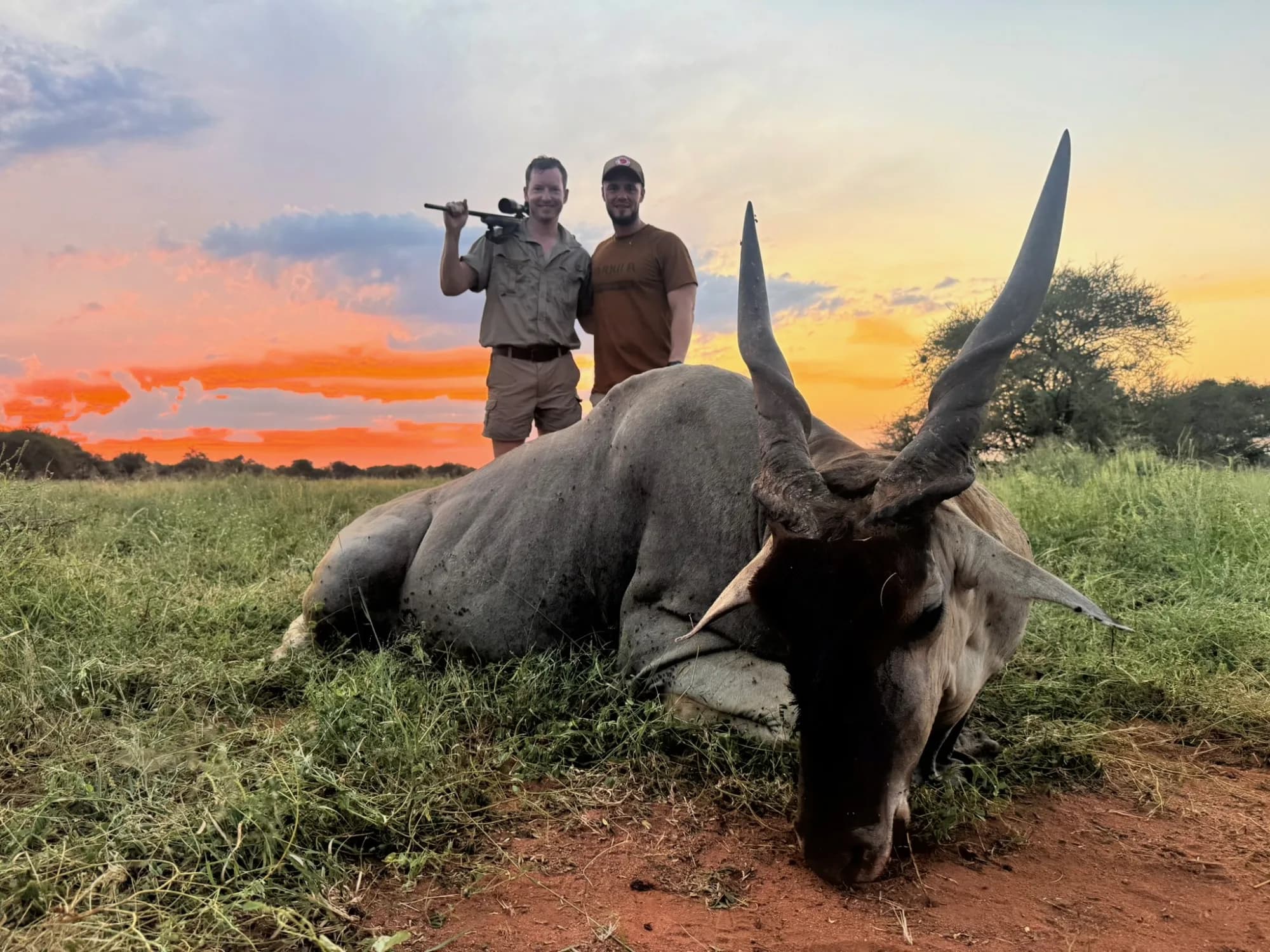
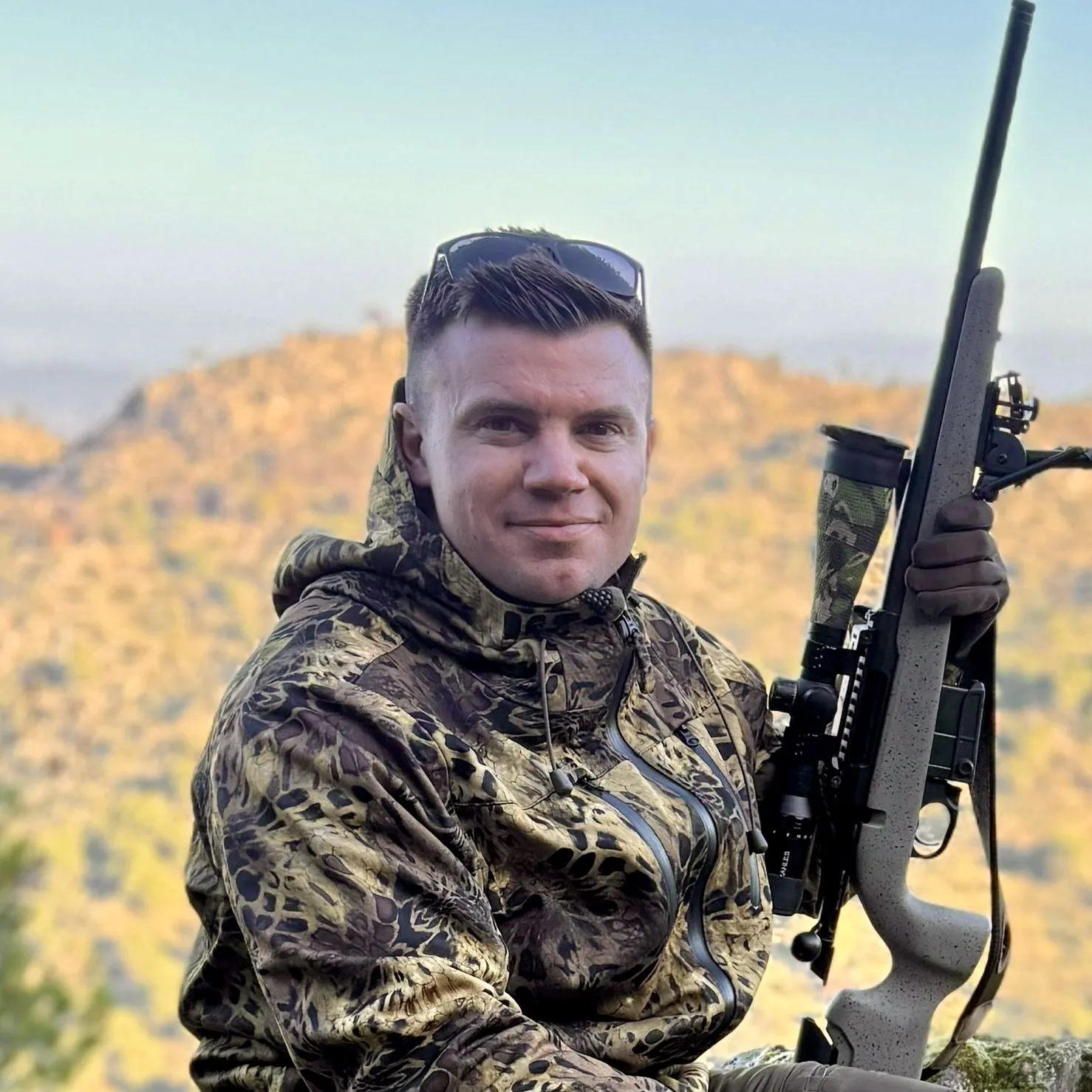
A hosted hunting trip is an international hunting experience where a representative of the booking company is physically present on the ground throughout the entire trip — not just at pickup and drop-off, but during the hunt, at meals, around the fire, and through every logistical checkpoint from landing to departure. The host manages the overall experience while local Professional Hunters (PHs) manage the hunt itself. This model sits between booking direct with an outfitter and using a hunting agent or marketplace, and it fundamentally changes who is accountable when things go right or wrong in the field.
The concept is simple, but the implications are significant. According to Safari Club International (SCI), roughly 60% of international hunting complaints involve miscommunication between the client and the outfitter — a gap that exists precisely because nobody from the booking side is there to bridge it. A host eliminates that gap by being on the ground, in real time, for the full duration of the trip. At Huntica, we built an entire company around this idea. We call it "We host where we hunt." A co-founder — either Alex Hohne or Rasmus Jakobsen — is physically present on every trip we run, across all six of our destinations from Spain's Sierra de Andujar to New Zealand's Southern Alps.
This guide is a complete breakdown of what hosted hunting means, how it works, and when it's worth the investment.
What does a hunting host actually do?
A hunting host manages everything around the hunt so the Professional Hunter can focus entirely on finding and approaching game. The host's daily role covers five distinct functions: logistics coordination, quality control, real-time problem-solving, group management, and documentation.
Logistics coordination starts before sunrise. The host confirms the day's plan with the outfitter and PHs, organizes vehicle assignments, verifies that each hunter has the right rifle, ammunition, and gear for the morning's terrain, and coordinates meal times with the lodge kitchen. On a multi-hunter trip at a property like Alex Hohne's Finca Encinarejo in Andalusia, this means managing 4-8 hunters across 2-4 PHs, each heading to different blinds or walking different ridgelines — all before the first cup of coffee.
Quality control is continuous. A host monitors whether the lodge experience matches what was promised, whether the PHs are performing at the standard the outfitter committed to, and whether game density and conditions align with what the hunter was told to expect. If a PH is consistently arriving late to the morning pickup or a lodge is underperforming on meals, the host addresses it directly — that day, not after the trip.
Problem-solving ranges from the routine (a scope knocked off zero during transit, a hunter who needs a rest day) to the complex (firearms delayed at O.R. Tambo International Airport in Johannesburg, a sudden weather system closing a mountain pass in the Southern Alps). The host has dealt with these situations before and has local relationships, backup plans, and institutional knowledge that a first-time visitor simply cannot replicate.
Group management is where the host's presence matters most on multi-hunter trips. Rotating hunting partners, staggering wake-up calls, giving a father private time in the field with his son, ensuring the quiet hunter in the group gets equal PH attention — these are human dynamics that an outfitter rarely has the bandwidth or incentive to manage. The host does it by the hour.
Documentation includes coordinating photography, maintaining shot records, and managing the taxidermy paperwork that begins the moment an animal is taken. On a South African hunt, the dip-and-pack process for trophy export requires specific TOPS (Threatened or Protected Species) permits from the Department of Forestry, Fisheries and the Environment — paperwork that is straightforward when managed by someone who has done it dozens of times and a genuine headache when left to the hunter.
How is a hosted trip different from a guided hunt?
The host is not the guide. This is the most common misunderstanding about hosted hunting, and it's worth being precise about. A Professional Hunter (PH) holds a government-issued licence to guide hunters in the field — in South Africa, this is administered by the provincial nature conservation authority; in Spain, by the Junta de Andalucia. The PH leads the stalk, ensures legal compliance, manages firearm safety, and makes the call on whether a specific animal meets the criteria for the hunt. The PH manages the hunt.
A host manages the experience. On a Huntica trip, the host — Alex Hohne or Rasmus Jakobsen — is not the person glassing the hillside for kudu or reading wind for a stalk on Iberian ibex in the Sierra Morena. That's the PH's job. The host is the person who made sure you arrived at the right concession, that the PH knows your physical limitations, that your rifle was sighted in yesterday, and that the lodge has your dietary requirements sorted. When the afternoon hunt ends and you're back at the fire, the host is reviewing the next day's plan with the outfitter, adjusting pairings if needed, and making sure the evening's energy matches what the group needs — whether that's a quiet dinner or a long night of stories.
Some hosting companies conflate these roles, especially in Southern Africa where a PH who also owns the outfitting operation might claim to "host" the trip. The difference is accountability. A PH works for the outfitter. A host works for you. When those interests align, everything is smooth. When they don't — and on any trip longer than three days, they eventually won't — having someone in your corner who isn't on the outfitter's payroll is the difference between a problem being solved quietly and a problem becoming the story you tell when you get home.
How is a hosted trip different from booking through an agent?
A hunting agent connects you with an outfitter, handles the booking paperwork, and may assist with travel logistics. A host does all of that — and then shows up on the ground with you for the entire trip. The difference is physical presence and real-time accountability.
Most hunting agents — including well-known operations like Hunting Consortium, Global Hunting Solutions, and numerous independent consultants you'll meet at the Dallas Safari Club (DSC) Convention or SCI Annual Hunters' Convention — work on commission, typically 10-20% of the outfitter's rate. Many are experienced hunters themselves who have genuinely visited the destinations they recommend. But once you board the plane, the agent's involvement becomes remote: a phone call if you have a problem, an email exchange if the outfitter underdelivered, a follow-up after you return home.
A host's involvement is the opposite of remote. At Huntica, our hosts have walked every property before it earns the Approved Ground designation. They know the PHs, the lodge staff, the backup concessions, the customs officers at the airport, and the best taxidermist in the region. When your hunt isn't going well — wrong species priority, a PH whose style doesn't match yours, lodge conditions that don't match the photos — the host restructures the situation that evening, face to face, without you needing to navigate an uncomfortable conversation with someone you just met.
The agent model works well for experienced international hunters who have established relationships with outfitters and are comfortable self-managing on the ground. But for first-time international trips, group hunts, or destinations where logistical complexity is high — South Africa, Greenland, Argentina — the gap between a phone number and a person sitting across from you at dinner is substantial.
How is a hosted trip different from a marketplace?
Online hunting marketplaces like BookYourHunt and Huntingdoor aggregate outfitter listings into a browsable catalogue where hunters can compare destinations, species, pricing, and reviews. For research and discovery, they are genuinely useful tools. The limitation is structural: a marketplace is a platform, not a partner.
Outfitters pay to list on marketplaces, and the platform earns a commission or listing fee on each booking. This creates a volume incentive — more listings generate more bookings — that doesn't always align with quality control. The marketplace vets listings to varying degrees, but the fundamental model is self-reported: the outfitter describes their own property, uploads their own photos, and sets their own pricing. A 2024 analysis by the Professional Hunters' Association of South Africa (PHASA) noted that complaints from marketplace-booked hunts were 3.2x higher per booking than complaints from agent-booked or hosted hunts. The AfricaHunting.com forums contain hundreds of threads documenting the gap between listing descriptions and on-the-ground reality.
A hosted hunting company operates on the opposite model. At Huntica, we maintain a small roster of favored partners — outfitters we have hunted with personally, whose properties we have walked, and whose PHs we know by name. We add new Approved Ground only after a co-founder has completed the full vetting process, including multiple site visits across different seasons. The trade-off is choice: a marketplace offers hundreds of options; a hosting company offers a curated handful. But what you lose in breadth, you gain in depth — and in the certainty that someone who has been there is standing next to you when you arrive.
What does "Approved Ground" mean in hosted hunting?
Approved Ground is the term for a destination that has been personally vetted by the hosting company's team and meets a defined set of standards before any client sets foot there. It is not a marketing label — it is a structured quality assurance process.
At Huntica, the Approved Ground checklist covers eight criteria that every property must pass before we host a trip there:
- Founder-hunted — A Huntica co-founder has personally hunted the property and experienced it as a guest, not just a visitor.
- Ethical game management — Wildlife populations are managed for long-term quality and sustainability, not short-term volume. No put-and-take operations. No artificially inflated densities.
- PH and staff quality — The Professional Hunters, trackers, and lodge staff are experienced, ethical, and focused on the hunter's experience.
- Accommodation standards — Lodges and camps are safe, clean, well-maintained, and consistent with what we promise. In Spain, that's the lodge at Finca Encinarejo inside the hunting area. At Magersfontein in South Africa's Northern Cape, that's a working farm lodge with hunting out the back door and honest hospitality.
- Safety and access — Terrain, infrastructure, and medical access are appropriate for the type of hunt and the group being hosted.
- Host integration — The property's operations allow a Huntica host to be genuinely embedded in daily life, not treated as an outside visitor.
- Story potential — The environment naturally creates the conditions for friendship and memory — scenic landscapes, communal spaces, the kind of setting where people talk long after the hunt ends.
- Logistical viability — International travel connections, firearm import processes, and in-country transfers are manageable within the trip timeline.
This checklist is reapplied after every hosted season. Approval is not permanent. If an outfitter's game management declines, if a PH leaves and the replacement is weaker, or if client feedback flags an issue, we pause hosting at that property until the problem is resolved. Currently, Huntica maintains Approved Ground across six destinations: South Africa (Magersfontein, Northern Cape), Spain (Sierra de Andujar), Greenland (muskox), Canada (moose and elk), Argentina (red stag and dove), and New Zealand (Himalayan tahr).
Who benefits most from a hosted hunting trip?
Hosted hunting is not for every hunter on every trip. Knowing when the model adds genuine value — and when it doesn't — is important.
First-time international hunters. If you've never hunted outside your home country, the logistical complexity of an international trip is real. Firearm import regulations vary dramatically: South Africa requires a SAP 520 temporary import permit processed through the Central Firearms Registry; Greenland's Naalakkersuisut manages muskox licences through an annual quota system; Argentina's RENAR (National Firearms Registry) has its own processes for visiting hunters. A host who has navigated these systems dozens of times removes a layer of stress that can otherwise define your trip.
Group hunts. Groups of 4-8 hunters — friends, family, or mixed — are where hosting delivers the most visible value. Managing personalities, rotating hunting partners, ensuring everyone gets fair time with the best PHs, and keeping the group's energy balanced across a 7-10 day trip is a full-time job. Without a host, that job falls on whoever organized the trip, and it usually means they spend more time managing logistics than hunting.
Corporate and incentive trips. The Huntica Brotherhood tier exists specifically for this. When a company is hosting clients, partners, or senior team members on a hunting trip, the stakes are high and the margin for error is low. A host manages the experience so the corporate organizer can participate as a guest, not a logistics coordinator. The International Council for Game and Wildlife Conservation (CIC) has noted a growing trend of corporate groups choosing hosted formats over self-organized hunts, particularly in Southern Africa and Scandinavia.
High-net-worth and time-poor hunters. Hunters who value their time above their money — typically professionals, executives, or experienced international hunters who have outgrown the DIY approach — choose hosted trips because they want someone else managing the details. They've done the self-booked trip. They've dealt with the delayed firearms, the miscommunication with the outfitter, the lodge that didn't match the website. They're paying for certainty.
When hosted hunting is unnecessary. If you've hunted with the same outfitter three or more times, you know the ground, you trust the PHs, and you're comfortable managing your own travel logistics — book direct and save the hosting fee. A good host will tell you this honestly.
What does a hosted hunting trip cost?
A hosted hunting trip typically costs 20-40% more than booking the same outfitter directly. The hosting fee covers trip design, on-the-ground management, pre-trip logistics, and post-trip coordination — services that would otherwise fall on the hunter or simply not happen.
Here's what that looks like in practice across representative destinations:
South Africa — Magersfontein plains game (Northern Cape). A 7-day trip for one hunter averages $6,000-$9,000 USD with the outfitter (daily rate plus trophy fees for a standard plains game list: kudu, springbok, gemsbok, impala, warthog, blesbuck). The hosting fee adds $1,500-$3,000, bringing the total hunting cost to $7,500-$12,000 before international flights and taxidermy.
Spain — Sierra de Andujar. A 5-7 day Iberian red deer and wild boar hunt at a property like Finca Encinarejo runs approximately EUR 4,000-EUR 8,000 with the outfitter. Hosting adds EUR 1,200-EUR 2,500.
Greenland — muskox. A muskox hunt is one of the more expensive and logistically demanding hunts in the world. Outfitter costs for a 5-7 day trip range from $8,000-$15,000 USD depending on region and season, with hosting adding $2,500-$5,000. The hosting fee here includes coordination with the Greenlandic Self-Rule Government's quota system and logistics in some of the most remote terrain on earth.
What the hosting fee covers. Trip design by the hour (not a template itinerary), pre-trip logistics including firearms permits and travel coordination, airport meet-and-greet and transfers, on-the-ground management for the full duration, real-time problem-solving, group rotation management, daily coordination with outfitters and PHs, post-trip taxidermy tracking, trophy shipping oversight, and rebooking consultation. At Huntica, every Hosted and Bespoke trip includes these services as standard.
What it doesn't cover. International airfare, travel insurance, personal gear, trophy fees beyond the agreed species list, taxidermy processing and shipping costs (which are coordinated by the host but paid by the hunter), and tips to PHs and lodge staff. We provide guidance on all of these during the planning phase — no surprises.
The honest question isn't whether the hosting fee is "worth it" in the abstract. It's whether the specific value a host provides on the trip you're planning — at the destination you're going to, with the group you're traveling with — justifies the premium. For a solo experienced hunter returning to a trusted outfitter, it probably doesn't. For a group of six friends heading to South Africa for the first time, it almost certainly does.
How to evaluate a hosted hunting company
Not every company that uses the word "hosted" delivers the same level of service. Some use the term loosely — a company representative might meet you at the airport and appear for dinner, but isn't present during the hunt or available when problems arise. Others conflate hosting with outfitting, meaning the "host" is actually the outfitter wearing a different hat.
Here are the criteria that separate genuine hosted hunting companies from those borrowing the language:
Ask who your host is by name. A real hosting company can tell you exactly which person will be on the ground with you. At Huntica, it's one of our co-founders — Alex Hohne or Rasmus Jakobsen — on every trip. If a company can't name your host, they're not hosting.
Ask how many trips the host has completed at that destination. Heritage matters. A host who has completed 15 seasons at a property in the Northern Cape knows things about that ground — seasonal game movement, PH strengths, lodge quirks, backup concessions — that cannot be learned from a brochure or a single site visit.
Ask about the vetting process. How does the company select outfitters and properties? Do they have a formal checklist? When did they last personally hunt the destination they're recommending? If the answer is vague or defensive, that tells you something.
Ask what happens if something goes wrong mid-trip. This is the stress test. A genuine hosted company has protocols, backup plans, and local relationships that activate immediately. An agent-with-hosting-language will tell you to call their office.
Ask for references from previous clients. Any company confident in their hosting will connect you with past guests. The Professional Hunters' Association of South Africa (PHASA), Safari Club International (SCI), and the Dallas Safari Club (DSC) can also be resources for verifying a company's track record.
Check for industry affiliations. Membership in PHASA, SCI, DSC, the International Council for Game and Wildlife Conservation (CIC), or equivalent national bodies doesn't ensure quality, but it indicates a company operating within established professional standards.
Frequently Asked Questions
What is the difference between a hunting host and a Professional Hunter?
A Professional Hunter (PH) holds a government-issued licence to guide hunters in the field — they lead the stalk, manage safety, and ensure legal compliance during the hunt. A host is a representative of the booking company who manages the overall trip experience: logistics, group dynamics, scheduling, quality control, and problem-solving. On a Huntica trip, the PH finds and approaches game. The host — Alex Hohne or Rasmus Jakobsen — manages everything else. They are complementary roles, not interchangeable ones.
Is a hosted hunting trip only for beginners?
No. Many hunters who choose Huntica Hosted or Huntica Bespoke trips are experienced international hunters who have previously booked direct or through agents. They choose hosted because they want someone else handling logistics so they can focus entirely on the hunt and the people around them. The Brotherhood tier is designed specifically for corporate groups where the hosting layer manages all coordination.
How many destinations does a typical hosted hunting company cover?
Genuine hosted hunting companies tend to cover fewer destinations than agents or marketplaces — because hosting requires physical presence, deep local knowledge, and personal relationships with outfitters and PHs at each location. Huntica currently hosts across six destinations: South Africa (Magersfontein, Northern Cape), Spain (Sierra de Andujar), Greenland (muskox), Canada (moose and elk), Argentina (red stag and dove), and New Zealand (Himalayan tahr). Each is Approved Ground, personally vetted by a co-founder.
Can I request specific dates for a hosted hunt?
Huntica Hosted group trips run on set dates, typically 2-3 departures per season per destination. Huntica Bespoke trips are fully private — your dates, your species list, your pace. Both formats include a Huntica co-founder as your on-the-ground host. Bespoke trips can be scheduled around your calendar within the destination's hunting season.
Do I need to bring my own firearms on a hosted trip?
It depends on the destination. For South Africa, many hunters bring their own rifles — the SAP 520 temporary import permit process is manageable with a host coordinating the paperwork. For Greenland and New Zealand, bringing firearms involves more complex logistics, and your host can arrange approved rental firearms through the outfitter. A Huntica host coordinates firearms logistics for every trip, including backup rifles at the lodge in case of transit delays — a contingency that proves its value more often than most hunters expect.
What happens if I'm not satisfied with the outfitter during a hosted trip?
This is one of the primary reasons the hosted model exists. If the outfitter, PH, or lodge conditions are not meeting the standard you were promised, the host addresses the situation directly and immediately — restructuring the schedule, rotating PHs, moving to a backup concession, or escalating with the outfitter's management. Because the host has a pre-existing relationship with the outfitter and represents multiple future bookings, they have leverage that an individual hunter simply does not. The host's job is to represent your interests on the ground.
How far in advance should I book a hosted hunting trip?
For Huntica Hosted group trips, 6-9 months in advance is typical — group departures fill based on set capacities of 4-8 hunters. For Huntica Bespoke private trips, 3-6 months is usually sufficient, though peak season dates in popular destinations like South Africa (May-September) and Spain (October-February) should be booked earlier. Greenland muskox hunts require advance booking of 9-12 months due to the government quota system administered by Naalakkersuisut.
Is hosted hunting available outside of Africa?
Yes. While the hosted model originated and is most established in Southern African safari hunting, it applies to any international destination where logistical complexity, language barriers, or unfamiliar regulatory environments create friction. Huntica hosts trips in Spain, Greenland, Canada, Argentina, and New Zealand — destinations where having a host on the ground with heritage and relationships in the region changes the experience as much as it does in South Africa.
Tell us where you want to go
If you've read this far, you probably already know whether having someone on the ground with you matters for the trip you're planning. Maybe you're heading to South Africa for the first time with a group of friends. Maybe you're an experienced hunter who's done the self-booked route and wants someone else managing the details for once. Maybe you're organizing a corporate trip and need the hosting layer so you can actually enjoy it yourself.
Whatever the reason, we'd like to hear about it. Tell us where you want to go, and we'll talk through whether a Hosted, Bespoke, or Brotherhood trip fits what you're after. No pitch — just a conversation between people who hunt.