Springbok hunting in South Africa is an open-country, spot-and-stalk pursuit of Antidorcas marsupialis — South Africa's national animal and the only true gazelle in southern Africa. The classic springbok hunt unfolds on the wide plains of the Karoo and the Northern Cape, where herds graze open ground and shots routinely stretch to 200-300 metres. A mature ram stands about 75 cm at the shoulder, weighs 30-48 kg, and carries ridged, lyre-shaped horns that hook sharply inward at the tips. Springbok are hunted across South Africa's autumn-to-spring season (March-October), with the dry winter months of May-August offering the clearest glassing. It is the most accessible African trophy: common springbok trophy fees run roughly $250-$450, while the copper, black, and white colour variants carry higher fees and together make up the four-animal "springbok slam." Huntica's Magersfontein ground near Kimberley sits in prime springbok country.
I've hunted springbok on Karoo ground since I was a boy — seven generations of my family on South African soil. Where the kudu is the ghost of the thick bush, the springbok is the gazelle of the wide horizon, and hunting him well is its own discipline.
Why is springbok the classic South African hunt?
The springbok holds a place no other South African animal can claim. He is the national animal, on the rugby jersey, and the only gazelle in the southern half of the continent — there is real cultural weight to a springbok on the wall here. In the 1800s he crossed the Karoo in trekbokken, herds counted in the millions, and he remains the signature animal of the dry interior today.
What makes him the classic hunt is the manner of it: open-country hunting, no thick bush to crawl through. You glass vast country from a high point, find a herd a kilometre off, and use every fold and dry watercourse to close the gap — knowing the last 200 metres are open ground and the shot will be the hardest part. He is the everyman's hunt by trophy fee and the connoisseur's hunt by the shooting he demands, which is why nearly every serious South African plains game safari includes him.
Where do you hunt springbok in South Africa?
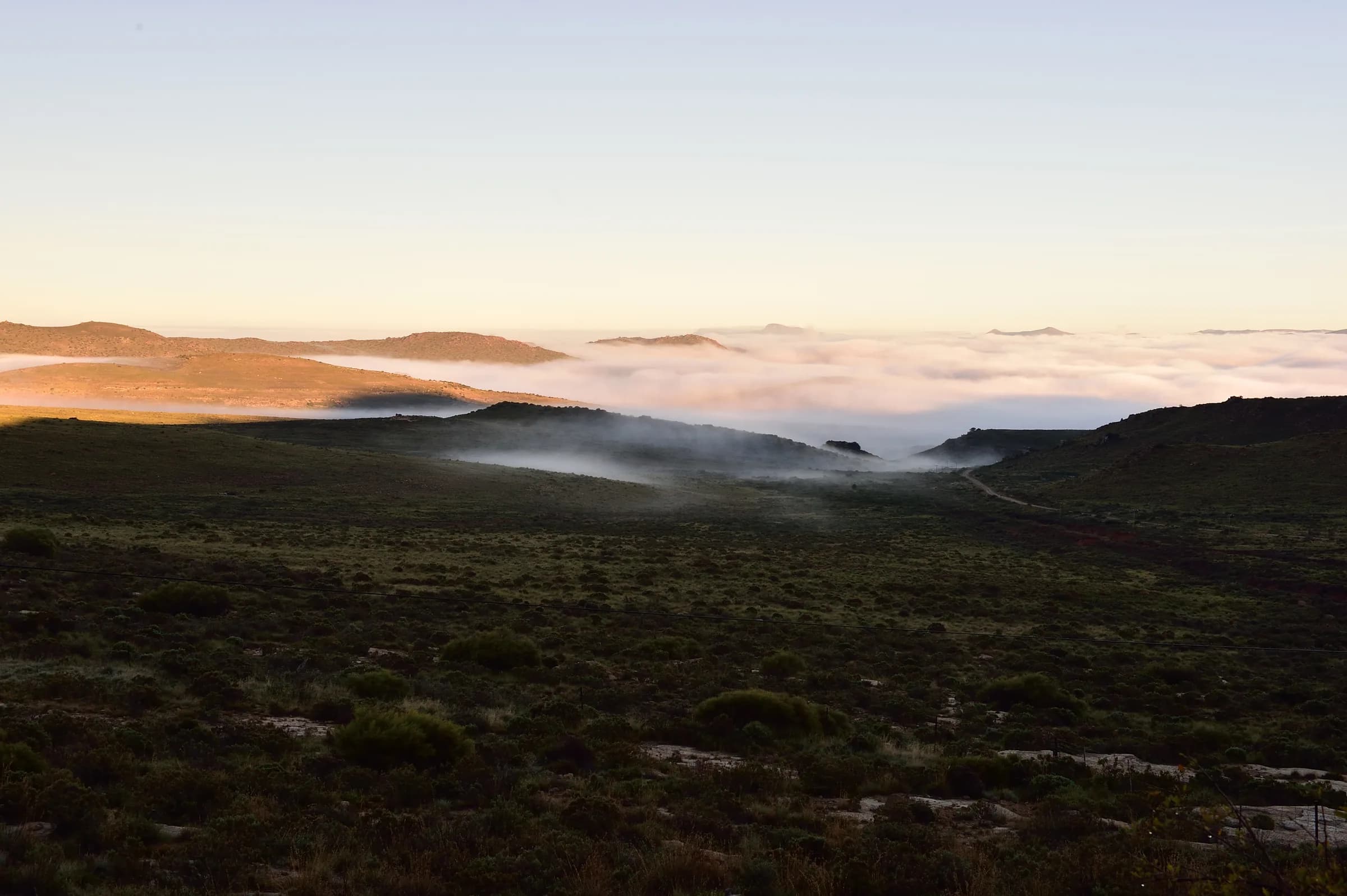
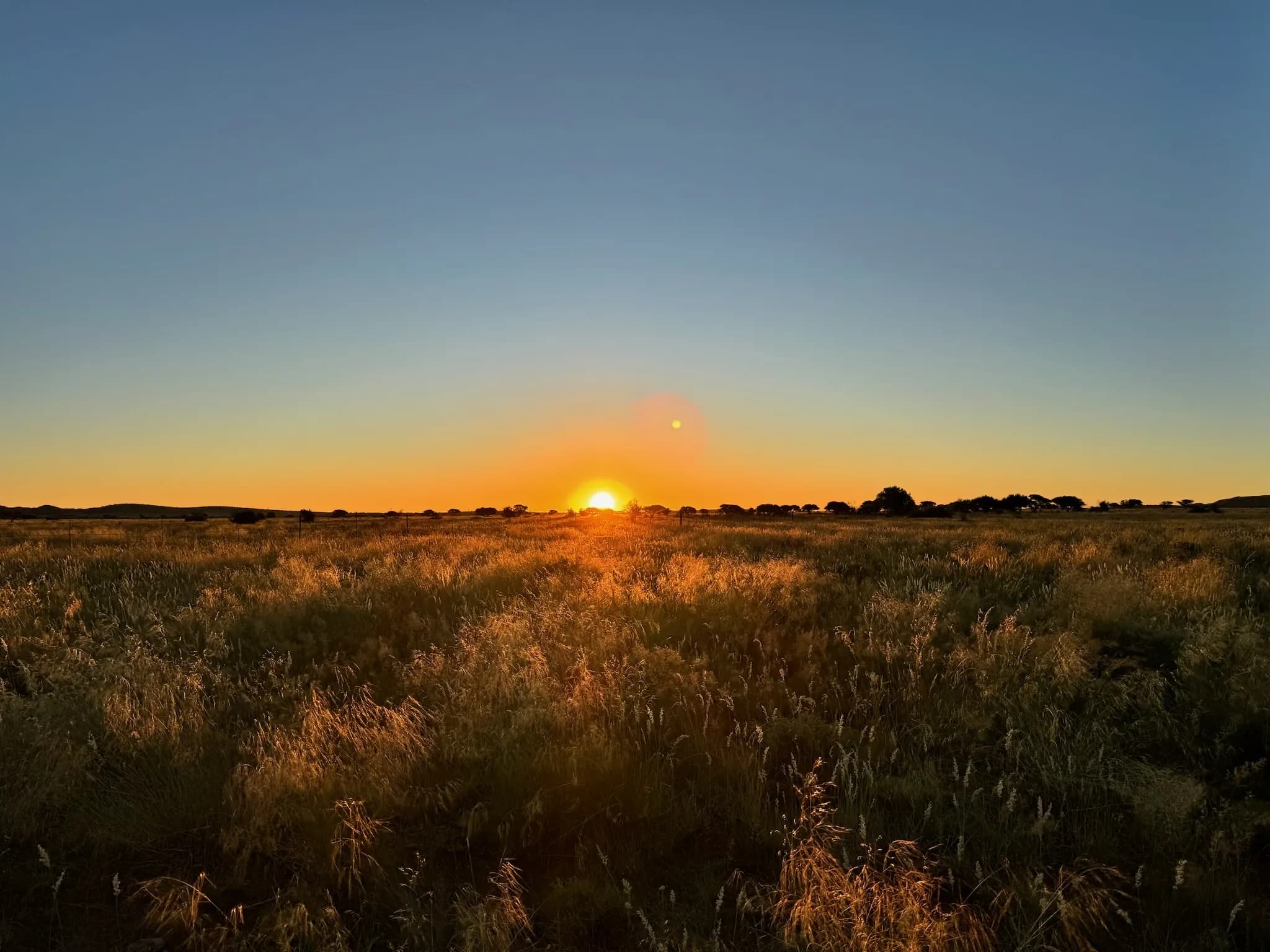
The heartland is the Karoo and the Northern Cape. Springbok are an arid-country animal, thriving on the open, sparsely vegetated plains of the Great Karoo, the Northern Cape, the western Free State, and the Karoo fringe of the Eastern Cape. This is short-grass, dwarf-shrub country — wide, treeless, built for the long view — exactly the terrain that makes springbok hunting what it is.
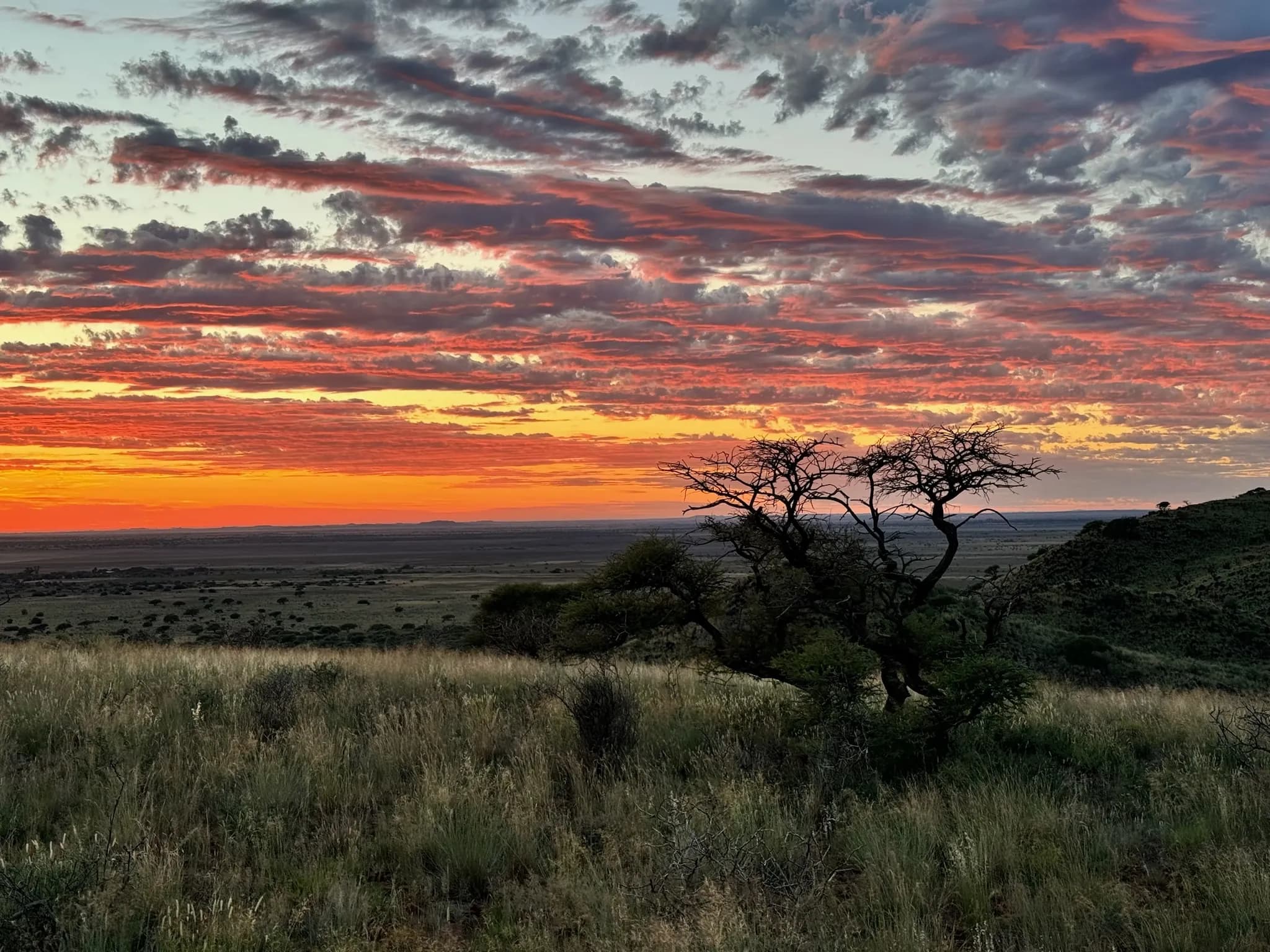
The Northern Cape around Kimberley is the centre of gravity for a modern springbok hunt, and where I host every Huntica plains game group. On Huntica Approved Ground at Magersfontein — roughly 7,000 hectares plus surrounding concessions — springbok graze the open bushveld and plains between the rock outcrops, alongside gemsbok and the wider Northern Cape plains game. The ground is genuinely target rich: high game density, careful management, and the open sightlines springbok hunting needs.
The method is open-country glassing. You work from vantage points — a koppie (rocky hillock), a vehicle on a rise, a low ridge — and glass for herds at distance. Springbok are gregarious, so you are usually picking a ram out of a group of ten, fifty, or two hundred. The stalk is then a problem of geometry: using the dongas (dry erosion gullies), dips, and dead ground to close from a kilometre to a sensible distance without the herd's many eyes catching you on the open flat. You will often belly-crawl the last stretch and shoot off a rock or a bipod.
The colour variants — copper, black, and white springbok — are bred on Karoo, Free State, and Northern Cape ranches, including ground we reach from Magersfontein. That is why the Northern Cape is the natural base for a hunter who wants all four.
When is springbok hunting season?
South Africa's core safari season runs March through October, and springbok can be hunted across all of it — many Karoo properties hunt them year-round, since they are managed in good numbers on open farmland. But the season you choose shapes the experience.
March-April (autumn / the rut): The springbok rut falls in autumn, and rams are active and visible as they tend ewes and contest territory. The veld still carries some green, temperatures are comfortable (18-28°C by day), and coats are in good condition. A fine time to hunt, with rams moving well in daylight.
May-August (winter — peak): This is when I bring most springbok and slam hunters. The Karoo winter is dry and clear, and visibility across the plains is at its best — exactly what long-range glassing wants. Mornings are genuinely cold (often -2 to 5°C), days warm to 15-22°C, and the low light makes spotting easy. Coats are prime for the taxidermist. The trade-off is wind, the enemy of a 280-metre shot, so we hunt hard in the still early hours.
September-October (early spring): Conditions warm and dry out further, and game concentrates around water. Hunting stays productive, though heat haze builds through midday and can blur long shots. Lambing begins in spring, and well-run properties focus on rams.
For a dedicated springbok hunt — and for the slam — book May through August. Clear, cold, dry conditions give you the glassing and the steady shooting this animal rewards.
The springbok slam explained: common, copper, black, and white
The "springbok slam" is the goal of taking all four recognised colour forms of springbok — common, copper, black, and white — on the same species. It is one of the most attainable slams in world hunting, and one of the most striking sets you can put on a wall.
Here is what the four are:
- Common springbok — the natural, wild-type colour: a cinnamon-fawn back, a bold dark band along each flank, and a white belly and face. The lowest trophy fee of the four.
- Copper (kopper) springbok — a colour morph in rich, coppery-brown tones, the back and flank band glowing a deep metallic russet.
- Black springbok — a dark morph, near chocolate-to-charcoal with a paler face blaze. Dramatic and unmistakable on the veld.
- White springbok — a pale, creamy-white morph that almost glows against the brown plains. Not albino; eyes and horns are normally pigmented.
The common springbok is the natural wild colour; the copper, black, and white forms are managed colour variants bred on Karoo, Free State, and Northern Cape ranches. Their trophy fees sit above the common springbok, and that fee difference is most of what separates the slam from a single common ram.
The appeal is straightforward: four distinct trophies and a complete matched set of the same elegant animal in four colours. It gives a short trip real structure and folds neatly into a longer safari as a running goal across the week. Best of all, it is achievable — on ground that holds all four, a hunter who shoots well can complete it in a single trip, and the Safari Club International recognises the four-colour slam as a formal record.
What caliber and shot placement work for springbok?
This is the section that matters most, because springbok hunting is, above all, a shooting test. The animal is small — a ram's body is roughly the size of a large dog — and the shots are long. More springbok are missed or wounded by poor long-range shooting than almost any other plains game species — not because the rifles are wrong, but because the hunter has not practised at distance.
Caliber — flat-shooting and easy on the shoulder. Springbok have no heavy bone or deep chest, so you do not need a magnum. You need a flat trajectory, low recoil, and a rifle you can shoot with precision past 250 metres.
- Ideal: .243 Winchester (90-100 grain), 6.5 Creedmoor (120-140 grain), .25-06 Remington, or .260 Remington — fast, flat, light-recoiling, accurate. The .243 is a classic Karoo springbok rifle.
- Also excellent: .270 Winchester (130 grain), .257 Roberts, 7mm-08 Remington.
- One-rifle safari: A .270 or .308 carried for kudu and gemsbok takes springbok cleanly — just place the shot behind the shoulder to spare meat and cape on such a small animal.
Bullet: Standard cup-and-core or polymer-tip bullets — Hornady InterLock, Nosler Ballistic Tip, Sierra GameKing — are ideal. Springbok do not demand the controlled-expansion bullets kudu and eland require; you want one that opens reliably and quickly on a light-framed animal.
Why flat-shooting matters: Routine shots are 200-300 metres, and the Karoo almost always has wind. Know your drop and wind drift, and arrive with a dialled scope and your dope confirmed to 300 metres.
Shot placement: The vital zone is small — heart and lungs together are about the size of a side plate, roughly 15 cm. On a broadside animal, place the crosshair behind the shoulder crease, one-third up from the brisket, through both lungs. Quartering away, aim for the off-shoulder and angle forward through the chest. Avoid the high-shoulder "drop" shot past 150 metres — the target is too small to risk. A well-hit springbok rarely goes far.
The discipline that gets it done: Build a rock-solid rest — bipod, sticks, or a daypack over a rock. Read the wind every time. Wait for your ram to step clear of the herd and stand still; in a milling group you want a clean, settled animal. Then breathe and press. The hunter who practises prone and off sticks to 300 metres is the one who fills his slam.
How do you judge a springbok trophy?
Both rams and ewes carry horns, so the first job is telling them apart — and the second is reading the ram for age and quality. Springbok horns are scored by measuring each horn along the front curve, with the Safari Club International method adding base circumferences so mass counts. Rowland Ward records the single longest horn, with a minimum of 14 inches.
Ram versus ewe: A ram's horns are noticeably heavier — thicker through the base, more deeply ridged, with a more pronounced inward hook. Ewe horns are thinner, straighter, lighter. On a mature ram the bases are robust and heavily ridged; that mass is the giveaway.
The benchmark: A good mature ram measures 13-14 inches per horn — the target most hunters set. Anything 14 inches and over qualifies for Rowland Ward and is a genuinely fine trophy; 15 inches and beyond is exceptional and increasingly rare. Below 12 inches you are usually looking at a young ram or an ewe — let him grow.
Field-judging cues: A springbok's ear is about 15 cm (roughly 6 inches). If the horns stand clearly taller than the ears with heavy, ridged bases and a deep inward hook, you have a mature ram worth taking. Trust your PH — he can call mass and length through the spotting scope faster than you can range the animal. Colour does not change the scoring: a copper, black, or white ram is judged on the same horn standards as a common one. The colour is the collector's prize; the horn is the trophy.
A word on the pronk. The springbok's signature behaviour — pronking, or stotting — is the stiff-legged vertical leap, up to two metres high, back arched and a fan of long white hair flared open along the spine. That dorsal flap of skin and hair gives the species its name (marsupialis, from the pouch-like fold) and releases scent as it opens. For a hunter, a herd that suddenly starts pronking has sensed you: freeze, let them settle, and recheck your wind before you move.
What does a springbok hunt cost?
Springbok costs break down the same way every South African hunt does — daily rates, trophy fees, and trip expenses. The numbers below are realistic, market-typical, and transparent.
Trophy fees:
- Common springbok: $250-$450 — the most accessible trophy fee in African hunting, and the reason springbok appears on almost every plains game list.
- Copper (kopper) springbok: roughly $600-$1,200, as a managed colour variant.
- Black springbok: roughly $700-$1,500.
- White springbok: roughly $500-$1,000.
- The full slam (all four): expect roughly $2,500-$4,500 in combined trophy fees, depending on the ground and the variants' quality.
Daily rates: $350-$500 per day in the Northern Cape, covering accommodation, meals, PH services, trackers, and vehicles — the same whatever you hunt that day.
Springbok as an add-on species: This is where springbok is unbeatable value. If you are already at Magersfontein for a kudu and gemsbok safari, the marginal cost of adding a common springbok is just the trophy fee — $250-$450 — because you are on the ground anyway. One of the best-value additions in African hunting, full stop.
Springbok as a dedicated slam trip: The slam also stands on its own as a focused short hunt. A realistic self-booked example: 5 days at $400/day is $2,000 in daily rates, plus roughly $3,000-$4,000 in slam trophy fees — about $5,000-$6,500 per hunter before flights, taxidermy, and shipping. Add a gemsbok and you have a complete open-country safari in under a week.
With Huntica hosting: Springbok — and a full four-colour slam — folds into a Huntica Hosted Northern Cape plains game trip, quoted as one all-in figure per hunter for a 7-day safari covering several species, with hosting, transfers, accommodation, meals, and the agreed trophy list included. A Huntica Bespoke private trip built around the slam sits at the higher end. Read our full breakdown of hunting safari costs for how these numbers compare across destinations and species.
What is not included: international flights (€800-€2,500 from Europe, $1,200-$3,000 from the US), taxidermy and shipping (see below), firearm import permits, travel insurance, and gratuities (industry standard: 8-10% to the PH; €15-€25/day for trackers and camp staff).
Pairing springbok with gemsbok and the Northern Cape mixed bag
Springbok and gemsbok are the classic arid-country pair, and the reason most hunters who want one want both. The gemsbok (Cape oryx) is the iconic animal of the Kalahari and the Northern Cape — a powerful, desert-adapted antelope carrying long, rapier-straight horns, the perfect counterweight to the small, elegant springbok. Hunt them on the same open ground, with the same glassing-and-stalk method and flat-shooting rifle, and you have the heart of a Northern Cape safari. See our gemsbok hunting guide for the full picture.
Around those two, the open-plains mixed bag almost assembles itself. The Karoo and Highveld plains hold a natural set of open-country species that all hunt alike:
- Black wildebeest — the highveld plains specialist, comical and tough, a true open-ground trophy.
- Red hartebeest — a striking, high-shouldered antelope of the open veld.
- Blesbok — a plains animal often taken alongside springbok on the same farms, and a fine, accessible trophy.
- Gemsbok — the anchor of the arid-country list.
On Magersfontein, a springbok-anchored trip scales up easily. The same ground reaches kudu in the broken country, plus sable, roan, buffalo, and managed colour variants — so a hunter can add the heavyweight species without changing camp. That range, out the back door of one lodge, is why I base Huntica's plains game hunting here.
Taxidermy and getting your springbok home
A springbok mount is one of the most rewarding small trophies in African hunting — and a full four-colour slam, displayed together, is a genuinely beautiful wall. Here is what to expect from skinning shed to your door.
Mount options:
- Shoulder mount: the standard, showing head, neck, and bold flank band — roughly $400-$900 in South Africa. Four side by side make a striking slam set.
- Full mount (life-size): very popular for springbok, since the animal is small and a pronking pose is iconic. Roughly $1,200-$2,500.
- Skull mount (European): cleaned skull and horns, simple and light, $150-$300.
- Flat skin / tanned hide: the springbok's coat is one of the most beautiful in Africa, the variant colours especially. A common cape runs $100-$250; tanned hides are prized as rugs.
Dip-and-pack: Before any trophy leaves South Africa it must be treated and packed for export — a standard, regulated step handled by the skinning team or a dedicated facility, at roughly $80-$150 per trophy.
Shipping: Trophies travel by sea freight in custom wooden crates (4-6 months to Europe, 6-8 months to the US) or by air at roughly three times the cost. A crate of several springbok mounts and a gemsbok ships economically because the animals are compact.
Permits: Springbok is not on CITES, so no CITES permit is required for the EU, US, or most markets — you need a standard South African veterinary export certificate plus your home country's paperwork (US hunters file a USFWS Form 3-177).
For the full step-by-step on mounts, crating, freight, and customs, read our trophy shipping and taxidermy guide. On a Huntica trip, we coordinate the whole chain with our favored partner taxidermists — and for a slam, we make sure all four capes are tagged and handled as a matched set from the moment they reach the skinning shed.
What a hosted springbok hunt looks like with Huntica
A springbok hunt with Huntica is open-country hunting at its purest — glassing, planning, and a shot that has to be earned. No driving up to animals. No sitting over water. You walk, you glass, and you make the stalk work.
A typical morning starts with coffee in the cold dark and a walk to a vantage point as the light comes up. From a koppie we glass the plains — springbok flowing across the open veld, gemsbok dark against the dawn, the country opening for kilometres. When we pick a ram worth taking, the stalk becomes a geometry problem: which donga, which fold lets us close from 800 metres to 250 without the herd's hundred eyes finding us on the flat. The last stretch is often on your belly. Then a solid rest over a rock, the wind read once more, and the wait for your ram to step clear and stand. That moment — small animal, long shot, steady hold — is the whole hunt distilled.
For slam hunters, I sequence the four colours across the days, saving the trickiest morph for once your shooting is dialled in. Expect to walk and glass hard, and to be a better long-range shot at the end of the week than at the start.
What makes this different from a self-booked hunt is the layer above the PH. The PH runs the stalk and calls the trophy; the host runs the experience — matching you to the right PH, deciding when to break off a springbok stalk for a gemsbok herd that has fed into range, and keeping the day and the logistics running while you hunt. That is what we host where we hunt means: out the back door of the Magersfontein lodge, skinning shed on site, a host with you every day.
Frequently Asked Questions
What is the springbok slam?
The springbok slam is the goal of taking all four recognised colour forms — common, copper (kopper), black, and white — on the same species. The common springbok is the natural wild colour; the other three are managed colour variants bred on Karoo, Free State, and Northern Cape ranches. Recognised as a formal slam by Safari Club International, it is one of the most attainable slams in world hunting and can often be completed in a single trip on ground that holds all four. Most of the cost difference from a single springbok is trophy fees on the three managed variants.
What is the best caliber for springbok?
A flat-shooting, low-recoil caliber is ideal, because springbok are small animals taken at long range — 200-300 metres is routine on open Karoo ground. The .243 Winchester is a classic springbok rifle; the 6.5 Creedmoor, .25-06 Remington, and .270 Winchester are equally well suited. Standard cup-and-core or polymer-tip bullets are perfect — springbok do not need the heavy bullets kudu or eland require. A .270 or .308 carried for larger plains game takes them cleanly too. Far more important than caliber is practice: confirm your drop and wind drift to 300 metres before you travel.
Why do springbok pronk?
Pronking — also called stotting — is the springbok's signature stiff-legged vertical leap, up to two metres high, back arched and a fan of long white hair flared open along the spine. That dorsal flap of skin and hair gives the species its scientific name, Antidorcas marsupialis, from the pouch-like fold. Springbok pronk in play, when alarmed, and to signal a predator it has been spotted. For a hunter, a herd that begins pronking has sensed you — freeze, let them settle, and recheck your wind.
Can I complete the springbok slam in one trip?
Yes. On ground that holds all four colour forms — which the ranches around our Magersfontein base do — a hunter who shoots well can complete the slam inside a single trip, often within four to six days. The limiting factor is rarely availability; it is marksmanship, because each animal is a small target at distance. We sequence the four colours across the days, saving the trickiest morph for once your shooting is dialled in.
Is springbok meat good to eat?
Springbok is widely regarded as some of the finest venison in South Africa — lean, fine-grained, and mild. Springbok loin grilled over coals is a Karoo staple, and springbok biltong (dried, cured strips) is prized across the country. The meat is very low in fat and free of hormones and antibiotics; a ram yields a modest amount given its size, but the quality is exceptional. On a Huntica trip, your springbok will be on the braai.
How is springbok hunting different from impala hunting?
They are different hunts entirely, which is why many hunters want both. Impala is a bushveld animal hunted in cover at 80-200 metres, where the challenge is stalking close past a herd's collective alarm. Springbok is an open-plains gazelle hunted across the bare Karoo at 200-300 metres, where the challenge is glassing vast country and then making a precise long shot on a small target. Impala rewards your stalking; springbok rewards your marksmanship and reading wind at distance — and offers the four-colour slam, which impala does not. See our impala hunting guide for the bushveld side of the comparison.
Tell us where you want to go
If the springbok has caught you — the open Karoo horizon, the long shot you have to earn, the idea of four colours on one wall — the next step is a conversation. Tell us where you want to go, and I will walk you through what a hosted springbok hunt, or a full four-colour slam, looks like on the Magersfontein ground in the Northern Cape, on Huntica Approved Ground. No brochures, no price lists. Just a straight conversation between hunters about the national animal and the wide country he lives on.