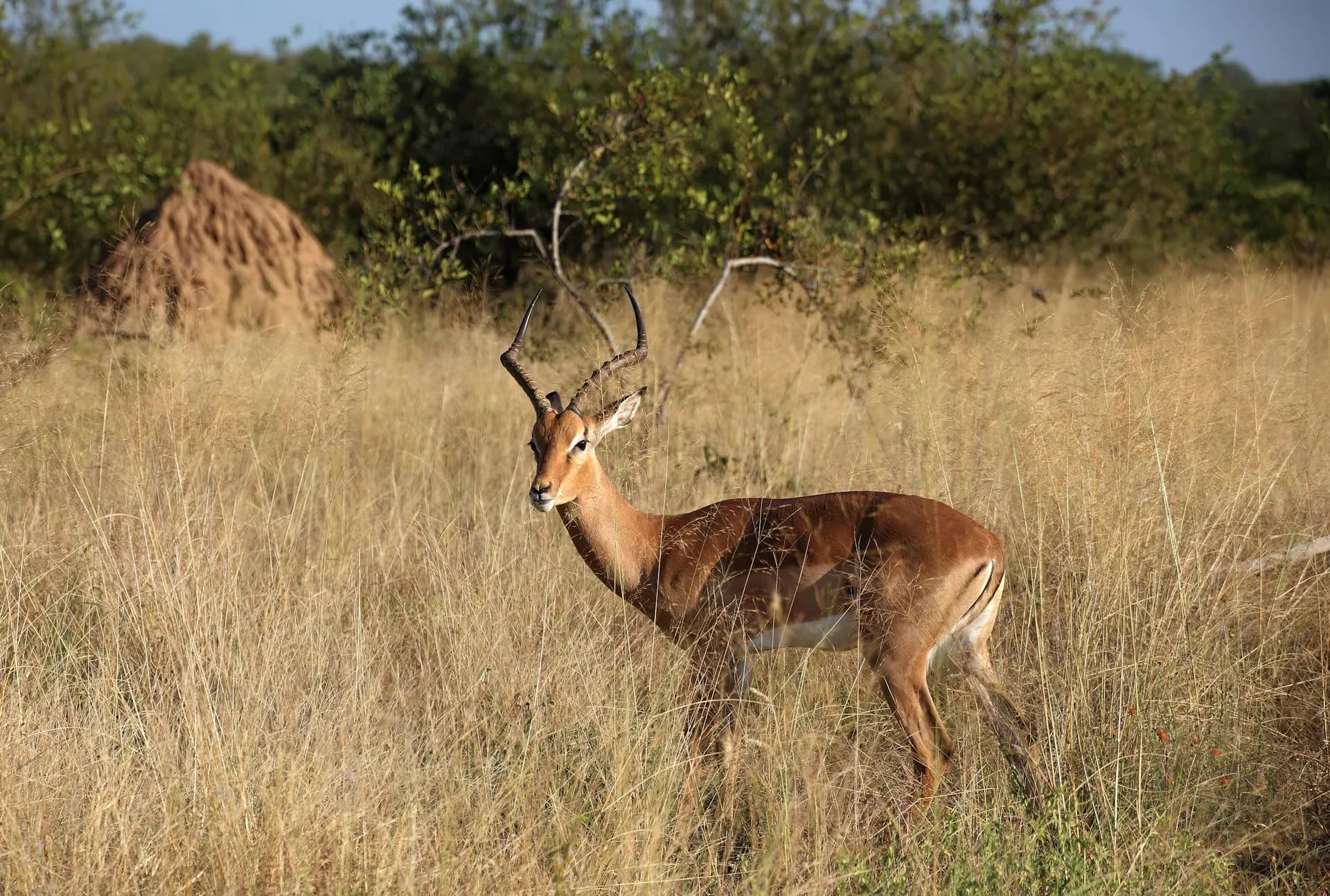

Impala hunting in South Africa is a spot-and-stalk pursuit of Aepyceros melampus — the most abundant and widely distributed antelope on the African subcontinent, found across the Eastern Cape, Limpopo, KwaZulu-Natal, and the Northern Cape provinces. A mature impala ram stands 90 cm at the shoulder, weighs 50-75 kg, and carries elegant lyre-shaped horns that sweep upward and backward before curving inward at the tips. Impala are hunted year-round in South Africa, with the best trophy quality from March through October during the cooler months.
For first-time African hunters, impala is the species I recommend starting with. Not because it is easy — a big impala ram in the Eastern Cape bushveld will test your stalking, your patience, and your shooting under pressure — but because it is accessible, the populations are healthy, the trophy is beautiful, and the meat is among the finest wild protein on the continent. Every serious plains game safari includes impala, and many of the best hunting stories I have heard began with a ram that was harder to take than anyone expected.
Why is impala the perfect first African trophy?
Impala occupies a unique place on any African safari because it delivers an authentic, challenging hunting experience at an entry-level price point. A trophy ram costs $300-$600 in trophy fee — a fraction of kudu, sable, or nyala — yet the animal itself is beautiful, the horns make a striking mount, and the hunting is genuinely engaging.
The impala's accessibility does not mean it is a pushover. Impala live in herds of 15-50 animals, and those herds have 30-100 eyes, ears, and noses working as a collective alarm system. A single ewe spotting movement at 200 metres triggers an explosive scatter — the famous impala jump, where the entire herd erupts in 3-metre-high leaps in every direction, covering ground at 60-80 km/h. One nervous animal ruins the approach for everyone.
What makes impala ideal for a first safari is the volume of encounters. On quality Eastern Cape ground, you will see impala every day — often multiple herds. Each encounter is a chance to practice stalking, reading wind, judging trophy quality, and controlling buck fever. By the time you take your ram on day 2 or 3, you have had five or six approaches, learned to move in the bush, and built the confidence that carries through the rest of the trip when you are after kudu or wildebeest.
The trophy itself deserves respect. A good impala shoulder mount — the lyrate horns, the rich rufous-and-white colouring, the clean lines — is one of the most elegant wall mounts in African hunting. Many experienced hunters who have taken dozens of species still consider a good impala ram one of their favourite trophies.
Where to hunt impala in South Africa
Impala are found across South Africa's bushveld and savanna regions, but trophy quality and hunting experience vary significantly by province.
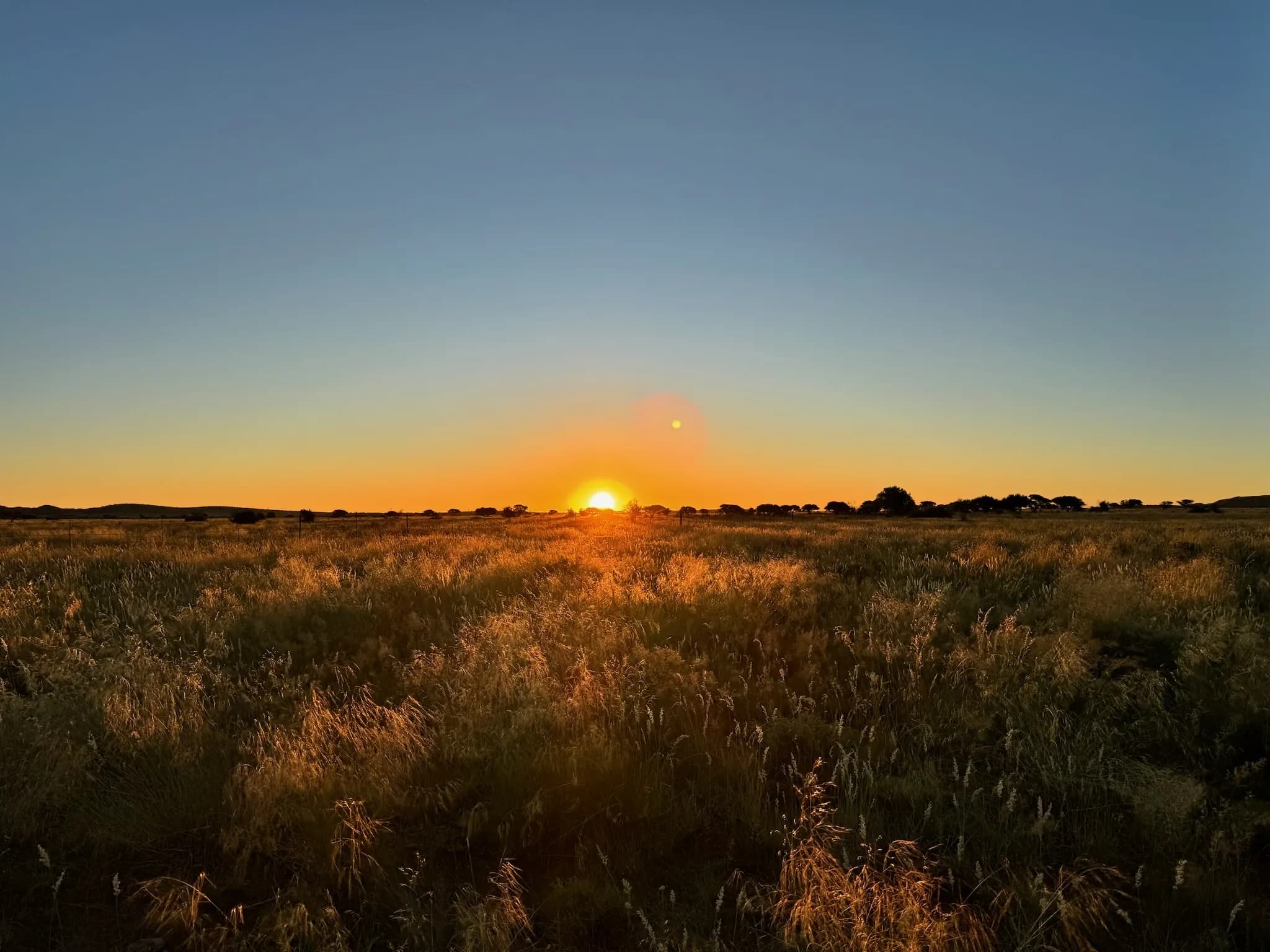
Eastern Cape: Impala were introduced to the Eastern Cape and have thrived on the mixed bushveld and valley terrain. The region offers a unique advantage — impala share ground with kudu, bushbuck, warthog, blue wildebeest, and other plains game. Shot distances in the Eastern Cape: 80-200 metres through spekboom and valley bushveld.
Limpopo: The bushveld heartland of South Africa. Limpopo holds the country's densest impala populations — they are the most common antelope species in the province. Hunting is typically in denser bush than the Eastern Cape, with shorter shot distances (50-120 metres) and more close-quarters encounters. Limpopo produces good trophy rams, though the hunting experience is different — hotter, flatter, and thicker bush.
KwaZulu-Natal (KZN): The Zululand thornveld around Hluhluwe, Mkuze, and the northern KZN bushveld holds healthy impala populations. KZN offers a subtropical setting with lush vegetation — beautiful country but challenging stalking in dense thornveld. Trophy quality is good; a 23-24 inch ram is realistic.
Northern Cape (Kimberley area): On Huntica Approved Ground at Magersfontein (~7,000 hectares), impala are present alongside sable, roan, buffalo, and the Northern Cape's signature plains game. The drier Kalahari-edge terrain makes for longer shots and a different hunting experience than EC.
For a first African safari that centres on impala alongside kudu and other plains game, our Magersfontein ground in the Northern Cape is where I host every Huntica trip. The species diversity, the terrain variety, and the overall safari experience are unmatched.
When is impala hunting season?
Impala can be hunted year-round in South Africa, with no closed season in any province. That said, the timing of your trip affects trophy quality, animal behaviour, and your overall experience.
March-April (early season): The impala rut peaks in late April through May in most South African provinces. In the weeks before the rut, territorial rams begin establishing dominance — chasing rivals, roaring (a distinctive guttural grunt-snort), and herding ewes into breeding groups. This pre-rut period is excellent for trophy hunting: rams are active, visible, and distracted by territorial behaviour. Vegetation is still green from summer rains but beginning to thin. Temperatures are comfortable: 18-28°C days, 8-15°C nights.
May-July (peak season — the rut and winter): The impala rut runs May through June, when dominant rams hold harems of 15-30 ewes and defend territories aggressively. Rutting rams are vocal, active throughout the day, and less cautious than at any other time. However, they are also constantly moving — staying in one spot long enough for a shot can be the challenge. Post-rut (July), exhausted rams become solitary and easier to approach but harder to locate. Winter vegetation is at its driest, improving visibility dramatically. This is the overlap with prime kudu season, making it ideal for a combined hunt.
August-October (late season): Dry, clear conditions. Game concentrates near water sources. Bachelor herds of rams reform after the rut, and some of the best trophy rams are found in groups of 5-10 mature males. Vegetation is sparse — sightlines extend to 200+ metres in many areas. Temperatures begin climbing in October (22-32°C). Late season impala hunting can be excellent.
November-February (summer — off season): Hot, wet conditions. Vegetation is thick, making stalking difficult and shots shorter. Impala lambing season peaks in November-December, and most concessions avoid hunting ewes during this period. Not the best time for a dedicated impala hunt, though rams can still be taken.
For a first impala hunt combined with kudu and other plains game, book May through July. You get the rut, the best weather, and the widest species availability.
What caliber for impala?
Impala are not big animals — a mature ram weighs 50-75 kg with a relatively light bone structure and a narrow chest cavity. They do not require heavy calibers, and in fact, heavy magnums are counterproductive — excessive meat damage on a 60 kg animal is wasteful, and the heavier recoil can lead to flinching and poor shot placement.
Minimum: .243 Winchester with 100-grain bonded bullets. Perfectly adequate for impala inside 200 metres. The .243 is an excellent choice for smaller-framed hunters, younger shooters, or anyone who shoots best with minimal recoil.
Ideal: .270 Winchester (130-150 grain) or .308 Winchester (150-165 grain). These are the sweet spot for impala — enough energy for clean results at any reasonable range, flat-shooting, and moderate recoil. On a multi-species safari where you might also shoot kudu, wildebeest, or zebra, the .308 or .270 handles everything on the plains game list.
Also excellent: .30-06 Springfield (150-165 grain), 7mm-08 Remington (140 grain), 6.5 Creedmoor (140 grain). All perform well on impala.
One-rifle safari: If you are bringing a single rifle for a plains game safari that includes kudu, impala, wildebeest, and warthog, the .300 Winchester Magnum with 180-grain bonded bullets handles everything. You can use it on impala — it works — but choose your shot carefully. A 180-grain .300 Win Mag through the shoulder of a 60 kg impala is heavy medicine. Heart/lung shots behind the shoulder minimize meat damage.
Bullet selection: Standard soft-point or polymer-tip bullets are fine for impala — their hide and bone structure does not demand the controlled-expansion or monolithic bullets required for kudu or eland. Hornady InterLock, Nosler Ballistic Tip, or Federal Power-Shok all perform well. If your safari rifle is loaded with premium bonded bullets for kudu, those work on impala too — they just will not expand as dramatically.
How does shot placement work on impala?
Shot placement on impala is straightforward compared to larger, heavier-boned species — but precision matters because the vital zone is smaller and the animal reacts faster.
The heart/lung shot (broadside): Place the crosshair directly behind the shoulder crease — the vertical line where the front leg meets the body — and one-third up from the bottom of the chest. The impala's vital zone (heart and lungs combined) is roughly the size of a dinner plate — about 18-20 cm in diameter. A bullet through this zone produces a quick, clean result. A well-hit impala typically runs 20-50 metres and goes down. They do not carry lead the way kudu or eland do — a good shot ends it fast.
High shoulder (the drop shot): Place the bullet at the intersection of the shoulder and the spine — roughly where the top of the shoulder crease meets the back line. This impacts the spine and central nervous system, dropping the impala where it stands. It is a smaller target (10 cm circle) and should only be attempted inside 150 metres with a stable rest. The advantage: no tracking, no follow-up shot, immediate recovery.
Quartering away: Aim for the off-shoulder. On an impala, the bullet needs to travel through the rear lung area and exit through the opposite shoulder — approximately 25-30 cm of penetration. Standard calibers handle this easily.
Quartering toward: Usable on impala inside 150 metres. The shoulder bone is lighter than on kudu — a .270 or .308 will punch through the near shoulder into the vitals. Aim for the point of the near shoulder.
The reality in the field: Impala are nervous, alert, and fast. A broadside impala standing in the open at 120 metres sounds like an easy shot — until you factor in the bush between you, the wind shifting, the ewe that just looked your way, and your heart rate from the stalk. When the shot is there, take it calmly. Impala do not give you many second chances — the herd will be 300 metres away and running within 3 seconds of the first shot.
How do you judge an impala trophy?
Impala horns are scored by measuring the length of each horn along the front surface from base to tip. SCI records the combined length of both horns. Rowland Ward measures only the longest horn.
What the numbers mean:
- SCI minimum entry: 54 inches (combined). This represents a mature ram but not necessarily an old one.
- Average mature ram (Eastern Cape): 20-22 inches per horn (40-44 inches combined). A representative, respectable trophy on well-managed ground.
- A good ram: 23-24 inches per horn (46-48 inches combined). An older animal with deeper curl and wider lyre shape. This is the target most experienced hunters set.
- An exceptional ram: 25-27 inches per horn (50-54 inches combined). Top-end genetics and age. A 27-inch impala ram is genuinely rare — comparable to a 55-inch kudu bull in relative difficulty.
- Record class: 28+ inches per horn. SCI world record exceeds 72 inches combined. These are extraordinary animals that represent a lifetime of favourable genetics and habitat.
Field judging tips: The impala's ear length is roughly 15-16 cm (6 inches). If the horn tips extend above the ear tips when viewed from the front, the ram is likely 20+ inches. If the horns clearly exceed the ears by half again, you are looking at 24+ inches. Look for deep, wide lyre shape — horns that sweep outward before curving inward at the tips indicate maturity. Thick, ridged bases (visible ridging on the lower third of the horn) indicate an older animal. Smooth, thin horns mean a young ram.
Mass matters. A 22-inch ram with heavy, deeply ridged bases and wide spread may score higher on SCI than a 24-inch ram with thin, narrow horns. Total impression in the field often comes from mass and shape rather than raw length.
What does an impala hunt cost?
Impala is the most affordable trophy species on any African plains game safari — making it accessible to first-time hunters and a natural addition to any trip focused on larger species.
Trophy fee: $300-$600 per impala ram. Many Eastern Cape and Limpopo outfitters include one impala in a standard plains game daily rate package, meaning your first impala may carry no additional trophy fee. When priced separately, trophy fees are typically $350-$500.
Daily rates: $350-$500 per day in the Eastern Cape (same rates as for kudu or any other plains game — the daily rate covers accommodation, meals, PH services, trackers, and field vehicles regardless of species hunted).
Total cost for an impala-focused day: If impala is part of a broader 7-day Magersfontein safari, the marginal cost of adding an impala to your kudu hunt is just the trophy fee: $300-$600. You are on the ground anyway, walking for kudu, and impala appear during those walks. It is one of the best value additions in African hunting.
Standalone impala trip: There is no such thing, in practical terms. No one flies to South Africa specifically for impala. But impala is the backbone species of almost every Eastern Cape and Limpopo plains game safari — the animal you will see most, encounter most, and often take first. Allow $300-$600 in trophy fee and consider it the gateway species of your safari.
With Huntica hosting: Impala is included in virtually every Huntica Hosted Magersfontein plains game trip. A standard Huntica group safari — 7 days, kudu + 3-4 other plains game species — is quoted as one all-in figure per hunter. Impala is almost always on the species list. See our full hunting costs breakdown and our kudu hunting guide for the broader Northern Cape picture.
What does a hosted impala hunt look like with Huntica?
Impala hunting on a Huntica trip is woven into the fabric of your Magersfontein safari — it happens naturally during kudu walks, early-morning game drives, and those quiet moments when the bush offers an opportunity you were not specifically chasing.
A typical scenario: it is day 2 of a 7-day Huntica Hosted plains game safari. You have been walking since 05:30, glassing ridgelines and valleys for kudu. At 07:15, your PH spots a bachelor herd of impala rams in a clearing 300 metres ahead — seven rams feeding at the edge of a spekboom thicket. He glasses them through the spotting scope and picks out a mature ram on the right side of the group: heavy horns, deep lyre, ridged bases, estimated 23 inches. The kudu can wait.
The stalk takes 25 minutes. You circle downwind, use a dry riverbed for cover, and close to 130 metres. The ram is broadside, feeding. Your PH sets up the shooting sticks. You settle the crosshairs behind the shoulder. The shot is clean, the ram runs 30 metres and folds. The rest of the herd explodes into the air — the famous impala jump — soaring 3 metres high and scattering into the bush in every direction. Ten seconds of chaos, then silence. Your first African trophy.
What follows is part of the ritual: handshakes, photographs with the animal where it fell, a quiet moment of respect, and the work of field-dressing and loading for the skinning shed. By 08:00, you are back on the kudu trail with a story to tell at the lodge that evening.
On a Huntica trip, the impala is never an afterthought. I match hunters to PHs who understand when to break from the kudu stalk for a good impala, and when to let the impala pass because a kudu track is getting warm. That judgement — knowing the right species at the right moment — is what your host provides by the hour. The PH handles the stalking. The host handles the experience.
Frequently Asked Questions
Can I hunt impala with a bow?
Yes. Bow hunting impala is legal in all South African provinces and is one of the most popular archery targets on the continent. Effective range is 20-35 metres from a ground blind or treestand positioned over water, feeding, or travel routes. Minimum draw weight: 50 lbs (lower than kudu — impala's lighter frame does not demand as much kinetic energy). Arrow weight: 400+ grains with a fixed-blade broadhead. Impala are skittish at close range — they string-jump (duck at the sound of the bowstring release), so aim lower than you would for a rifle shot.
What other species combine well with impala?
Everything. Impala is the foundation species of any Northern Cape, Eastern Cape, or Limpopo plains game safari. Common combinations: kudu (the centrepiece), blue wildebeest ($800-$1,200 trophy fee), warthog ($350-$500), bushbuck ($1,200-$2,000), blesbok ($400-$600), gemsbok ($1,200-$1,800), and nyala ($2,500-$4,000). On a 7-day Huntica Magersfontein trip, most hunters take 4-6 species including impala. See our kudu hunting guide for the complete South African plains game species breakdown.
Is impala meat good to eat?
Impala is some of the finest game meat in southern Africa — arguably the best table fare of any plains game species. The meat is lean (under 2% fat), tender, and has a clean, mild flavour that appeals even to people who dislike gamey venison. Impala loin grilled over hardwood coals is the standard camp dinner across the Eastern Cape. Impala biltong (dried, cured strips) is a South African staple — you will eat it on the stoep every evening. A mature ram yields approximately 25-30 kg of usable meat. On a Huntica trip, your impala will be on the braai that evening.
How fast can an impala run?
Impala are among the fastest antelopes in Africa, reaching top speeds of 80-90 km/h in short bursts. Their signature move is the "pronking" leap — vertical jumps of up to 3 metres high and 10-12 metres long, executed in rapid succession during a flight response. A herd of 30 impala erupting from a thicket is one of the most explosive sights in African hunting. The jumps serve a dual purpose: predator confusion (unpredictable trajectory) and signalling (the black tuft of hair on the hind legs releases scent from metatarsal glands, marking the escape route for the herd).
Do I need a separate licence for impala in South Africa?
No. Your South African hunting is conducted under the outfitter's hunting licence and concession permits. International hunters need a valid passport, a temporary firearm import permit (SAPS Form 520, processed at the airport on arrival), and travel via an outfitter with registered hunting concessions. On a Huntica trip, all permits and paperwork are handled before you leave home. See our first safari guide for the complete walkthrough.
What is the difference between common impala and black-faced impala?
Common impala (Aepyceros melampus melampus) is the widespread subspecies found across South Africa — the animal this guide covers. Black-faced impala (Aepyceros melampus petersi) is a distinct subspecies found only in northwestern Namibia and southwestern Angola, recognized by a dark blaze on the face and darker body colouring. Black-faced impala are significantly rarer, carry higher trophy fees ($3,000-$6,000), and are hunted primarily in Namibia's Kaokoland and Etosha periphery. They are not found in South Africa.
Tell us where you want to go
If you have been thinking about your first African safari — or your next one — and impala is on the list (it should be), the next step is a conversation. Tell us where you want to go, and I will walk you through what a hosted plains game trip looks like on the Magersfontein ground in the Northern Cape, on Huntica Approved Ground. Impala is where many of the best stories start. Come find yours.