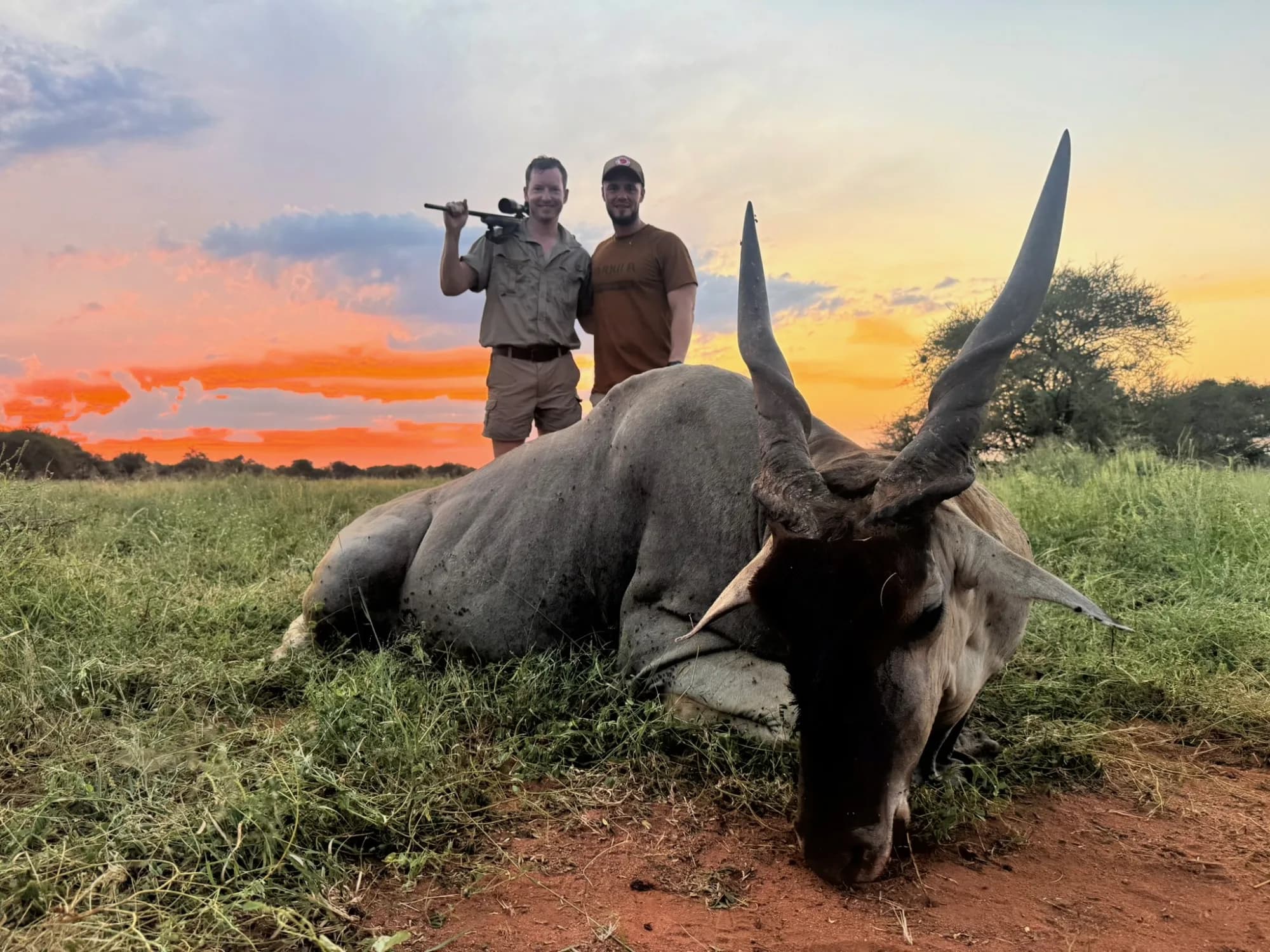
Cape buffalo hunting is the pursuit of Syncerus caffer — the only one of Africa's Big Five that has no antlers to score, no predators it truly fears, and a reputation, earned over a century of hunting literature, as the animal most likely to hunt you back. A mature dagga boy weighs 700–900 kg, carries a hard boss of fused horn across his skull, and can cover the ground between you in seconds. Hunting him is the most demanding and the most serious thing most hunters will ever do on foot in Africa. It is also, for many, the hunt that ruins them for everything else.
I have hunted and hosted on African ground my whole life — seven generations of my family on South African soil, and a professional hunter's licence that I do not take lightly when buffalo are involved. This guide is written the way I brief a guest before we walk in: straight about the danger, precise about the rifle and the shot, and honest about what it costs and what it asks of you. Buffalo is not a trophy you buy. It is a hunt you earn, and the margin for a careless decision is smaller than on any plains game animal alive.
Why Cape buffalo is the benchmark of dangerous game
The Cape buffalo occupies a particular place in the imagination because of how he behaves when things go wrong. Unwounded, he is a herd animal grazing the bushveld, wary but not aggressive. Wounded, he becomes something else entirely — patient, intelligent, and willing to circle back on his own tracks to wait for whatever is following. The old hunters called him "Black Death" and the "widowmaker," and the names are not marketing. A buffalo absorbs punishment that would drop anything else and keeps coming, and a hunter who places a poor first shot has not ended a hunt — he has started a far more dangerous one.
That is exactly why buffalo is the entry point to dangerous game for serious hunters. He is challenging without being a logistical expedition, available across good southern African ground, and more attainable than elephant, lion, or rhino while demanding the same discipline. The pursuit is everything: hours on a track in soft sand, the wind held like a held breath, closing to thirty or forty metres on an animal that can weigh as much as your car. When it goes right, it is the most complete hunt in Africa. When it goes wrong, it is why your professional hunter carries a big rifle and never takes his eyes off the bull.
Where to hunt Cape buffalo
Cape buffalo are hunted across southern and eastern Africa, and the experience varies enormously by region. South Africa offers the most accessible, well-organised, and consistent buffalo hunting on the continent, with strong genetics, excellent infrastructure, and the simplest travel and trophy logistics. The big-tracking, fully wild "dagga boy in the long grass" experience also lives in the great wilderness blocks of Zimbabwe, Mozambique, Tanzania, and Zambia for hunters who want a longer, rawer expedition.
On Huntica Approved Ground in the Northern Cape, and on the specialist dangerous-game concessions we host with favoured partners, buffalo are hunted on foot by tracking and spot-and-stalk across mixed bushveld and acacia savanna. We host buffalo only on ground we have walked and people we trust, because dangerous game is the one hunt where the quality of the professional hunter beside you is not a luxury — it is the whole thing. This is not an animal to hunt with an outfitter you found in a brochure.
When is the best season for Cape buffalo?
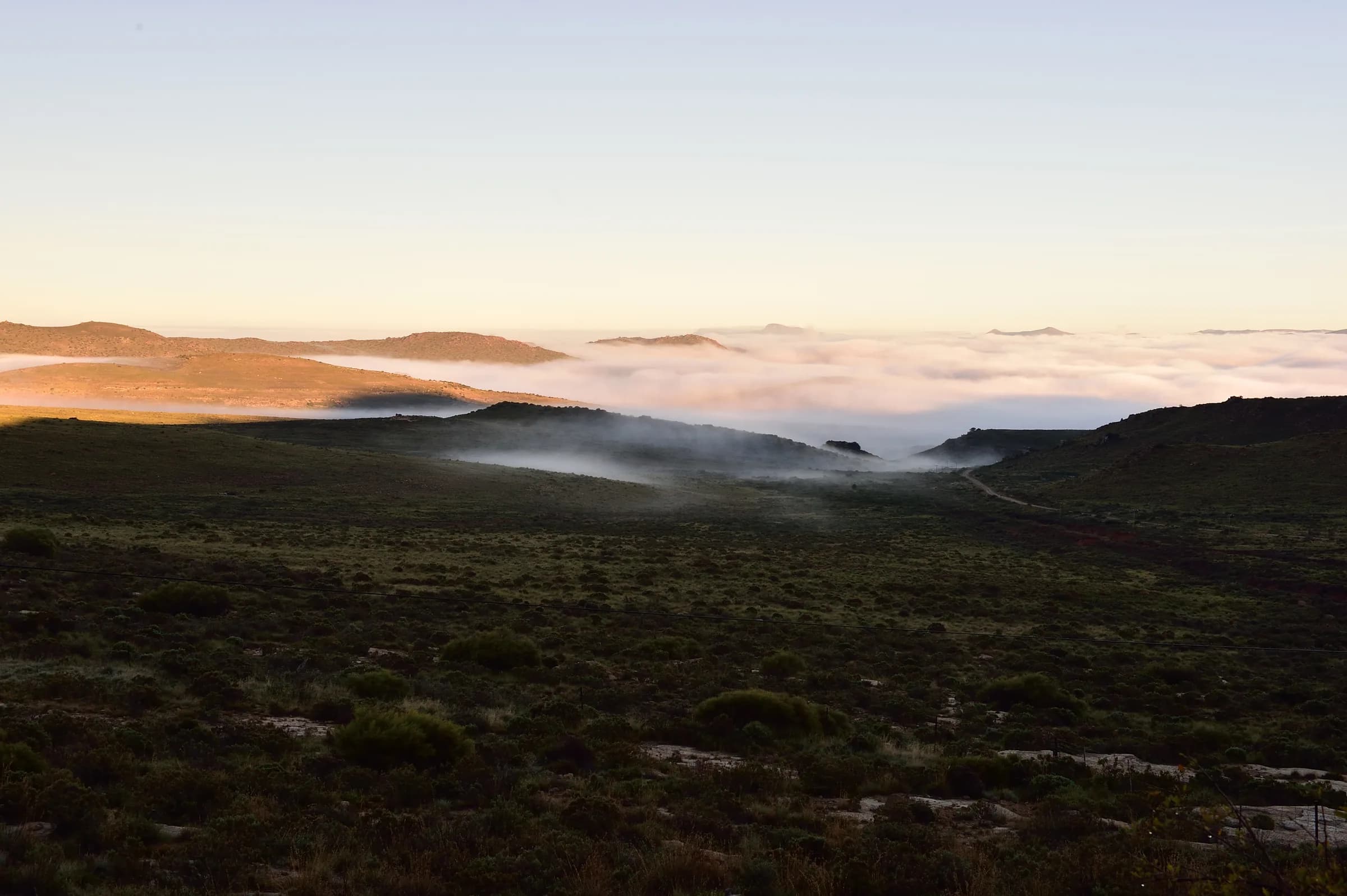
The core season runs from March or April through to September and October — the southern African dry winter. Cooler, drier conditions are not about comfort; they are about hunting. As the bush thins and surface water dries up, buffalo concentrate on the remaining water and feed, tracks hold cleanly in the dust, and visibility opens up enough to read a bull and place a shot. The classic months are June through September. Early-season hunts offer greener cover and dispersed animals; late season concentrates them hard on water and can produce the most intense tracking of the year.
What caliber for Cape buffalo?
This is where the law and good sense agree. South Africa, like most African jurisdictions, sets a legal minimum of .375 caliber (9.3mm and up) for dangerous game, and that minimum is also the floor of what is sensible. A buffalo's vitals sit behind heavy muscle and dense bone, and you are often shooting at close range at an animal that may need to be stopped, not merely hit.
- .375 H&H Magnum is the most popular and most versatile dangerous-game cartridge in the world for good reason — manageable recoil, superb bullets, and enough authority for buffalo in capable hands. If you own one rifle for Africa, this is it.
- .416 Rigby / .416 Remington steps up the stopping power for hunters who want more margin and can handle the recoil — a favourite of many professional hunters as a backup rifle.
- .404 Jeffery, .450/.470, .458 Lott and the big bores belong to experienced dangerous-game hunters who shoot them well. More power you cannot control is worse than less power you can.
Bullet choice matters as much as caliber. The standard is a premium bonded or monometal soft for the first shot into the vitals, followed by solids (full-metal-jacket, non-expanding) for follow-up shots that must drive through heavy bone and muscle. Your professional hunter will brief the exact load. What matters from you is that you can place that first shot calmly at thirty metres with a rifle you have practised with from shooting sticks — not off a bench. If you are bringing a rifle into South Africa, our international firearm import guide walks through the SAPS temporary permit process step by step.
Shot placement on Cape buffalo
The buffalo's heart-lung area is the target, and the broadside shot is the one to wait for. Picture a line up the back of the front leg; place the shot one-third of the way up the body on that line, into the crease behind the shoulder. That puts the bullet through the top of the heart and the lungs. Buffalo rarely drop to it — expect the bull to lunge, hump up, and run — but a well-placed soft is fatal, and the follow-up shots keep him honest.
Avoid the frontal chest shot unless your professional hunter calls for it and you are experienced; it is a smaller target with less margin. The golden rule of buffalo, repeated by every PH who has earned grey hair, is simple: keep shooting until the bull is down and still. A buffalo on his feet is a buffalo still in the hunt. When he goes down, you reload and you watch, because the "dead" buffalo that climbs back to his feet has written too many of the cautionary tales. This is also why the hunt is always conducted as a team — you, your tracker, and a professional hunter with a heavy rifle whose only job in that moment is to back your shot.
Reading a trophy bull — what to look for
Buffalo are not scored the way antlered game are, and chasing inches misses the point of the animal. Experienced hunters and ethical hosts read a bull by age first, character second, and spread a distant third.
- The boss is the heart of it. On a mature bull the two horn bases fuse into a hard, polished boss of solid horn across the skull. A soft or gapped boss means a young bull; a fully hard boss means he has reached maturity and done his breeding.
- A worn, broomed bull — horn tips rubbed and splintered, boss heavily scarred, body battered — is an old dagga boy past his breeding years. He is the right buffalo to take: ethically ideal and the most respected trophy in the field, regardless of width.
- Spread of 35–40 inches and up is impressive, but a hard-bossed, broomed old bull of modest width is a finer trophy than a wide young bull who should have been left to breed.
The art of the buffalo hunt is recognising the right old bull and passing the young ones. On a hosted hunt, that judgement call is shared — your PH and your host will not let you take a bull that should have walked.
What does Cape buffalo hunting cost?
Buffalo is dangerous game, and it is priced accordingly — well above plains game, but it remains the most attainable of the Big Five. Costs are built from a daily rate (higher than plains game because of the professional-hunter requirement, the tracking team, and the seriousness of the undertaking) plus a trophy fee for the buffalo itself.
As a planning benchmark, dangerous-game daily rates run roughly US$650–US$1,200 per day, and a Cape buffalo trophy fee typically falls in the region of US$6,000–US$9,000. A complete seven-to-ten-day buffalo hunt commonly lands in the US$15,000–US$25,000 range all-in for South Africa, which sits below the equivalent hunt in the wilder big-block countries.
With Huntica hosting: a Huntica Hosted or Huntica Bespoke Cape buffalo hunt is quoted to order — one written figure shaped by trip length, the concession, and any plains game you add alongside the buffalo. That includes the professional hunter and tracking team, daily rates and hosting, the buffalo trophy fee, all transfers, accommodation, meals and drinks, and the full firearm and trophy-export paperwork handled for you. For how buffalo compares to plains game and other destinations, read our breakdown of hunting safari costs. Buffalo also combines naturally with a plains game list — many hunters take a buffalo and a kudu, gemsbok, or sable on the same trip.
Getting your buffalo home
Cape buffalo is not listed under CITES, which makes its trophy export simpler than many hunters expect — no CITES permit is required, though standard South African export documentation, veterinary clearance, and your home country's import rules still apply. Your trophy is field-prepared, then dipped, packed, and shipped through a registered facility. On a hosted hunt we manage the dip-and-pack handover and the export paperwork so the process runs without you chasing it from home. The full walkthrough is in our trophy shipping and taxidermy guide, and first-time African hunters should also read our first African safari guide.
What a hosted Cape buffalo hunt looks like with Huntica
Of every hunt we host, buffalo is the one where hosting matters most — because the stakes are real and the quality of the people around you decides how the day ends. On a hosted buffalo hunt, you are never handed to an unknown outfitter and wished luck. A Huntica host is on the ground, the professional hunter is one we know and trust, and the tracking team has worked this dangerous-game concession for years.
We walk you through it before we walk in: the rifle, the load, the shot you are waiting for, what happens if the bull runs, and where you stand if he turns. In the field, the discipline is absolute and the patience is long — we pass young bulls, we wait for the broadside shot, and we do not take chances with wind or range. When the old dagga boy is down and still, there is a quiet at the end of a buffalo hunt that no plains game animal produces. That is the hunt. We host where we hunt, and on dangerous game that promise stops being a slogan and becomes the reason you came home with the story instead of the cautionary tale.
Frequently Asked Questions
How much does it cost to hunt Cape buffalo?
A complete South African Cape buffalo hunt commonly runs US$15,000–US$25,000 all-in for seven to ten days, built from a dangerous-game daily rate of roughly US$650–US$1,200 per day plus a buffalo trophy fee of around US$6,000–US$9,000. A hosted Huntica buffalo hunt is quoted as one written all-in figure, including the professional hunter, hosting, trophy fee, transfers, accommodation, and all firearm and export paperwork.
What is the best caliber for Cape buffalo?
The legal minimum across most of Africa, including South Africa, is .375 caliber, and the .375 H&H Magnum is the most popular and versatile choice. Hunters wanting more margin step up to the .416 Rigby or .416 Remington, while big bores like the .404 Jeffery and .458 Lott suit experienced dangerous-game shooters. Use a premium bonded soft for the first shot and solids for follow-ups.
Where do you shoot a Cape buffalo?
Wait for the broadside shot and place the bullet one-third of the way up the body on a line up the back of the front leg, into the crease behind the shoulder — through the top of the heart and the lungs. Buffalo rarely drop to the shot, so the rule is to keep shooting until the bull is down and completely still.
Is Cape buffalo hunting dangerous?
Yes — it is the benchmark of dangerous game. An unwounded buffalo is wary but not aggressive; a wounded one is intelligent, vengeful, and capable of circling back to ambush whatever is following. This is why every buffalo hunt is conducted as a team with an experienced professional hunter carrying a heavy backup rifle, and why shot placement and discipline matter more than on any other hunt.
What makes a good Cape buffalo trophy?
Read the bull by age, not width. A mature bull carries a hard, fused boss of solid horn across the skull; an old "dagga boy" with a worn, broomed boss and splintered tips is the ethically ideal and most respected trophy, regardless of spread. A hard-bossed old bull of modest width beats a wide young bull who should have been left to breed.
When is the best time to hunt Cape buffalo?
The dry winter months of March/April through September/October are best, with June to September the classic window. Cooler, drier conditions concentrate buffalo on water, hold tracks cleanly, and open up the visibility you need to read a bull and place your shot.
Do I need experience to hunt Cape buffalo?
You do not need previous dangerous-game experience, but you must be able to place a calm, accurate first shot at close range off shooting sticks with a .375 or larger rifle you have practised with. The hunt is conducted with a professional hunter who briefs and backs you throughout. Honest preparation — range time with your rifle and load — matters far more than a trophy résumé.
Can I combine a buffalo with plains game?
Yes, and most hunters do. A Cape buffalo pairs naturally with a plains game list on the same trip — kudu, gemsbok, sable, springbok, and more — making for a complete African hunt. We build the species list with you before you travel.
Tell us where you want to go
If buffalo has been sitting in the back of your mind — the boss, the track in the dust, the thirty-metre stalk on an animal that can weigh as much as your car — the next step is a conversation, not a booking form. Tell us where you want to go, and I'll tell you honestly what a hosted Cape buffalo hunt asks of you, what ground we'd put you on, and how we'd prepare you for the shot that matters. This is the one hunt where who stands beside you is everything. Make sure it's someone who has earned the right to be there.