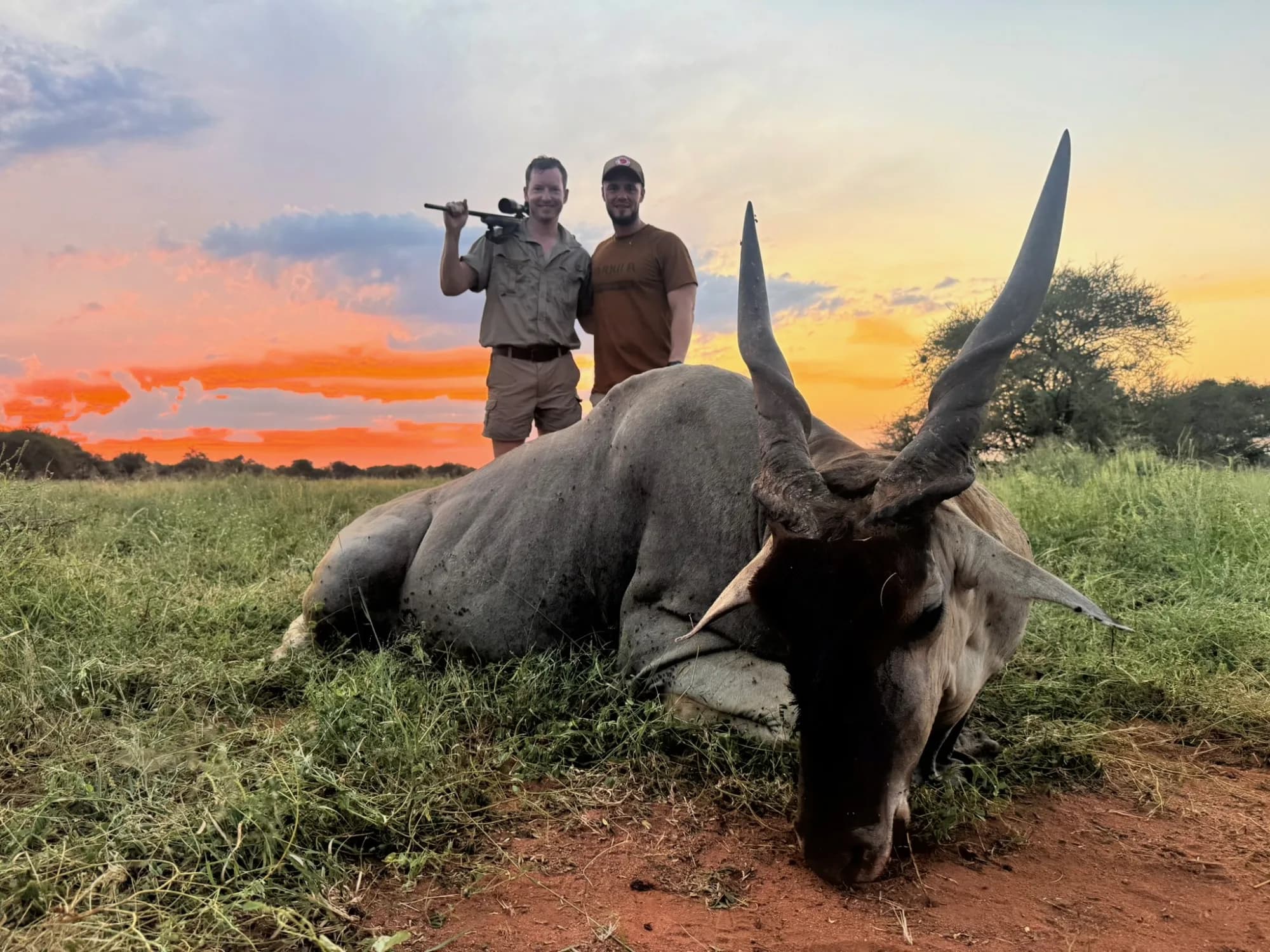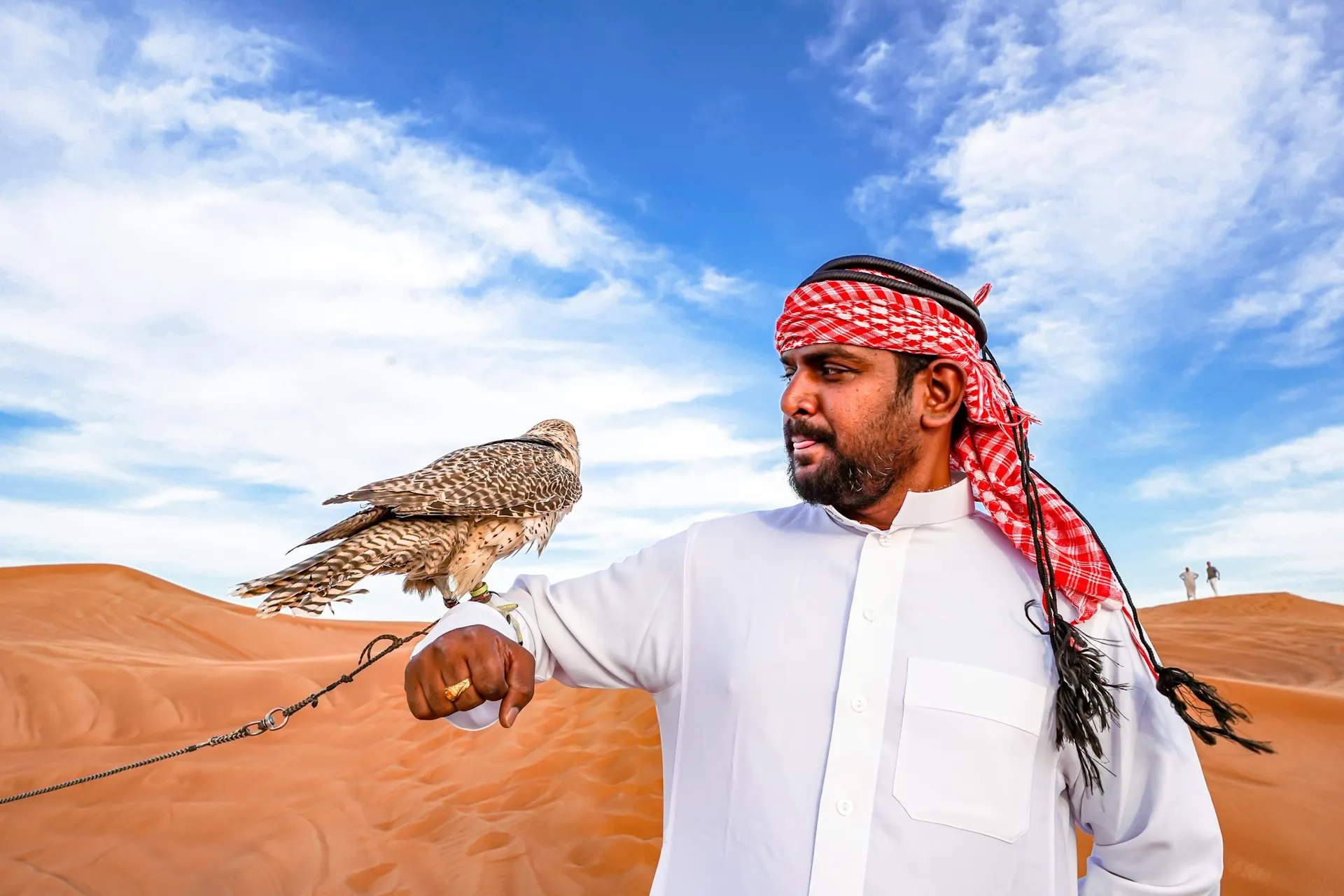
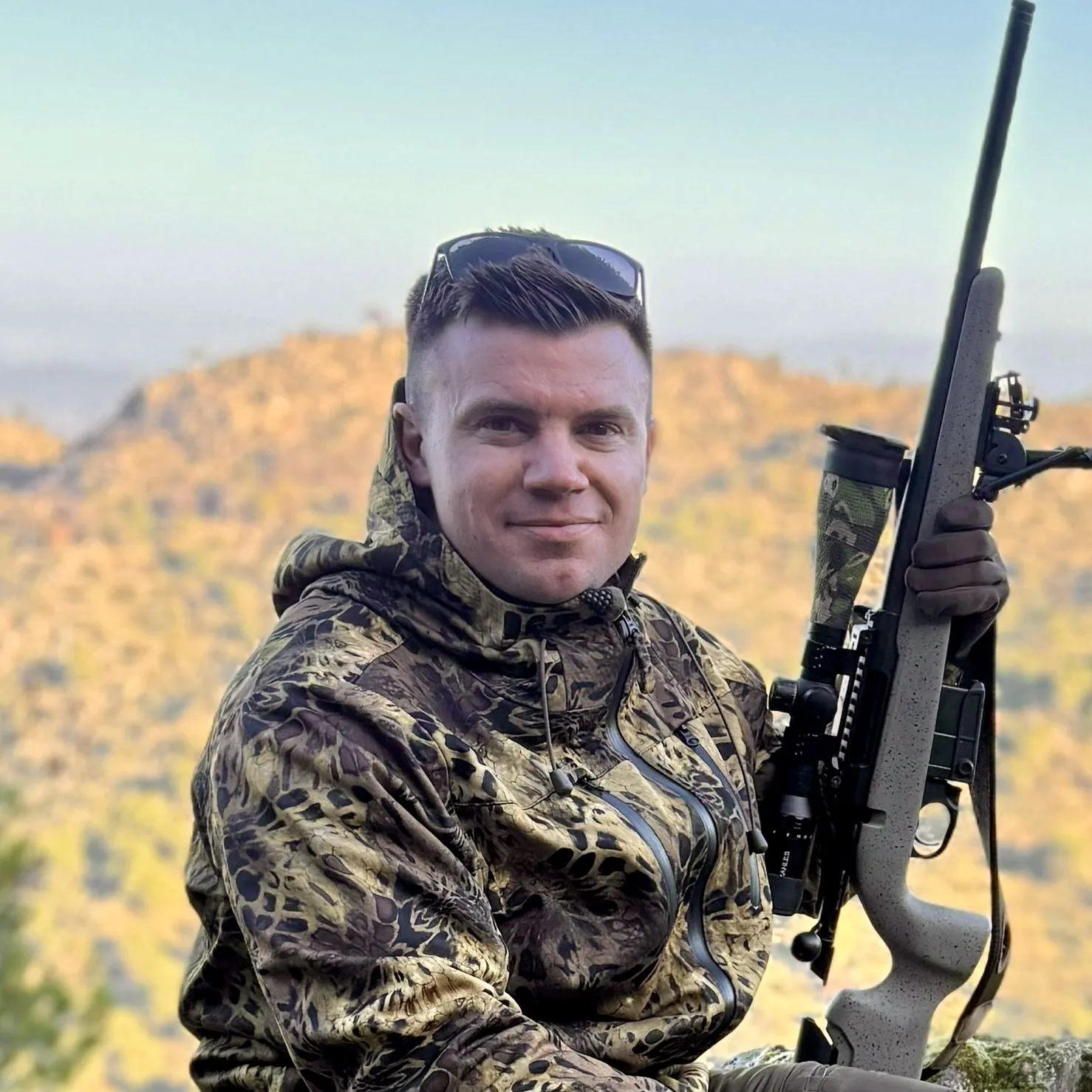
GCC hunters exploring international big game hunting for the first time will find that the discipline, patience, and deep respect for quarry that define falconry translate directly to the field in South Africa, Spain, and beyond. Falconry — practiced across the UAE, Saudi Arabia, Qatar, Kuwait, Bahrain, and Oman for over 4,000 years — shares more DNA with hosted big game hunting than most international operators realize. Both demand reading the land, understanding the animal, waiting for the right moment, and honoring a tradition that runs through generations.
I run Huntica from Dubai. I have lived in the Gulf for years, and I understand that the hunting traditions here are among the oldest and most sophisticated on Earth. The International Association for Falconry and Conservation of Birds of Prey (IAF) estimates there are over 50,000 active falconers across the GCC states, and UNESCO inscribed falconry on its Intangible Cultural Heritage list in 2016 with the UAE and Saudi Arabia among the sponsoring nations. When I speak with hunters from Abu Dhabi, Riyadh, or Doha about international hunting, the conversation almost always starts the same way: "I have hunted with birds my entire life. What does a rifle trip actually look like?"
This guide answers that question — practically, honestly, and from someone who understands both worlds.
What do falconry and big game hunting actually have in common?
More than you might expect. The core disciplines — patience, fieldcraft, respect for the quarry, and multi-generational tradition — are nearly identical between falconry and big game hunting. Both require hours of preparation for moments of intensity. Both demand reading terrain, wind, and animal behavior before committing to action. And both are, at their heart, social traditions passed from father to son across generations.
In falconry, a skilled saqar (falconer) may spend an entire morning positioning for a single flight at houbara bustard or stone curlew. In the Eastern Cape bushveld of South Africa, a hunter may glass ridgelines for three hours before identifying the right kudu bull at 180 metres. The emotional rhythm is the same: long stillness, deep focus, brief action, lasting story. The Abu Dhabi International Hunting and Equestrian Exhibition (ADIHEX), held annually since 2003, draws over 100,000 visitors and increasingly features international big game outfitters alongside falconry equipment suppliers — a clear sign that GCC hunters are expanding their horizons.
The difference is the tool. A falcon is a living partner. A rifle is a precision instrument. But the respect — for the animal, for the land, for the tradition — is the same discipline, expressed differently.
Why is South Africa the top destination for Arab hunters going abroad?
South Africa is the most popular international hunting destination for GCC hunters because it combines world-class game density, established hospitality infrastructure, and practical logistics that suit Gulf travelers. Direct flights from Dubai to Johannesburg on Emirates run daily — 8 hours, no layover — and South Africa's tourism industry has decades of experience accommodating Arab visitors with halal food, prayer facilities, and flexible scheduling.
The Northern Cape, where Huntica operates on Approved Ground at Magersfontein, holds excellent plains game across private conservancies and a working safari farm of approximately 7,000 hectares plus surrounding concessions. A first-time hunter from the Gulf can expect to pursue kudu, impala, blue wildebeest, gemsbok, springbok, and warthog across 7-10 days, with a hosted group trip quoted as one written all-in figure per person. South Africa's Professional Hunters Association (PHASA) maintains strict standards — every PH holds a government-issued license and must pass annual proficiency evaluations.
For GCC hunters accustomed to the prestige and heritage of Al Ain's falconry traditions or Saudi Arabia's annual King Abdulaziz Falconry Festival, South Africa's hunting culture resonates: it is generational, land-based, deeply tied to conservation, and conducted with genuine respect for the quarry and the ground.
How are halal food and prayer times handled on a hunting trip?
Halal food and prayer accommodations are standard practice on any well-organized hunting trip hosting GCC guests — and at Huntica, we arrange these details before your boots hit the ground, not as an afterthought. South Africa's Northern Cape lodges (including Magersfontein) regularly host hunters and tourists from the Middle East, and most have established halal supply chains through local butchers and catering services.
On a Huntica Hosted trip, we confirm halal-certified meal arrangements with the lodge weeks before arrival. Meat served at camp — including game harvested during the hunt — is processed according to Islamic slaughter requirements when requested. Our host coordinates with the lodge chef to ensure every meal meets dietary standards, and we carry backup provisions from verified halal suppliers in Port Elizabeth or Johannesburg as standard protocol.
Prayer times are built into the daily schedule. The hunting day already has a natural rhythm — early morning in the field, midday break at the lodge, afternoon session until sunset — that aligns well with salat times. Most lodges have quiet, private spaces suitable for prayer. On multi-day wilderness hunts where mosque access is not available, our hosts ensure prayer mats and compass readings for qibla direction are available. We have hosted hunters from Dubai, Abu Dhabi, and Riyadh who told us that accommodating these needs properly was the single biggest factor in choosing a hosted trip over booking direct.
What should GCC hunters expect with firearms if they come from a non-gun culture?
Most GCC hunters have extensive experience with falconry, but limited or no personal experience with rifles — and that is entirely normal and nothing to worry about. Firearms ownership is tightly regulated across the UAE, Saudi Arabia, Qatar, and Kuwait, and many first-time international hunters from the Gulf have never fired a bolt-action rifle before arriving in the field.
This is one of the strongest arguments for a hosted trip. On a Huntica hunt, our host and the assigned Professional Hunter conduct a thorough rifle orientation and safety briefing before the first day in the field. This includes basic handling, loading, safety mechanisms, shooting positions (prone, sitting, using sticks), and live-fire zeroing at the lodge range — typically 3-5 rounds at 100 metres to confirm point of impact.
Most outfitters in the Eastern Cape offer quality rental rifles — a Sako 85 or Tikka T3x in .300 Winchester Magnum is the standard recommendation and handles every plains game species from impala (60 kg) to eland (700 kg). Bringing your own rifle from the GCC is possible but adds significant logistical complexity: the UAE requires an export permit from the Ministry of Interior, and South Africa requires a temporary import permit (SAP 520) processed through SAPS at the port of entry. Our recommendation for first-time GCC hunters is to use a rental rifle, focus entirely on the experience, and consider bringing your own firearm on a return trip once you are comfortable with the logistics.
Ammunition is always available on-site. Allow approximately 20-40 rounds for a 7-10 day plains game trip, though you will likely fire fewer than 15 in the field.
Why is a hosted trip ideal for first-time international hunters from the Gulf?
A hosted trip eliminates every variable that turns a first international hunting trip into a stressful logistics exercise — and for GCC hunters unfamiliar with the international hunting industry, those variables are significant. Firearms permits across borders. Language differences on the ground. Cultural nuances around food, prayer, and daily rhythm. Quality assurance of lodges and outfitters you have never visited. A Huntica host handles all of this physically, in person, from airport to departure.
The alternative — booking through an online agent or directly with an outfitter in a country you have never visited — means trusting a stranger's website photos and managing every logistical detail yourself across time zones. Safari Club International (SCI) data suggests that approximately 60% of international hunting complaints stem from miscommunication between the client and the outfitter. For a GCC hunter on their first trip, that risk compounds: you may be navigating a new country, a new activity, a new tool (the rifle), and a new language simultaneously.
At Huntica, our co-founder Alex Hohne — a 7th-generation South African with a PH license — hosts every South Africa and Spain trip personally. Rasmus Jakobsen, whose family heritage is rooted in Greenlandic wilderness, hosts in Greenland, Canada, and New Zealand. One of us is always on the ground. That is not a marketing line — it is the operating model. For a first-time hunter from Dubai or Riyadh, it means there is always someone present who understands both your expectations and the local environment, and can bridge the two in real time.
Can non-hunting family members join the trip?
Absolutely — and many GCC hunting trips are structured specifically to include non-hunting companions. South Africa's Northern Cape lodges, like Magersfontein, are built for mixed groups: while hunters are in the field from sunrise to mid-morning and again from mid-afternoon to sunset, non-hunting guests enjoy game drives, spa facilities, cultural excursions, and wildlife photography on the same property.
Port Elizabeth, the gateway city for Eastern Cape hunts, is 45 minutes from Addo Elephant National Park — home to over 600 elephants and the only Big 7 reserve in Africa (adding southern right whale and great white shark to the traditional Big 5). Non-hunting companions can visit Addo on a day trip, explore the Tsitsikamma section of the Garden Route, or visit Kenton-on-Sea and the Sunshine Coast beaches. For families traveling from the Gulf, these options turn a hunting trip into a broader travel experience that accommodates different interests within the group.
On Huntica Bespoke trips, we design parallel itineraries — the hunter follows the PH into the bush while companions follow a dedicated guide to wine estates, historical sites, or photographic safaris. In Spain, non-hunting companions can explore Cordoba's Mezquita-Cathedral, Jaen's olive oil country, or Seville — all within 1-2 hours of our Approved Ground in the Sierra de Andujar. We have hosted families from Abu Dhabi where three brothers hunted while their father, who had retired from active hunting, spent the week photographing raptors — a direct connection to his falconry heritage.
What about VIP logistics — private transfers, flexible schedules, premium accommodations?
GCC hunters are accustomed to a certain standard of travel, and a properly hosted trip meets that standard without compromise. At Huntica, VIP logistics are not an upgrade tier — they are built into the Bespoke experience from the start.
Private transfers from O.R. Tambo International Airport or King Shaka International in Durban are arranged door-to-door. No shared shuttles, no waiting at a car hire desk. For hunters flying private — which approximately 15-20% of our GCC guests do — we coordinate directly with Lanseria Airport or private aviation facilities at O.R. Tambo for arrivals and departures.
Accommodation on Approved Ground ranges from high-end lodge suites with en-suite facilities and daily housekeeping to private-use properties where your group has the entire lodge to yourselves. For GCC families, private-use is often the preferred option — it provides complete privacy, the ability to set your own meal times around prayer schedules, and a level of comfort that mirrors what these travelers expect from five-star hospitality.
Flexible scheduling is standard. If you want to start the morning hunt later to accommodate Fajr prayer, we adjust. If you want to extend a midday break, the afternoon session shifts. A hosted trip runs by the hour, adapted to the group — not by a rigid itinerary printed before you arrived.
What destinations beyond South Africa should GCC hunters consider?
South Africa is where most GCC hunters start, but the international hunting world extends well beyond the Northern Cape. Spain is a natural second destination — a 7-hour flight from Dubai, deeply familiar territory for Gulf travelers, and home to world-class Iberian ibex hunting in the mountains of Andalusia and driven red-legged partridge in Castilla-La Mancha.
Spain's Sierra de Andujar, where Huntica operates on Approved Ground, offers becerrillo (young red deer) and Iberian ibex in terrain that resembles the Hajar Mountains of Oman more than any other European hunting destination. The cultural familiarity is significant: Andalusia's Moorish heritage, Arabic-influenced architecture, and Mediterranean cuisine make GCC travelers feel more at home than in most European destinations. Halal food is widely available in Cordoba, Granada, and Malaga. The Spanish ibex — specifically the Southeastern Spanish ibex (Capra pyrenaica hispanica) — is one of four subspecies and a genuine mountain hunting challenge at altitudes of 1,500-2,500 metres.
For more adventurous GCC hunters, Greenland offers an extraordinary muskox hunting experience in Arctic conditions that are unlike anything available in the Middle East. Argentina's La Pampa province delivers world-class red stag and water buffalo hunting. New Zealand's South Island provides free-range tahr and chamois in the Southern Alps. Each of these destinations is hosted by a Huntica co-founder who has walked the ground personally.
How does Dubai's own hunting heritage connect to international hunting?
Dubai and the broader UAE have a hunting heritage that predates the modern city by millennia. The Al Maktoum family's well-documented involvement in falconry — His Highness Sheikh Hamdan bin Mohammed bin Rashid Al Maktoum is a known patron of falconry traditions — reflects a culture where hunting is not recreation but identity. The Abu Dhabi Falconry Hospital, the world's largest falcon hospital treating over 11,000 birds annually, exists because this tradition is alive and thriving.
Saudi Arabia's King Abdulaziz Falconry Festival, launched in 2019, has grown into the world's largest falconry competition with prize money exceeding SAR 30 million (approximately €7.2 million). Qatar's Al Gannas Society promotes falconry education and conservation across the Gulf. ADIHEX in Abu Dhabi — the Abu Dhabi International Hunting and Equestrian Exhibition — is the largest exhibition of its kind in the Middle East and increasingly features African and European hunting outfitters alongside traditional falconry suppliers.
This cultural infrastructure means GCC hunters approach international big game hunting with a foundation that most first-time hunters from other regions simply do not have. The patience trained over thousands of hours with a saker falcon or peregrine falcon on the wrist translates directly to the patience required to glass a kudu ridgeline in the Northern Cape at dawn. The respect for quarry that defines Gulf falconry — the tradition of releasing birds, the ethical codes around fair chase — aligns precisely with the conservation-first approach that defines responsible international hunting. At Huntica, we recognize this heritage. It is one of the reasons we are based in Dubai.
Frequently Asked Questions
Do I need hunting experience to join an international hunting trip from the Gulf? No prior rifle hunting experience is required. On a Huntica Hosted trip, our host and Professional Hunter provide complete rifle orientation, safety briefing, and live-fire zeroing before the first day in the field. Many GCC hunters have never handled a rifle before their first trip and perform well with proper guidance. Falconry fieldcraft — patience, reading terrain, understanding animal behavior — translates directly.
Can I arrange halal food on a hunting trip in South Africa? Yes. Halal food arrangements are standard on Huntica trips hosting GCC guests. We confirm halal-certified catering with lodges before arrival, and game harvested during the hunt can be processed according to Islamic requirements on request. Most Northern Cape lodges, including Magersfontein, regularly host Muslim travelers and have established halal supply chains.
How do I get a rifle into South Africa from the UAE? You need a UAE export permit from the Ministry of Interior and a South African temporary import permit (SAP 520) processed at SAPS on arrival. Huntica handles all paperwork in advance. However, we recommend first-time GCC hunters use a quality rental rifle on-site — typically a Sako or Tikka in .300 Winchester Magnum — to simplify logistics on your first trip.
What is the best time of year for a GCC hunter to visit South Africa? The South African hunting season runs March through October. For GCC travelers, April-May and August-September offer the most comfortable temperatures (15-25°C) and avoid the extreme heat of the Southern Hemisphere summer. These months also align well with school holidays in the UAE and Saudi Arabia for family trips.
How much does an international hunting trip from the Gulf typically cost? A hosted plains game hunt in South Africa's Northern Cape (Magersfontein) is quoted as one written all-in figure per person for a 7-day group trip, including accommodation, meals, PH fees, and hosting. Bespoke private trips are quoted to the brief, depending on species, duration, and group size. Flights from Dubai to Johannesburg on Emirates start at approximately €800 return in economy and €3,500 in business class.
Can my family join even if they do not hunt? Absolutely. Magersfontein and surrounding Northern Cape lodges accommodate non-hunting companions with game drives, wildlife photography, spa facilities, and cultural excursions. Kimberley's Big Hole museum is 30 minutes away, and Cape Town is reachable for trip extensions. On Bespoke trips, we design parallel itineraries so hunters and non-hunters both have a full experience.
Is hunting in Africa compatible with Islamic ethics around animals? Responsible international hunting — conducted under government quotas, on managed conservancies, with professional oversight — aligns with Islamic principles of stewardship (khilafah) over the natural world. Animals are harvested humanely, meat is consumed or distributed to local communities, and conservation fees fund anti-poaching and habitat management. The Quran permits hunting for food and sustenance, and many GCC hunters view ethical hunting as consistent with their faith.
Do I need a visa to travel to South Africa from the Gulf? UAE passport holders receive visa-free entry to South Africa for up to 90 days. Saudi, Qatari, Kuwaiti, Bahraini, and Omani nationals require a visa — processed through the South African embassy or consulate in their home country, typically within 5-10 business days. Huntica provides invitation letters and supporting documentation for visa applications.
Tell us where you want to go
If you have spent years with a falcon on your wrist and you are curious about what the international hunting world looks like — we understand that curiosity, and we would be honored to guide it. Every Huntica trip is hosted personally by a co-founder who has walked the ground. Tell us where you want to go, and we will build the trip around you.