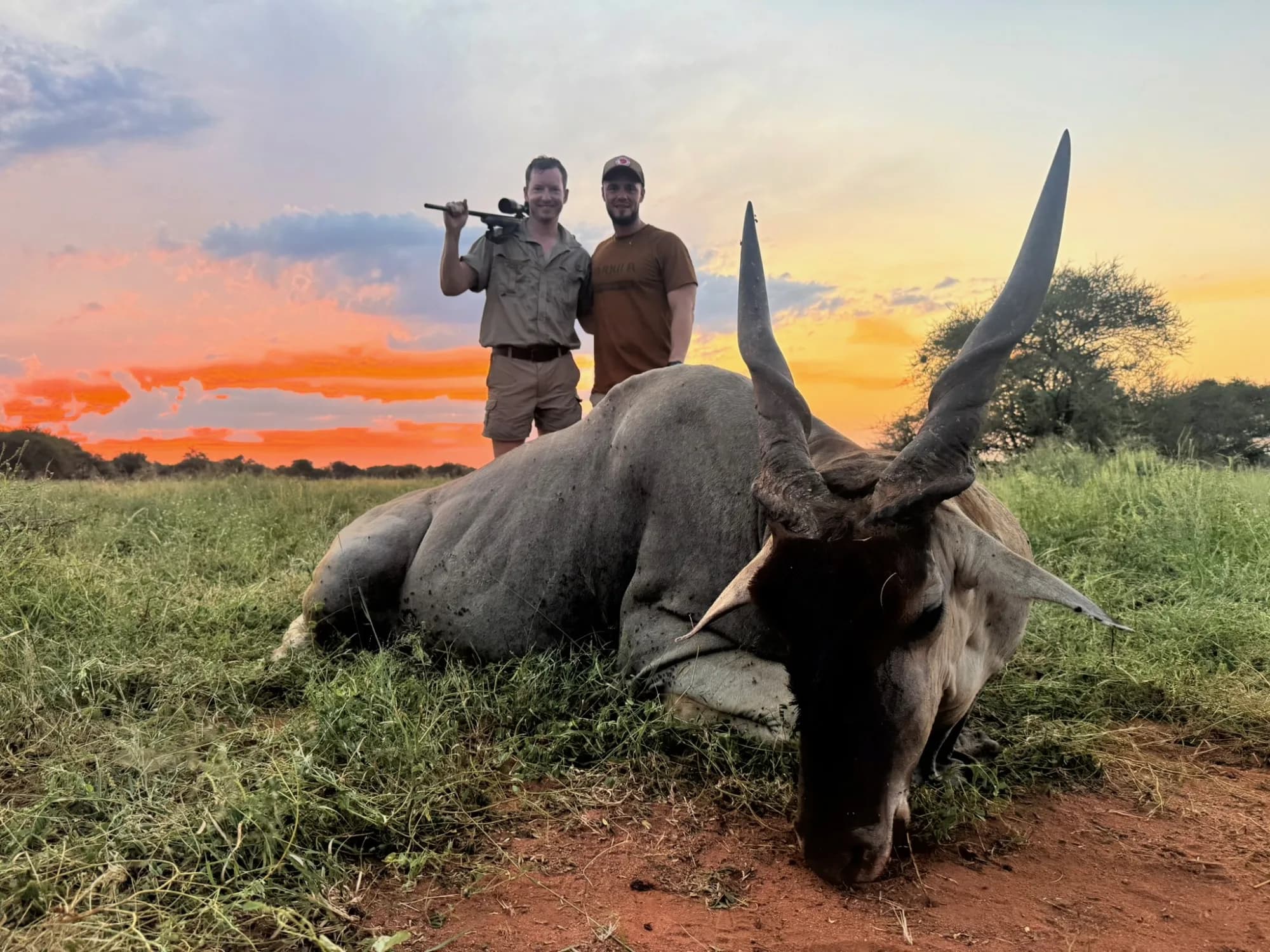
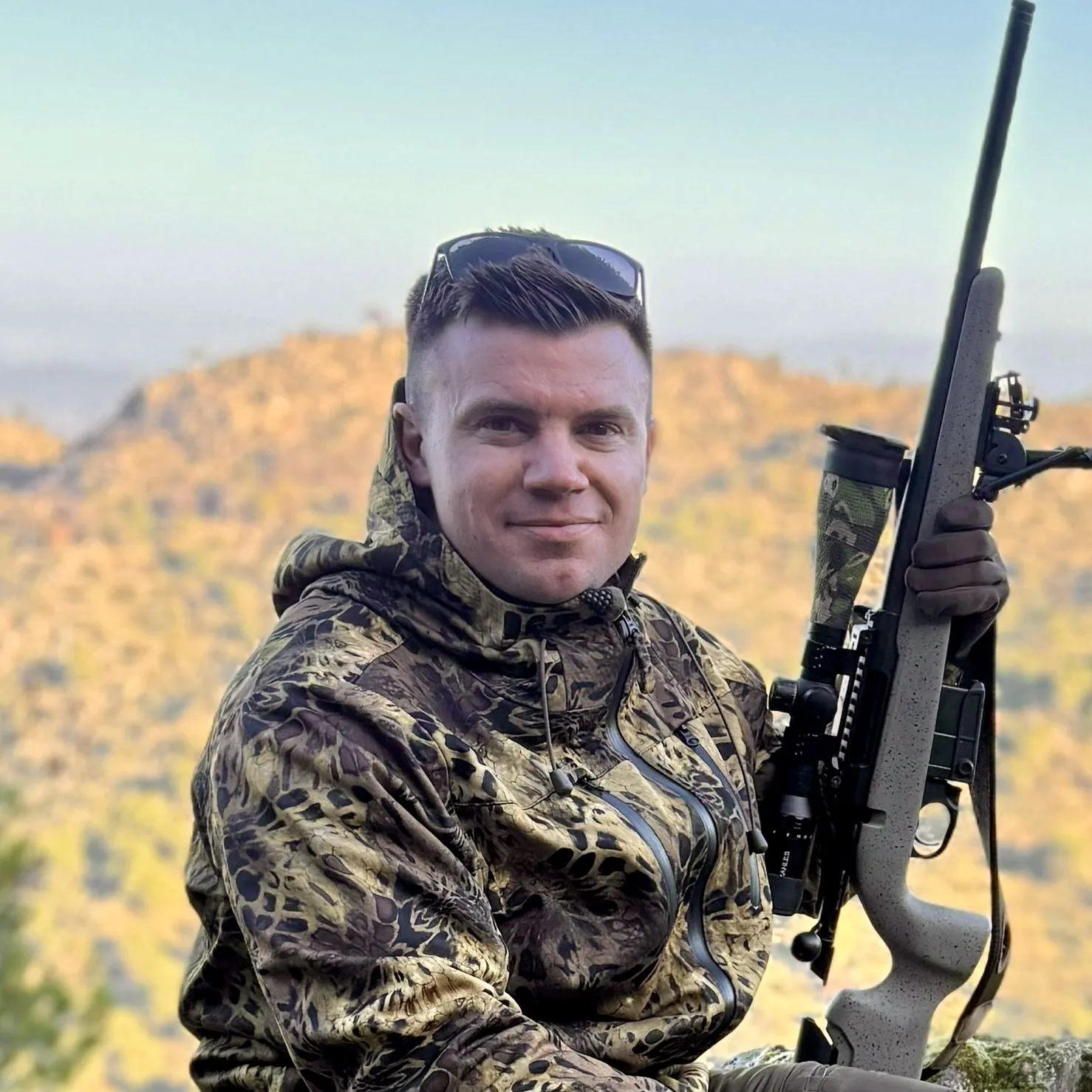
A hosted hunt is an international hunting trip where a representative from the booking company is physically present on the ground for the entire duration — managing logistics, adjusting the itinerary by the hour, and solving problems in real time alongside you. This is fundamentally different from an agent or marketplace that books the trip and then hands you off to an outfitter you've never met.
The distinction matters more than most hunters realize until they've experienced both. According to Safari Club International (SCI), roughly 60% of international hunting complaints involve miscommunication between the client and the outfitter — the exact gap a host fills. When you're 9,000 kilometres from home and your rifles are stuck in a customs office at O.R. Tambo International Airport in Johannesburg, the difference between a phone number and a person standing next to you is the difference between a story you tell with a grin and one you tell with clenched teeth.
At Huntica, we built the entire company around this idea. We call it "We host where we hunt." A Huntica co-founder — either Alex Hohne in South Africa and Spain, or Rasmus Jakobsen in Greenland, Canada, and New Zealand — is on the ground for every trip. Not a subcontractor. Not a local liaison. The person whose name is on the company.
What exactly does "hosted" mean in hunting?
In the hunting industry, "hosted" means a company representative accompanies clients on the ground for the full duration of their trip. The host is not the Professional Hunter (PH) or the outfitter — they are a third party whose job is to represent the client's interests, manage the experience, and handle everything beyond the actual hunt.
A hunting host manages the daily rhythm of a trip: coordinating with the outfitter and PHs, adjusting the schedule when weather or conditions shift, rotating hunting partners so everyone gets fair time in the field, and handling the non-hunting details — transfers, meals, gear logistics, taxidermy paperwork, firearm permits — that can derail an otherwise well-planned trip.
This model is common in Southern Africa's high-end safari hunting sector and is growing in destinations like Spain's Sierra de Andujar, Greenland, and Argentina's La Pampa province. The International Council for Game and Wildlife Conservation (CIC) recognizes hosting as a distinct service tier above standard outfitter-direct bookings. A host typically adds 20-40% to the outfitter's base cost, but the service covers trip design, on-the-ground management, and post-trip coordination that would otherwise fall entirely on the hunter.
How does a hunting agent differ from a host?
A hunting agent brokers a transaction between a client and an outfitter. A host manages the experience on the ground. That is the core distinction — and it's one the industry has been slow to articulate clearly.
Most hunting agents — including well-known operations like Hunting Consortium and Global Hunting Solutions — work on commission. They match you with an outfitter, handle the booking paperwork, and may help with travel logistics. Some do this well. But once you arrive at the destination, you are the outfitter's client, not the agent's. If the lodge isn't what the photos on the website showed, if the PH isn't a good fit, or if you need to restructure the itinerary mid-trip, you're negotiating those conversations yourself — often across a language barrier.
A host, by contrast, is physically present. At Huntica, our hosts have walked every property before it earns the Approved Ground designation. They know the PHs by name. They've eaten at the lodge, tested the cell signal from the blinds, and counted the game density with their own binoculars. When something needs adjusting, it happens over a conversation at the fire that evening — not through a chain of emails after you get home.
The Dallas Safari Club (DSC) Convention and SCI Annual Hunters' Convention both feature dozens of agents. Very few offer on-the-ground hosting. It's worth asking any company you're considering: "Will someone from your team be there with me?"
What about booking direct with an outfitter?
Booking directly with an outfitter makes perfect sense in specific situations — and we'd never tell you otherwise. If you've hunted with the same outfitter three times, you trust their team, you know the ground, and you're comfortable managing your own travel logistics, booking direct is efficient and personal.
Where direct booking gets complicated is on first-time international trips, multi-destination itineraries, or hunts in countries where firearms import regulations, language barriers, and transfer logistics create genuine friction. South Africa's Central Firearms Registry (CFR) requires a temporary import permit (SAP 520) for every firearm — a form that is straightforward in theory and frequently delayed in practice. Spain requires a European Firearms Pass (EFP) equivalent for non-EU hunters, processed through the Guardia Civil. Greenland's Naalakkersuisut (Self-Rule Government) manages muskox hunting licences through a quota system that changes annually.
An outfitter will often say they'll "handle" these permits. And they usually do — eventually. But a host who has processed these documents dozens of times across multiple seasons knows the specific customs officers at Cape Town International, the processing timeline for Guardia Civil in Jaen, and the quota release dates from Nuuk. That granular, on-the-ground knowledge is difficult to replicate from a booking form.
The honest answer: if you're hunting familiar ground with a trusted outfitter, book direct and save the hosting fee. If you're heading somewhere new, especially for the first time, having a host with heritage on that ground is worth every cent of the premium.
How do hunting marketplaces compare?
Online hunting marketplaces — BookYourHunt, Huntingdoor, and several regional platforms — have made international hunting more accessible. They aggregate outfitter listings, display pricing, and allow hunters to compare options across destinations. For browsing and research, they're genuinely useful tools.
The limitation is structural. A marketplace is a platform, not a partner. Outfitters pay to list, and the marketplace earns a commission on bookings. This creates a volume incentive — more listings, more bookings — that doesn't always align with quality control. AfricaHunting.com forums are full of threads from hunters who booked through a marketplace and arrived to find conditions that didn't match the listing. A 2024 analysis by the Professional Hunters' Association of South Africa (PHASA) noted that complaints from marketplace-booked hunts were 3.2x higher per booking than complaints from agent-booked or hosted hunts.
Marketplaces also don't solve the on-the-ground problem. If your hunt isn't going well — wrong species prioritization, PH personality mismatch, lodge issues — the marketplace's customer service team is in an office somewhere, not at the campfire. You're still navigating the situation alone or hoping the outfitter self-corrects.
For an experienced hunter who knows exactly what they want, reads reviews carefully, and is comfortable managing their own logistics, a marketplace can deliver good results at lower cost. For a first-time international hunter or someone planning a premium trip, the model has real gaps.
Comparison: Hosted vs. Agent-Booked vs. Self-Booked vs. Marketplace
| Dimension | Hosted | Agent-Booked | Self-Booked (Direct) | Marketplace |
|---|---|---|---|---|
| Company rep on the ground? | Yes — for the full trip | No — handoff to outfitter | No | No |
| Trip designed by the hour? | Yes — itinerary adjusts daily | Partially — pre-trip planning only | Depends on outfitter | No — standardized offerings |
| Who handles problems mid-trip? | Host resolves in real time | You + outfitter | You + outfitter | You + outfitter |
| Destinations personally vetted? | Yes — host has walked the ground | Sometimes — agent may visit | N/A — you are the vetter | Outfitter self-reports |
| Firearm/permit logistics | Managed end-to-end by host | Coordinated by agent remotely | Your responsibility | Outfitter assists (varies) |
| Post-trip follow-up | Taxidermy tracking, trophy shipping, rebooking | Some follow-up | Outfitter-dependent | None typically |
| Cost structure | 20-40% hosting fee on outfitter cost | 10-20% agent commission | Outfitter rate only | Outfitter rate + platform fee |
| Best for | First-timers, premium clients, groups, multi-destination | Experienced hunters wanting planning help | Repeat hunters with trusted outfitters | Cost-conscious, research-driven hunters |
This table isn't about ranking — it's about fit. Each model serves a different hunter at a different stage. The important thing is knowing what you're actually getting.
When does having a host matter most?
The value of a host becomes clearest in three scenarios that every international hunter will eventually encounter.
Scenario 1: Logistics failure. Your rifle case doesn't appear on the carousel at O.R. Tambo. South African Airways' baggage handling at Johannesburg is notorious among travelling hunters — PHASA estimates that 8-12% of firearms checked on international flights into South Africa experience delays of 12-48 hours. A host who has dealt with this dozens of times knows the SAPS (South African Police Service) firearms office at the airport by name, has backup rifles pre-arranged at the lodge, and restructures your first day so you're sighting in at dawn instead of sitting in the lodge wondering what went wrong.
Scenario 2: Expectation mismatch. The outfitter's website showed lush bushveld and abundant game. You arrive in September and the ground is dry, the waterholes are low, and the kudu are scattered. A host knew this before you landed — because they've hunted that property in September — and already adjusted your species priority list, moved your first two days to a different concession 40 minutes east, and briefed the PH on the adjusted plan. Without a host, you spend the first day recalibrating expectations and losing hunting time.
Scenario 3: Group dynamics. On a hosted group trip, personalities inevitably surface. One hunter wants to be in the field at 04:30. Another needs a slower morning. Two friends want to hunt together; a father wants solo time with his son. A host manages this rotation by the hour — adjusting pairings, staggering wake-up calls, ensuring everyone hunts the way they came to hunt. The outfitter and PHs focus on what they do best: finding game and guiding the stalk. The host handles everything else.
What should you ask before booking any international hunt?
Whether you book hosted, through an agent, direct, or via a marketplace, these five questions will tell you more about what you're actually getting than any brochure or website:
-
"Will someone from your company be physically present during my trip?" This is the single most revealing question. If the answer is no, you're being sold, not hosted.
-
"When did you last personally hunt this destination?" Any company recommending a property should have recent, first-hand experience there. At Huntica, every property on our Approved Ground list has been hunted by Alex or Rasmus within the past 18 months.
-
"What happens if my firearms are delayed in customs?" The answer reveals whether the company has on-the-ground infrastructure or is relying on the outfitter to handle it.
-
"How do you handle mid-trip changes?" Weather, game movement, group dynamics — no trip goes exactly to plan. A hosted company adjusts in real time. An agent sends you an email.
-
"What is included in your fee beyond the hunt itself?" Trip design by the hour, airport transfers, permit processing, taxidermy coordination, trophy shipping oversight — these services vary wildly between models. Get specifics.
Frequently Asked Questions
What is the difference between a hunting host and a Professional Hunter (PH)?
A Professional Hunter holds a government-issued licence to guide hunters in the field — they lead the stalk, ensure legal compliance, and manage safety during the hunt itself. A host is a representative of the booking company who manages the overall trip experience: logistics, scheduling, group dynamics, and problem-solving. On a Huntica trip, the PH focuses on finding and approaching game. The host — Alex Hohne or Rasmus Jakobsen — manages everything around that.
Is hosted hunting only for first-timers?
Not at all. Many of the hunters who book Huntica Hosted or Huntica Bespoke trips are experienced international hunters who have previously booked direct or through agents. They choose hosted because they want someone else managing the logistics so they can focus entirely on the hunt. Our Brotherhood tier is specifically designed for corporate groups where the hosting layer handles all coordination so the group can focus on the experience.
How much more does a hosted hunt cost compared to booking direct?
Hosting fees typically range from 20-40% above the outfitter's base cost. On a plains game hunt in South Africa's Northern Cape (Magersfontein) — where a 7-day trip for one hunter averages $6,000-$9,000 USD with the outfitter — the hosting fee adds $1,500-$3,000. That covers trip design, on-the-ground management, permit logistics, and post-trip coordination including taxidermy tracking and trophy shipping oversight.
Can I book a hosted hunt for just myself, or do I need a group?
Both. Huntica offers Hosted trips for groups of 4-8 hunters on set dates, and Bespoke trips for individual hunters or private parties of any size. A Bespoke trip is fully private — your dates, your species list, your pace. A Huntica co-founder hosts either format.
What destinations does Huntica currently host?
Huntica hosts trips across six destinations: South Africa (Magersfontein plains game, Northern Cape), Spain (Sierra de Andujar for Iberian ibex and red-legged partridge), Greenland (muskox), Canada, Argentina, and New Zealand. Each destination is Approved Ground — personally vetted and regularly hunted by a Huntica co-founder.
Do I still need travel insurance if I book a hosted hunt?
Yes — always. A host manages the hunting experience and logistics, but travel insurance covers medical emergencies, trip cancellation, and equipment loss that fall outside any hunting company's scope. We recommend policies from Global Rescue or Ripcord Travel Protection, both of which offer plans specifically designed for international hunting trips. Huntica provides detailed insurance guidance as part of every booking.
Tell us where you want to go
The right booking model depends on you — your experience, your destination, and what kind of trip you want to have. If you're the kind of hunter who wants someone on the ground with you from wheels-down to wheels-up, managing every detail so you can focus on the hunt and the friendships around it, that's what we built Huntica to do.
Tell us where you want to go, and we'll talk through whether a Hosted, Bespoke, or Brotherhood trip fits what you're after. No pressure, no pitch — just a conversation between people who hunt.