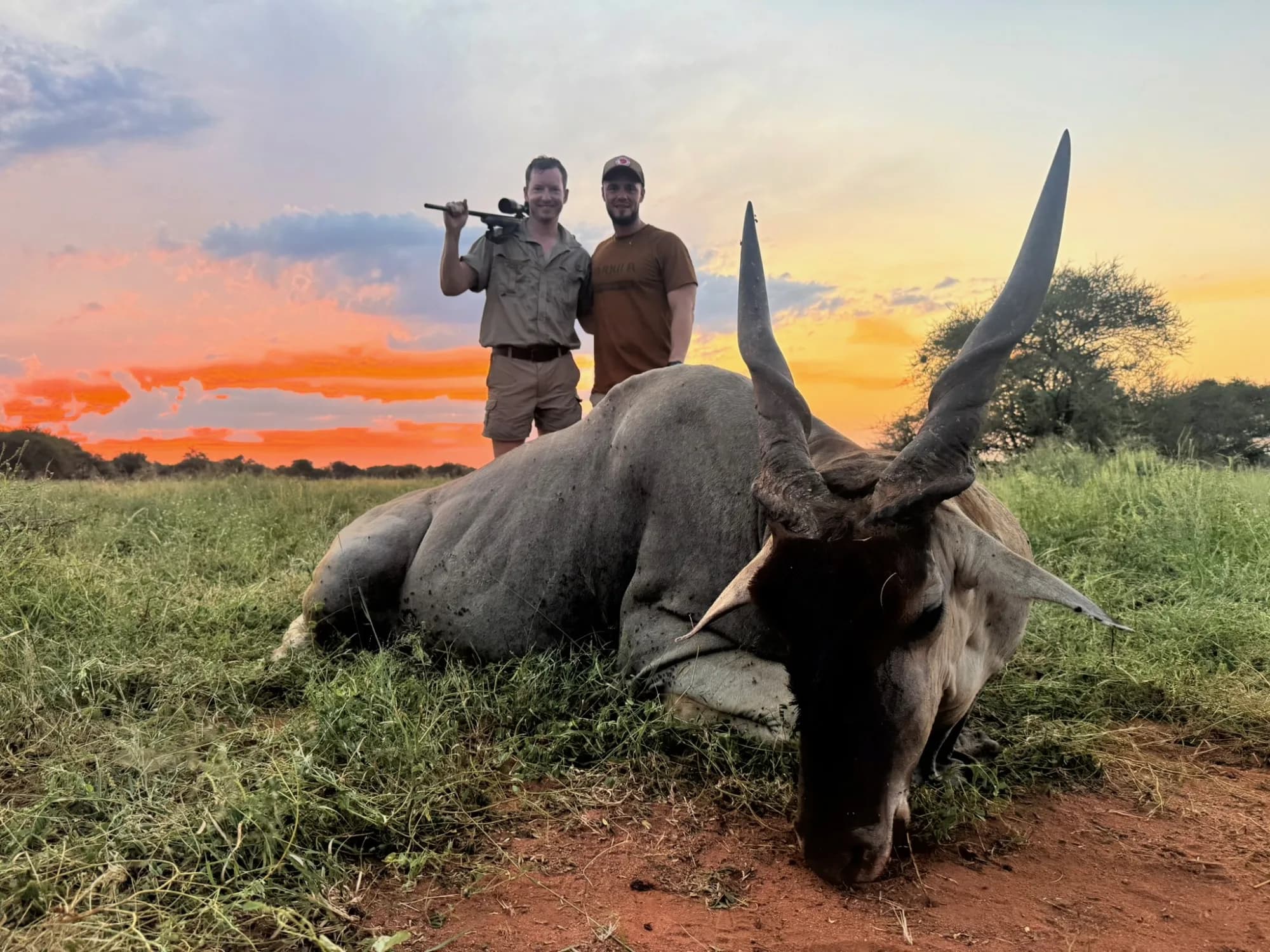
Choose a hunting outfitter by evaluating eight criteria: verified ground access, a named host who is physically present on the trip, transparent pricing by the hour, references from recent clients, species-specific expertise, safety and licensing credentials, clear cancellation terms, and a track record across multiple seasons. An agency that scores well on all eight will turn a booking into a story worth telling.
I run Huntica, a hosted hunting agency operating across six countries — South Africa, Spain, Greenland, Canada, Argentina, and New Zealand. Over the past decade, between our co-founders, we have guided or hosted hundreds of international hunting trips. Some through outfitters I would recommend to my closest friends. Others through operations I would never return to. The difference almost always came down to the same handful of factors, and none of them were visible on the outfitter's website. According to a 2024 survey by the International Council for Game and Wildlife Conservation (CIC), 62% of international hunters who reported a negative trip experience cited "misaligned expectations" as the primary cause — not the hunting itself, but the gap between what was promised and what was delivered.
Here are the eight criteria that close that gap.
What does a hunting outfitter actually do?
A hunting outfitter provides land access, professional hunting guides, field logistics, and the necessary permits for a legal hunt in a specific region. In South Africa's Eastern Cape, for example, an outfitter manages a concession or private conservancy, employs Professional Hunters (PHs) licensed under the Eastern Cape Parks and Tourism Agency, and handles everything from rifle import permits to meat processing. In Spain's Sierra de Andujar, a different outfitter coordinates with the Junta de Andalucia for Iberian ibex quota allocations.
The distinction that matters: an outfitter is the ground operator. They own or lease the land, they employ the guides, they feed you. An agency or booking agent, by contrast, sits between you and the outfitter — sometimes adding value, sometimes just adding cost. The question is not whether you use an outfitter or an agent. The question is whether anyone you trust is on the ground with you when it counts. According to the Professional Hunters' Association of South Africa (PHASA), there are over 1,200 registered outfitters in South Africa alone. Quality varies enormously.
Does the outfitter have verified ground access?
Ground access is the single most important factor in hunt quality, and it is the hardest to verify from a distance. A strong outfitter controls their own Approved Ground — private conservancies, government concessions, or long-term lease agreements — rather than sub-letting access from other landowners season by season. When an outfitter owns or has a multi-year agreement on their hunting area, they have a direct incentive to manage wildlife populations sustainably, maintain infrastructure, and invest in anti-poaching.
Ask for specifics. In the Eastern Cape of South Africa, a quality plains game outfitter manages at least 5,000 hectares of bushveld and can name the conservancy. In Greenland, muskox hunting is regulated by the Government of Greenland's Ministry of Fisheries, Hunting and Agriculture, and quotas are allocated to specific areas — your outfitter should know their exact allocation. In Argentina's La Pampa province, dove shooting outfitters operate on private estancias with multi-generational landowner relationships. If an outfitter cannot tell you exactly where you will be hunting and why that ground is productive, that is your first red flag.
Will someone you trust be physically present on the trip?
This is where the model matters more than the brochure. Most international hunting trips are sold through booking agents who connect you to an outfitter and collect a commission. You fly in, meet a guide you have never spoken to, and hope the experience matches the sales pitch. It often does not. A 2023 Dallas Safari Club post-convention survey found that 47% of exhibitor-booked hunts had no intermediary present during the actual trip.
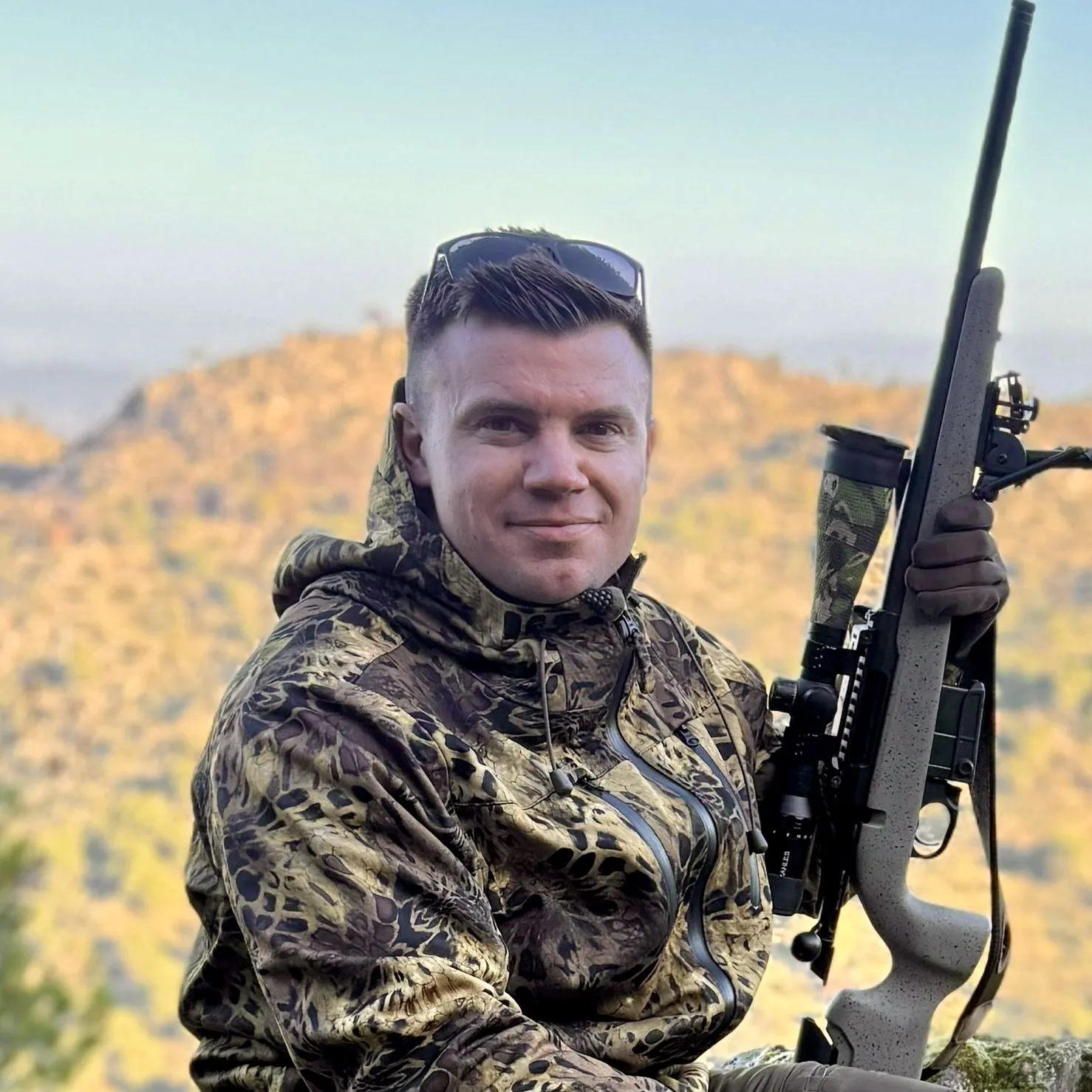
The hosted model solves this. A hosted hunting agency — like what we built at Huntica — sends a named host who has personally vetted the outfitter, walked the ground, and built a relationship with the PH team over multiple seasons. Our co-founder Alex Hohne, a 7th-generation South African with his own PH license, has run operations across the Eastern Cape and Limpopo for over fifteen years. When he hosts a trip to Spain's Sierra de Andujar for Iberian ibex, he has already hunted that ground, eaten at that table, and knows the local tracker by name. That is not a booking agent checking in by WhatsApp from another continent.
The practical difference: when something goes wrong — weather shuts down a stalk, a trophy does not meet expectations, a flight is cancelled — a host present on the ground resolves it in real time. No email chains. No "I'll follow up with the outfitter." Resolution by the hour, not by the week.
How transparent is the pricing structure?
International hunting pricing is notoriously opaque. A typical outfitter quote for a 7-day plains game hunt in South Africa ranges from $4,500 to $12,000 for the daily rate alone, before trophy fees, taxidermy, dipping and packing, gratuities, and internal flights. The total cost for a first-time international hunter often runs 40-60% higher than the initial quote.
When evaluating an outfitter, demand a written cost breakdown that separates: daily rates, trophy fees per species, observer fees if bringing a non-hunting companion, ammunition charges, field preparation and taxidermy, dipping and packing for export, staff gratuities (standard is 10-15% of daily rate in Southern Africa), and internal logistics like charter flights or transfers. In Greenland, a muskox hunt includes government tag fees set by the Naalakkersuisut (Greenland's Self-Rule Government) — these are fixed and verifiable. In New Zealand, tahr and chamois hunts in the Southern Alps typically run NZ$8,000-$15,000 for a 5-day helicopter-access trip, but fuel surcharges can add 20% in remote areas.
A reputable outfitter or hosting agency presents all-in pricing upfront. At Huntica, our Hosted and Bespoke tiers include a transparent fee structure where our hosting fee is a clear percentage on top of outfitter costs — no hidden margins baked into inflated trophy fees.
What are the outfitter's safety and licensing credentials?
Credentials are non-negotiable and vary significantly by country. Before booking, verify that your outfitter holds the legally required licenses for the jurisdiction you are hunting in.
In South Africa, every Professional Hunter must carry a valid PHASA membership and a provincial PH license issued by the relevant provincial authority (Eastern Cape Parks and Tourism Agency, Limpopo Department of Economic Development, etc.). The outfitter should also carry public liability insurance — a minimum of R10 million is standard for operations hosting international clients. In Spain, hunting guides must hold a guarda de caza license, and the outfitter needs a coto de caza (hunting estate) registration with the relevant autonomous community. In Canada, British Columbia and Alberta outfitters operate under guide-outfitter licenses issued by the provincial government, with assigned territories and species quotas. In Greenland, only locally licensed guides approved by the government may accompany visiting hunters for muskox, caribou, or polar species.
Ask for license numbers. Ask for insurance certificates. Ask whether they have had any violations or suspensions in the past five years. A legitimate outfitter will provide this without hesitation. An operation that deflects these questions is telling you everything you need to know.
What do recent references say — and how recent?
References older than two seasons are nearly worthless. Outfitter quality changes — PHs leave, land agreements expire, ownership changes hands. A glowing review from 2021 tells you nothing about a 2026 operation.
Request three to five references from hunters who completed trips within the last 12 months. Call them — do not rely on emailed testimonials. Specific questions to ask references: Did the actual hunting experience match what was described before booking? Were there any unexpected costs? How did the outfitter handle something that went wrong? Would you return? According to the Safari Club International (SCI) Record Book Committee, member complaint filings against outfitters increased 23% between 2020 and 2024, with "misrepresentation of trophy quality" and "undisclosed costs" as the two leading categories.
Also check online hunting forums. Platforms like AfricaHunting.com, HuntTalk.com, and the Accurate Reloading forums have extensive outfitter review threads with multi-year histories. Cross-reference forum feedback with the references the outfitter provides. A consistent pattern across independent sources is the closest you will get to a verified track record.
Does the outfitter have species-specific expertise for your target?
Generalist outfitters are a warning sign for specialized hunts. A South African outfitter who excels at Eastern Cape kudu, gemsbok, and bushbuck may have no business guiding a dangerous game buffalo hunt in Limpopo's Waterberg mountains. A Spanish outfitter with strong Iberian ibex operations in the Ronda mountains may not have any connection to the red-legged partridge shooting grounds of Castilla-La Mancha.
Match the outfitter to the species. For Greenlandic muskox, you need an operator with access to the specific hunting zones in East Greenland or Kangerlussuaq — the Government of Greenland issues fewer than 3,000 muskox tags annually across the entire territory. For Argentine high-volume dove shooting in Cordoba province, the outfitter should manage relationships with multiple estancias to rotate shooting fields and maintain bird populations. For New Zealand free-range tahr in the Southern Alps, the guide needs helicopter access and intimate knowledge of specific river valleys in the Rangitata or Rakaia catchments.
Our co-founder Rasmus Jakobsen carries Greenlandic heritage — his father was raised hunting the fjords and open tundra, and it came down to him. That is not credentials you can hire — it is generations of knowledge that shapes every decision on the ground. When evaluating an outfitter, ask how many seasons they have guided your specific target species. Anything under five is thin.
What happens when things go wrong?
Every experienced international hunter has a story about a trip that did not go as planned. Weather in Greenland can ground helicopter access for days. Drought in the Eastern Cape shifts game movement patterns across entire valleys. Political instability has disrupted hunting seasons in parts of Central Africa and Central Asia. The measure of an outfitter is not whether things go wrong — they will — but how they respond.
Before booking, review the outfitter's cancellation and refund policy in writing. Key questions: What happens if the hunt is cancelled due to weather? What is the refund policy if you do not harvest your target species? (Note: ethical outfitters never promise specific outcomes, but many offer credit toward a return trip.) What happens if the outfitter cancels? Is there travel insurance they recommend or require? According to the US Fish and Wildlife Service, approximately 15% of CITES import permits for hunting trophies face processing delays — your outfitter should be experienced in navigating this bureaucracy.
A hosted agency provides an additional layer of protection here. Because Huntica's hosts have pre-existing relationships with our favored partner outfitters — built over multiple seasons and repeat bookings — we have leverage to negotiate fair resolutions that a solo hunter simply does not. Read our Standards page for how we vet and maintain these partnerships.
Frequently Asked Questions
How far in advance should I book an international hunting trip?
Book 8-14 months ahead for most destinations. South African plains game and Spanish ibex hunts during peak season (May-September in the Eastern Cape, October-February in Andalucia) fill 10-12 months out. Greenland muskox hunts have limited government quota and often require 12-18 months' lead time. Argentine dove shooting is more flexible — 4-6 months is usually sufficient for Cordoba-based operations.
What is the difference between an outfitter, a booking agent, and a hosted agency?
An outfitter is the ground operator — they own or lease the land and employ the guides. A booking agent connects you to an outfitter and earns a commission, but is rarely present on the trip. A hosted agency like Huntica sends a named host who is physically on the ground with you, having personally vetted the outfitter, the PH team, and the specific hunting area across multiple prior visits. The host model adds a layer of quality assurance and real-time problem-solving that neither of the other two models provide.
How much does an international hunting trip typically cost?
Costs vary enormously by destination and species. A 7-day South African plains game hunt runs $6,000-$15,000 all-in per hunter. Spanish Iberian ibex hunts range from €4,500-€9,000 for a 3-4 day trip. Greenland muskox hunts cost $8,000-$14,000 including charter flights. New Zealand free-range tahr hunts run NZ$8,000-$15,000 for 5 days. These figures include daily rates, trophy fees, and basic logistics but typically exclude international airfare, taxidermy beyond field prep, and gratuities.
Should I visit a hunting convention before booking?
Conventions like the Dallas Safari Club (DSC) convention, Safari Club International (SCI) annual convention, and the European IWA OutdoorClassics in Nuremberg are useful for meeting outfitters face-to-face and comparing operations. However, convention booths are sales environments — impulse bookings at conventions account for a disproportionate share of disappointing trips. Use conventions for research, collect materials, then do your due diligence at home before committing funds.
What questions should I ask a hunting outfitter before booking?
Ask these ten: (1) What specific ground will we hunt? (2) Who is my PH and how many seasons have they guided this species? (3) What is the all-in cost with no exceptions? (4) What is your cancellation and refund policy? (5) Can you provide three references from the last 12 months? (6) What licenses and insurance do you carry? (7) Will anyone from your organization be present on the trip? (8) What is the realistic success rate for my target species? (9) What happens if weather or logistics prevent hunting? (10) How do you handle trophy export and CITES permits?
Is it worth paying more for a hosted hunting experience?
Yes, if you value certainty. The hosting fee — typically 20-40% above outfitter cost — buys you a vetted operation, a named host on the ground, transparent pricing, and someone with real leverage to fix problems in real time. For a first international trip or a once-in-a-lifetime species, the difference between a good hunt and a great story often comes down to whether someone you trust was standing next to you when it mattered. Browse our destinations to see where Huntica hosts operate.
Tell us where you want to go
Choosing the right outfitter is the single decision that shapes everything else — the ground you walk, the guide beside you, the story you bring home. If you are planning an international hunt and want a host who has already walked the ground, we would like to hear where you are headed.