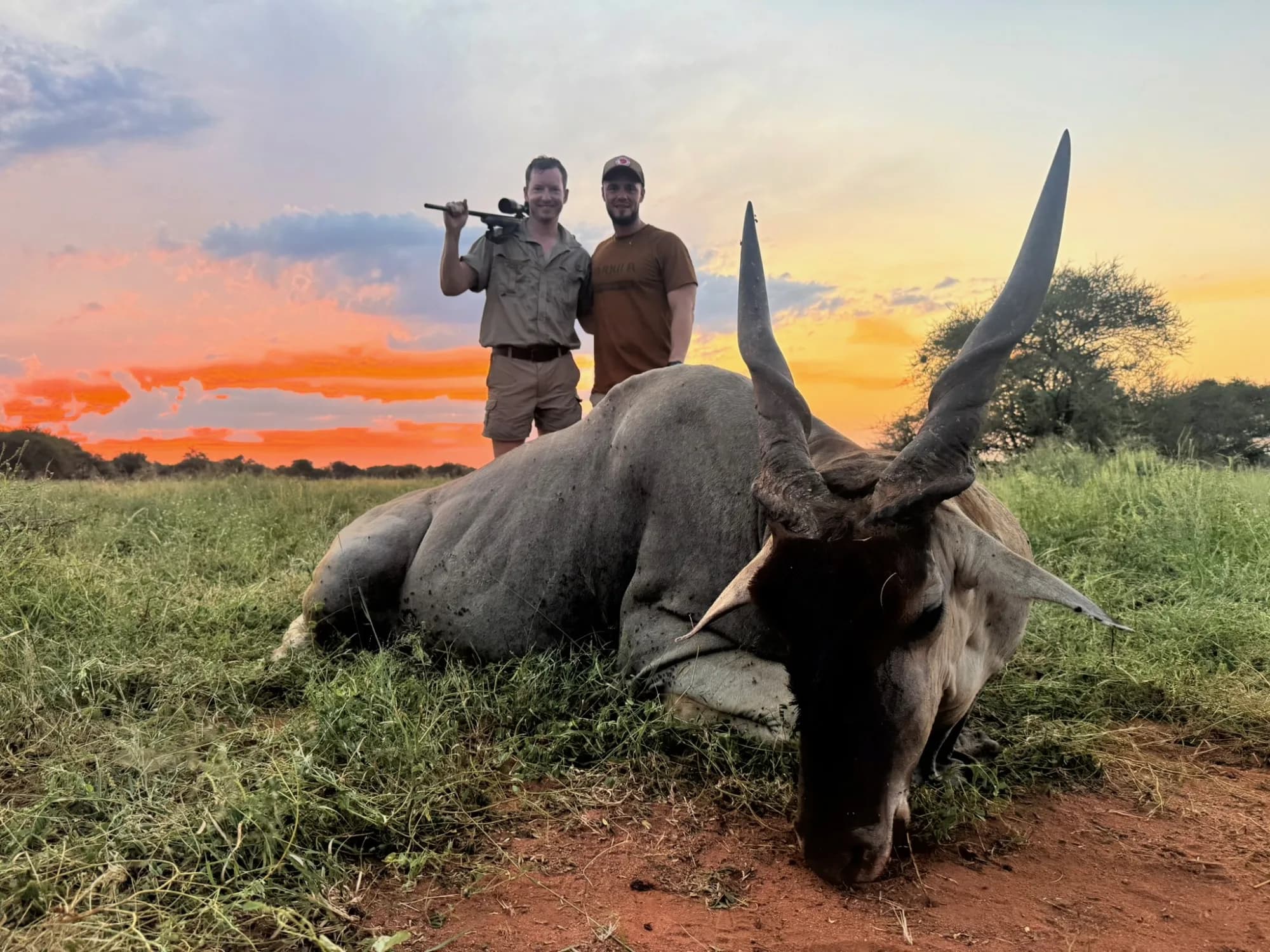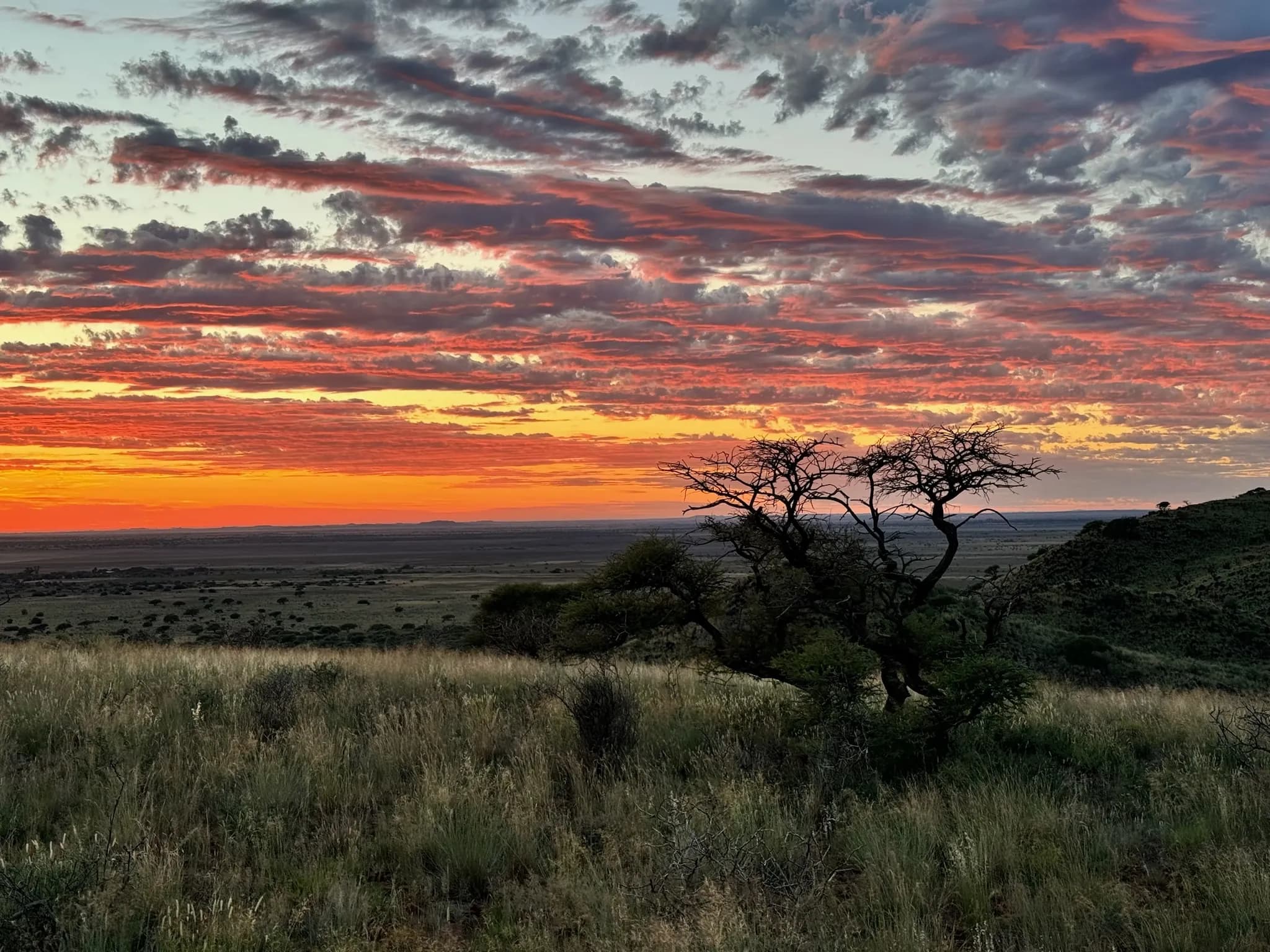

Regulated hunting is one of the largest direct funding mechanisms for wildlife conservation on Earth. According to IUCN's 2016 Informing Decisions on Trophy Hunting report, hunting generates approximately $426 million annually for conservation across sub-Saharan Africa. In the United States, hunters contribute roughly $1.6 billion per year through the Pittman-Robertson Federal Aid in Wildlife Restoration Act — an excise tax on firearms and ammunition that has generated over $14 billion since 1937 (U.S. Fish & Wildlife Service, 2023). These are not optional donations or goodwill gestures. In many countries, hunting revenue is the primary mechanism through which wildlife management is funded — paying for anti-poaching patrols, population surveys, habitat restoration, and the salaries of the biologists and rangers who do the actual work on the ground.
I'm Alex Hohne. My family has been on the land in South Africa for seven generations. I hold a Professional Hunter's license, and I co-founded Huntica because I believe hunting done right is one of the most powerful conservation tools we have. But I understand why people are skeptical. The debate is saturated with emotion on both sides. What's often missing is the data.
This piece lays that data out. Where hunting helps. Where it doesn't. And why the quality of management matters more than the act itself.
How Hunting Funds Conservation — The Money Trail
The financial architecture of hunting-based conservation is more structured than most people realize. It's not simply "hunter pays, animal dies, someone profits." In well-managed systems, hunting revenue flows through multiple channels that directly support wildlife and the landscapes they depend on.
In the United States, the Pittman-Robertson Act (1937) places an 11% excise tax on firearms, ammunition, and archery equipment. Since its inception, it has directed over $14 billion to state wildlife agencies for habitat acquisition, species management, and hunter education (U.S. Fish & Wildlife Service, 2023). In fiscal year 2022 alone, over $1.1 billion was distributed to states. This money funds everything from wetland restoration in Louisiana to elk reintroduction in Kentucky. Hunters did not lobby against this tax. They lobbied for it.
In southern Africa, the financial model works differently but the principle holds. Conservation levies are built into hunting fees at the government level. In South Africa, each animal harvested on a game ranch carries a mandatory levy paid to provincial conservation authorities. Daily conservancy fees fund anti-poaching units. Community trusts receive a percentage of revenue from concession-based hunting. According to Lindsey et al. (2007), published in Biological Conservation, trophy hunting generated gross revenues of at least $201 million per year across southern and East Africa at the time of the study, with a significant portion directed to conservation and community development.
Namibia's communal conservancy model is perhaps the clearest example. Since the Nature Amendment Act of 1996 granted communal land residents rights over wildlife, hunting revenue has funded 86 registered communal conservancies covering over 166,000 square kilometers — roughly 20% of the country (Namibian Association of CBNRM Support Organisations, NACSO, 2021). Wildlife populations that were in steep decline before 1996 have rebounded dramatically because communities now have a direct financial stake in protecting them.
Species Recovery Stories Driven by Hunting
Numbers tell stories that rhetoric can't. Here are five species whose recovery is directly linked to hunting-based conservation incentives.
White Rhinoceros. In 1900, the southern white rhinoceros population had been reduced to roughly 50 individuals in a single South African reserve, Imfolozi (now Hluhluwe-iMfolozi Park). Through a combination of strict protection and, critically, game ranching incentives — where private landowners were permitted to breed and manage white rhino populations, including limited trophy hunting — numbers recovered to over 20,000 by 2015 (IUCN African Rhino Specialist Group). Private landowners in South Africa now hold approximately 25% of the country's white rhino population (Emslie et al., 2019). The economic value created by legal, regulated hunting gave ranchers reason to invest millions in breeding, security, and anti-poaching. Poaching has since reduced numbers, but the recovery itself was driven by the hunting-as-incentive model.
Markhor. Pakistan's national animal was listed as endangered with a population estimated at roughly 2,500 in the early 2000s. A community-based trophy hunting program, developed with support from IUCN and the government of Khyber Pakhtunkhwa, allocated a small number of permits annually — typically 6 to 12 — with 80% of the revenue going directly to local communities. By 2020, markhor populations had more than doubled to an estimated 5,700 individuals (Woodford et al., IUCN SSC, 2020). Villages that once saw markhor as competition for grazing land became their fiercest protectors because a single hunting permit generates $100,000 or more for the community.
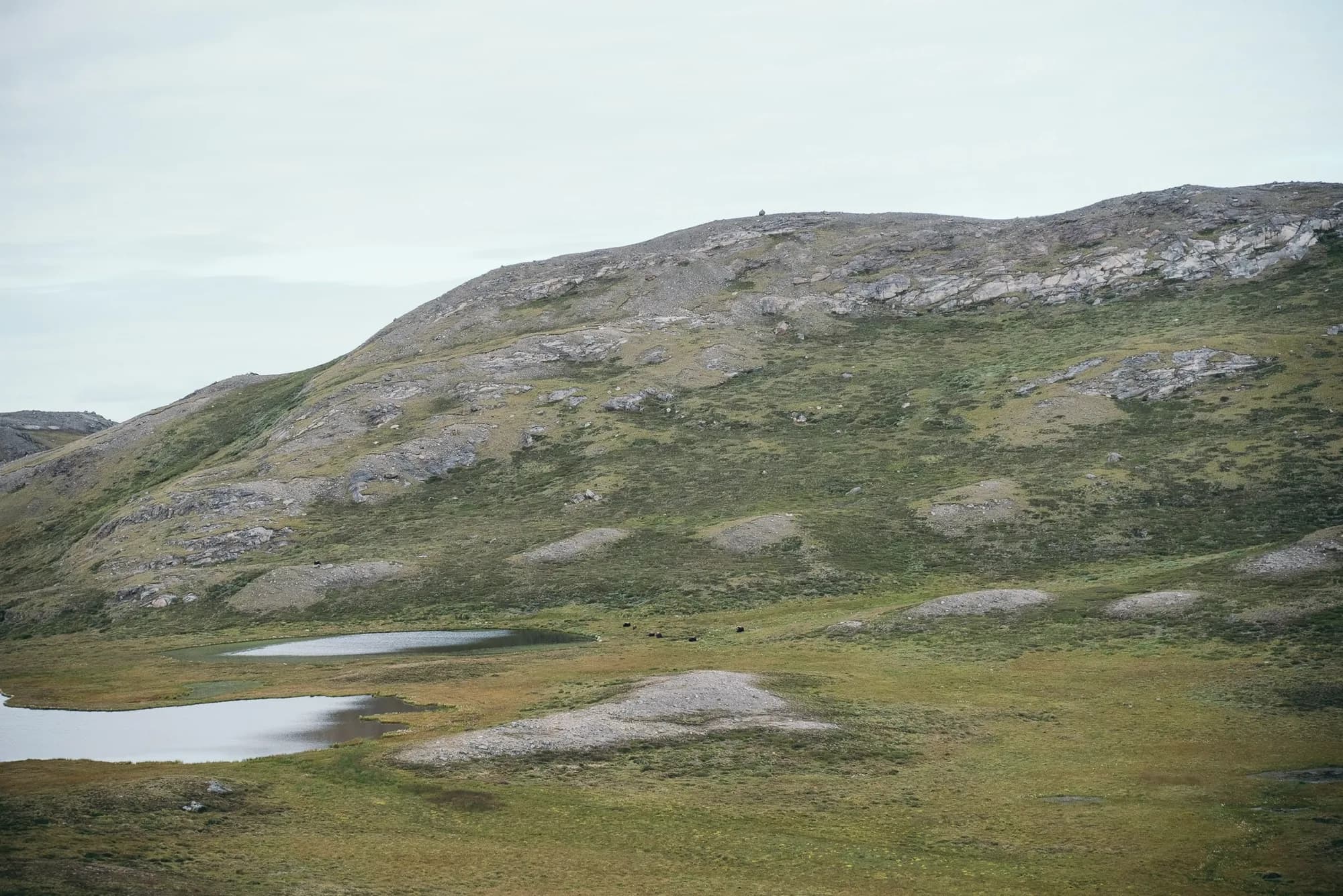
Muskox in Greenland. My co-founder Rasmus Jakobsen's father was raised hunting in Greenland, where muskox have been hunted by indigenous peoples for thousands of years. Today, Greenland's government (Naalakkersuisut) manages muskox through strictly regulated quotas based on annual population surveys. The current population stands at approximately 20,000 animals across Greenland (Greenland Institute of Natural Resources, 2022). Hunting fees fund the biological surveys that set sustainable quotas each year — a self-reinforcing cycle where the activity funds its own oversight.
White-Tailed Deer (United States). By 1900, unregulated market hunting had reduced white-tailed deer to an estimated 500,000 animals across North America. Through hunter-funded state wildlife management programs — financed largely by Pittman-Robertson dollars and hunting license fees — the population has recovered to over 30 million (Quality Deer Management Association, now the National Deer Association, 2023). It is one of the most successful wildlife recoveries in history, funded almost entirely by hunters.
Crocodilians. In both Australia and southern Africa, saltwater and Nile crocodile populations were severely depleted by the mid-20th century. The introduction of regulated commercial use — including hunting, ranching, and sustainable harvest programs — gave communities and landowners economic incentive to protect crocodiles and their wetland habitats. According to IUCN's Crocodile Specialist Group (2019), populations in both regions have recovered from endangered to stable, with sustainable use cited as the primary driver.
What Happens When Hunting Stops
If the hunting-conservation link were merely theoretical, we could debate it indefinitely. But we have real-world case studies of what happens when hunting is removed. The results are consistent and sobering.
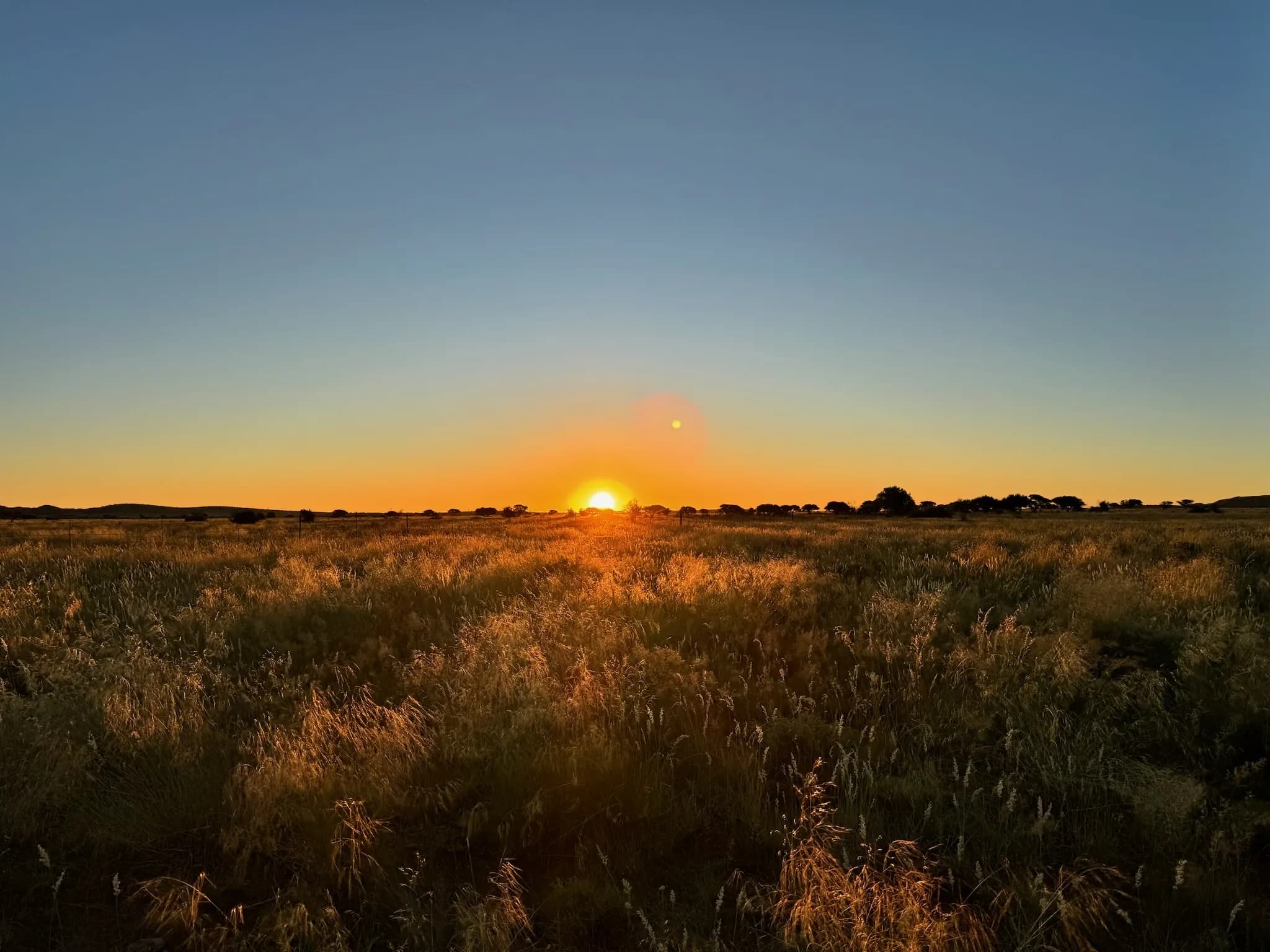
Kenya. In 1977, Kenya banned all sport hunting. According to data published by the Kenya Wildlife Conservancies Association (KWCA, 2016), wildlife populations on Kenyan rangelands declined by approximately 68% between 1977 and 2016. The primary cause was not poaching alone — it was habitat conversion. Without economic incentive to maintain wildlife on private and communal land, landowners converted to agriculture and livestock. Wildlife lost the competition for space because it had lost its economic value.
Botswana. In 2014, Botswana imposed a blanket ban on hunting. Within five years, human-wildlife conflict reports surged — particularly involving elephants in the Okavango panhandle and northern communities. Community conservation funding collapsed because hunting concession fees had been the primary revenue source for many Community-Based Natural Resource Management (CBNRM) programs. In 2019, the Botswana government reversed the ban, citing unsustainable levels of human-wildlife conflict and the collapse of community conservation funding (Government of Botswana, 2019).
Tanzania. When hunting was restricted or suspended in certain Tanzanian concessions during the late 2000s, poaching increased in those areas. A study by Packer et al. (2011), published in Conservation Biology, found that hunting concessions in Tanzania acted as buffer zones around national parks — when properly managed, they provided anti-poaching patrols and deterrence that parks alone could not sustain. Removing hunting removed the funding for those patrols.
The pattern is clear: when legal hunting disappears, the money disappears. When the money disappears, the patrols disappear. When the patrols disappear, the poaching increases and the habitat converts. The animals lose twice.
The Habitat Argument — Why Hunting Land Matters
This is the part of the conservation case that gets the least attention and matters the most. Individual animals recover. Populations fluctuate. But once habitat is gone, it is gone. And habitat is where hunting's conservation impact is most measurable.
In South Africa, approximately 20.5 million hectares are privately managed as game ranches — over three times the area of the country's national parks combined (Taylor et al., Biological Conservation, 2016). This land is maintained as wild habitat because wildlife has economic value. The moment that value disappears, the calculus for a landowner shifts toward cattle, crops, or development. Game ranching — funded substantially by hunting — is the economic engine that keeps that land wild.
In the United States, Ducks Unlimited has conserved over 15 million acres of wetland habitat since 1937, funded primarily by hunter contributions (Ducks Unlimited, 2023). The Rocky Mountain Elk Foundation has protected or enhanced over 8.1 million acres (RMEF, 2023). The National Wild Turkey Federation: over 4.3 million acres. These are hunter-funded organizations doing landscape-level work that benefits every species in those ecosystems — not just the hunted ones.
The math is straightforward. The single greatest threat to wildlife globally is habitat loss (IUCN Red List, 2023). Hunting creates an economic model where wild habitat has value. Remove it, and that habitat has to justify its existence against agriculture, mining, or development. In most of the world, it can't.
Community Impact and the Anti-Poaching Link
Conservation that ignores the people living alongside wildlife is conservation that fails. This has been demonstrated repeatedly across Africa, and it's where the social dimension of hunting revenue becomes critical.
Zimbabwe's CAMPFIRE program (Communal Areas Management Programme for Indigenous Resources) was established in 1989 to give rural communities direct financial benefits from wildlife management, including regulated hunting on communal lands. At its peak, CAMPFIRE generated over $20 million annually for rural communities (Frost & Bond, 2008, Oryx). Communities that received hunting revenue actively invested in anti-poaching patrols because wildlife had become their most valuable asset.
Namibia's conservancy model tells the same story at national scale. According to NACSO's 2021 report, conservancies support over 189,000 community members through wildlife-based revenue. Elephant numbers in Namibia's communal conservancies have increased from approximately 7,500 in 1995 to over 24,000 in 2020. Springbok populations tripled. Black-faced impala, once critically low, have stabilized. These recoveries happened because communities had a direct financial reason to tolerate and protect wildlife rather than fence it out or poach it.
Save Valley Conservancy in southeastern Zimbabwe provides a focused case study. After integrating community revenue-sharing from hunting, poaching incidents dropped by approximately 75% over a decade (Lindsey et al., 2013, PLOS ONE). The mechanism is not mysterious: when a community's income depends on wildlife, its members become the most effective anti-poaching force available. No ranger patrol can match an entire village with a financial stake in the outcome.
When Hunting Doesn't Help Conservation
Intellectual honesty requires acknowledging that not all hunting contributes to conservation. The distinction between well-managed and poorly managed hunting is the entire point — and it's a distinction the hunting industry itself has not always been willing to make clearly enough.
Captive-bred hunting in enclosed spaces. Shooting captive-bred animals — particularly lions — in small, fenced enclosures has minimal conservation value. The animals are not part of wild populations. The genetic value is often negligible. The habitat footprint is small. And the practice is widely condemned within the professional hunting community. South Africa's own High-Level Panel on elephant, lion, leopard, and rhinoceros (2020) recommended phasing out captive lion breeding for hunting purposes. It's worth noting: many hunters were among the loudest voices calling for that panel's recommendations.
Corruption in quota-setting. When hunting quotas are set politically rather than biologically — as has occurred in parts of Tanzania, Mozambique, and Central Africa — overharvesting becomes a real risk. CITES monitoring data has flagged multiple instances where national quotas exceeded scientific recommendations. Poorly governed concessions can become extraction operations rather than conservation tools.
Revenue leakage. When hunting revenue doesn't reach communities living alongside wildlife, the conservation loop breaks. If fees go to national treasuries and aren't redistributed, the people who bear the cost of living with dangerous animals see no benefit — and the incentive to poach returns.
The point is simple: well-managed hunting, with transparent quotas, genuine community benefit, and accountable operators, is good for conservation. Quality of management is everything.
This is exactly why Huntica's Approved Ground checklist exists. Every destination we operate in must demonstrate sustainable quota-setting based on biological data, documented conservation levies, verified community benefit mechanisms, active anti-poaching measures, and ethical hunting standards. We don't take clients to places we haven't verified ourselves, on the ground.
The Ethical Framework: Fair Chase and the Hunter's Responsibility
The conservation data alone doesn't address the moral question that sits beneath it: is it ethical to take a wild animal's life for sport? This is a real question, and it deserves a real answer — not a dismissal.
The foundation of ethical hunting is the principle of fair chase. The Boone and Crockett Club, founded by Theodore Roosevelt in 1887, defines fair chase as "the ethical, sportsmanlike, and lawful pursuit and taking of any free-ranging wild game animal in a manner that does not give the hunter an improper advantage over such animals." The animal can escape. The outcome is not predetermined. The hunter accepts the possibility of going home empty-handed.
Aldo Leopold, the father of modern wildlife management, articulated this most clearly in A Sand County Almanac (1949): "A thing is right when it tends to preserve the integrity, stability, and beauty of the biotic community. It is wrong when it tends otherwise." Leopold's land ethic places the health of the ecosystem above the individual, and it frames hunting as an act of participation in the natural order — not dominion over it.
Serious hunters are, by any measurable standard, among the most invested conservationists in the world. Safari Club International has raised over $70 million for wildlife conservation projects globally. The Dallas Safari Club funds anti-poaching, veterinary, and community programs across Africa and Asia. The International Council for Game and Wildlife Conservation (CIC) works with governments on sustainable use policy at the UN and CITES level.
This is not to say every hunter is ethical, or that hunting is above moral scrutiny. But the claim that hunters don't care about wildlife is contradicted by every financial and institutional dataset we have. Hunters have more at stake in the survival of wild places than almost any other group — because their heritage disappears the moment the animals do.
What Huntica Requires From Every Destination
At Huntica, we don't sell hunts and walk away. We're hosted — physically on the ground at every destination, which means we see firsthand whether conservation standards are being met. Our Approved Ground checklist is the practical application of everything discussed in this piece. It's how we translate data and principle into operational standards.
Every Approved Ground destination must demonstrate:
- Sustainable quotas — Harvest numbers set by qualified wildlife biologists based on population survey data, not operator preference or political convenience.
- Conservation levies — Mandatory financial contributions to provincial or national conservation authorities, separate from the hunt fee.
- Community benefit — Documented revenue-sharing mechanisms with communities adjacent to hunting areas. Employment, infrastructure, and direct payments.
- Anti-poaching measures — Active patrols, ranger salaries, equipment, and reporting structures funded in part by hunting revenue.
- Habitat management — Evidence of land management practices that maintain or improve habitat quality — invasive species control, water management, burn programs.
- Fair chase standards — No captive-bred animals, no artificially small enclosures, no baiting practices that undermine the animal's natural advantage.
We verify these criteria in person because paperwork is easy to fabricate. Being on the ground is the only audit that matters. This is the difference between a hosted hunting company and one that books from a catalog — we've walked the land, met the communities, inspected the operations, and put our reputation on the line alongside the outfitter's.
When we chose Magersfontein in South Africa's Northern Cape as our flagship South African destination, it wasn't random. My family has been part of South African hunting for seven generations. I've watched farms convert from livestock to game ranching over my lifetime — and I've seen the wildlife come back as a result. That's not theory. That's Tuesday.
Frequently Asked Questions
Does the money from hunting actually reach conservation? In well-regulated systems, yes. The Pittman-Robertson Act in the US is audited by the Department of the Interior — every dollar is tracked from manufacturer excise tax to state wildlife agency project. In Namibia's conservancy model, NACSO publishes annual audits of revenue distribution to communities. In poorly regulated systems, revenue leakage is a documented problem, which is why the quality of governance matters as much as the hunting itself.
What about endangered species — should they ever be hunted? CITES regulates international trade in endangered species, including hunting trophies. For species listed on CITES Appendix I (the most restrictive category), hunting permits are exceptionally rare and require scientific justification. The markhor example demonstrates that very limited, tightly controlled hunting of vulnerable species — where revenue goes directly to community protection — can accelerate recovery. But this only works under rigorous management, and the default should always be caution.
Is there a difference between hunting and poaching? A fundamental one. Regulated hunting operates within quotas set by wildlife biologists, generates revenue for conservation and communities, and is subject to legal oversight. Poaching is illegal, unregulated, generates no conservation revenue, and often involves species that are genuinely threatened (rhino horn, elephant ivory, pangolin). The two are not the same activity, and conflating them undermines efforts to combat actual poaching.
What percentage of hunting revenue goes to conservation? It varies by country and system. In the US, 100% of Pittman-Robertson excise tax revenue goes to state wildlife agencies. In Namibia's conservancies, community governance structures determine allocation, with significant portions going to anti-poaching and habitat management. In some African countries, government-captured levies may not be fully reinvested. The global average is difficult to calculate, but studies by Lindsey et al. (2007) and IUCN (2016) consistently show that hunting is the dominant funding source for wildlife management across large areas of sub-Saharan Africa.
Is hunting sustainable long-term? When quotas are set using biological data and adjusted annually based on population surveys, yes. The white-tailed deer population in the US has been hunted continuously for over a century while growing from 500,000 to 30+ million. Muskox in Greenland have been hunted under quota for decades with stable populations. Sustainability is a function of management quality, not the act of hunting itself.
What about non-lethal wildlife tourism instead? Photo tourism is valuable — it works well in high-density, accessible areas like Kenya's Maasai Mara or Tanzania's Serengeti. But most wildlife habitat is remote and cannot support the infrastructure photo tourism requires: lodges, roads, vehicles, reliable water and electricity. Hunting tourism operates in these remote areas precisely because it requires less infrastructure and generates higher per-client revenue. A single hunter on a 10-day trip can generate more revenue for a remote concession than a year of sporadic photo tourists. The two models are complementary, not competing.
How do hunting quotas work? Quotas are set at the national or provincial level based on annual population surveys — aerial counts, camera traps, spoor surveys, mark-recapture studies. The quota represents the number of animals that can be sustainably harvested without impacting population stability. In well-managed systems, quotas adjust annually: reduced if populations decline, increased if populations are healthy. The quota is the guardrail that separates sustainable hunting from exploitation.
Does Huntica verify conservation practices at its destinations? Yes. Our Approved Ground checklist requires every destination to meet specific conservation criteria before we operate there. We verify in person — our hosts are physically on the ground, not reviewing paperwork from a distance. If a destination doesn't meet our standards, we don't operate there. That's not marketing — it's how we've built the company from the beginning.
Where This Leaves Us
The data on hunting and conservation is not ambiguous. It's not universally positive — poor management, corruption, and captive-bred operations are real problems the industry must address honestly. But where governance is strong, quotas are science-based, revenue reaches communities, and habitat is maintained, regulated hunting is among the most effective conservation tools available.
My family has been part of this for seven generations. I've seen what happens when wildlife has economic value — the land stays wild, the animals recover, the communities benefit. And I've seen what happens when that value disappears — the fences go up, the cattle move in, and the game is gone within a decade.
At Huntica, every hunt we host has to justify itself against our Approved Ground standards. Not because we're trying to win a public relations argument, but because that's the only way to ensure that the hunting we're involved in actually contributes to what we say it contributes to. The stories our clients take home from the field should be stories that the land and the communities benefited from too.
If you have questions about how we select our destinations, how conservation criteria factor into our operations, or where you want to go next — tell us where you want to go.