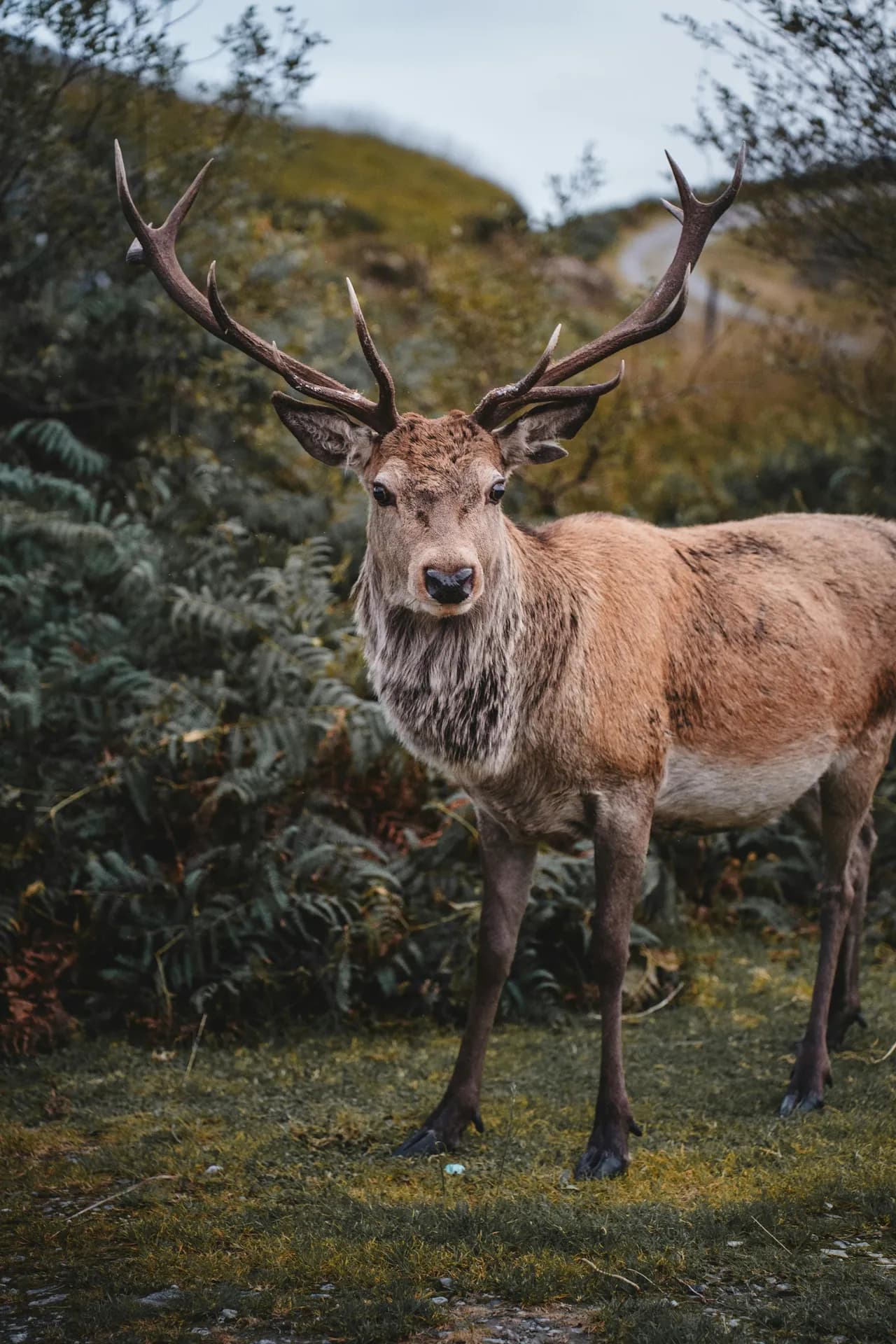
Red stag hunting in Argentina is a pursuit of Cervus elaphus — European red deer introduced to Patagonia and the Pampas in the early 1900s that have grown into some of the largest-bodied, highest-scoring red stag on Earth. Argentine stags routinely produce SCI scores of 300-380, with exceptional animals exceeding 400 — numbers that rival or surpass anything in Europe or New Zealand. The roar (the Argentine rut) peaks in March and April, when mature stags become vocal, territorial, and reckless in ways that make this one of the most dramatic hunts in the world.
Argentina's combination of rich grassland nutrition, mild winters, low hunting pressure on quality estancias, and over a century of genetic development has created a red stag population that consistently outperforms its European ancestors. I have hunted red stag on four continents, and the Argentine roar is the hunt I keep coming back to. When a 350-class stag steps out of a tree line at dawn, chest heaving, neck swollen, roaring at a rival 200 metres away — that is a moment that rewires how you think about deer hunting.
Why does Argentina produce world-class red stag?
Argentina's red stag story begins in 1906 when Pedro Luro imported European red deer from Austria-Hungary and Germany to his estate in La Pampa province. Over the next century, those deer spread across central Argentina and into Patagonia, finding conditions that European deer could only dream of — vast grasslands with year-round nutrition, mild winters that do not stress animals the way Scandinavian or Scottish winters do, and enormous home ranges that allowed natural selection to favour the biggest, strongest animals.
The result is a population of red stag that consistently grows larger antlers than their European ancestors. Average body weight for a mature Argentine stag runs 200-280 kg — comparable to the largest Central European populations but with significantly more antler mass. The nutritional advantage is real and measurable: Argentine stags in La Pampa and Buenos Aires province have access to alfalfa, clover, and native grasses that provide protein levels of 15-22% year-round. In Scotland or Spain, winter nutrition drops below 8%, and antler growth suffers accordingly.
The genetics are Central European — primarily Austrian and German bloodlines — but 120 years of natural selection in ideal habitat have produced animals that routinely carry 14-18 points (tines) per side and main beams exceeding 100 cm. The Argentine red stag is, in many hunters' assessment, the finest free-range Cervus elaphus in the world.
Where to hunt red stag in Argentina
Argentina's red stag populations concentrate in three primary regions, each offering a different hunting experience and terrain character.
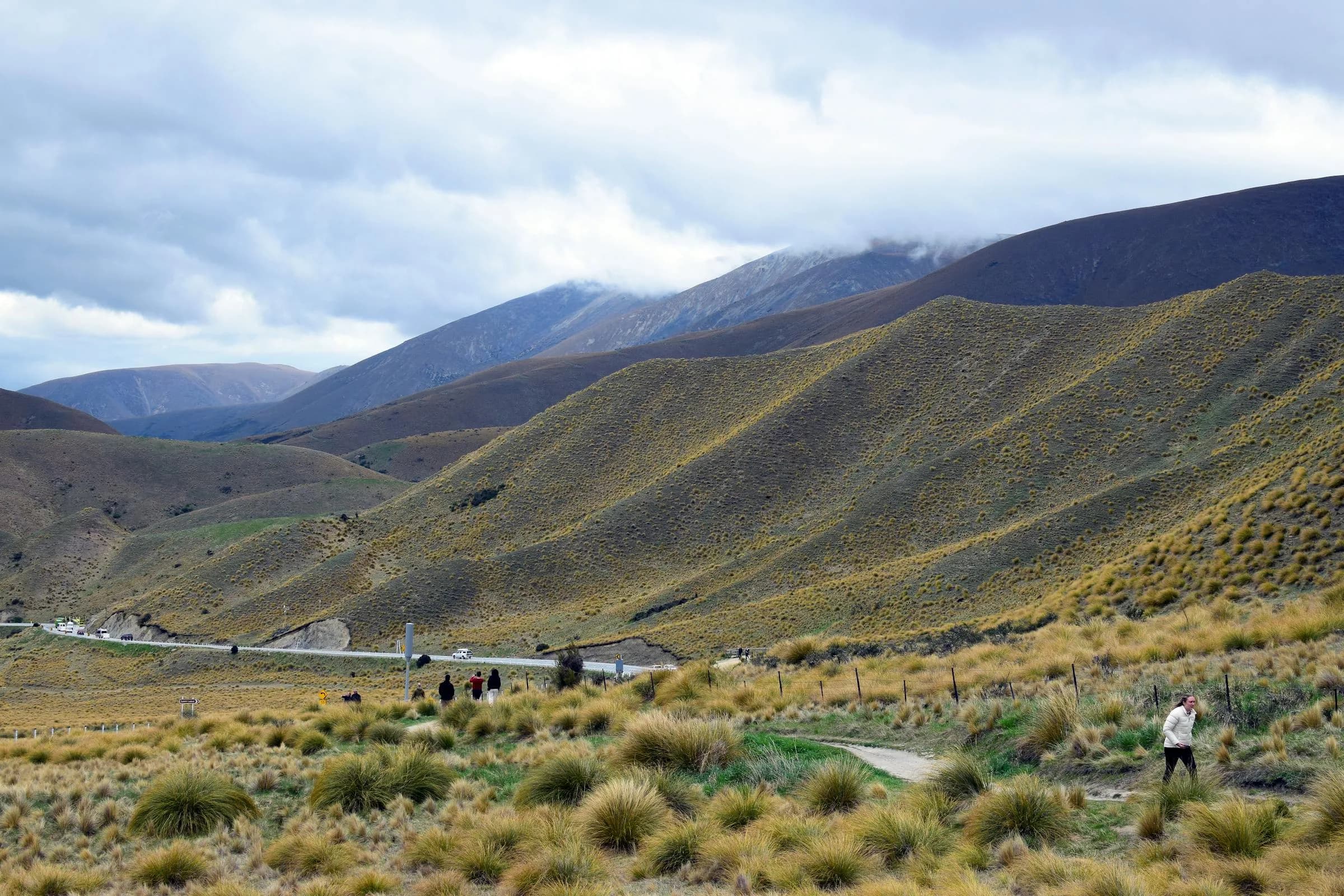
La Pampa province: The heartland of Argentine red stag hunting. La Pampa sits in central Argentina, roughly 600 km southwest of Buenos Aires, and offers rolling grassland interspersed with caldén forest — a native woodland of Prosopis caldenia trees that provides bedding cover and thermal shelter. The terrain is open enough for long-range glassing but broken enough for stalking approaches. La Pampa estancias typically cover 5,000-20,000 hectares with well-managed stag populations. Trophy quality is consistently high: 300-380 SCI is the working range on good ground.
Buenos Aires province (southern districts): The agricultural heartland south of Buenos Aires city — around Tandil, Olavarría, and the Sierra de la Ventana — holds strong red stag populations on private estancias surrounded by rich farmland. Stags here benefit from crop nutrition (soybeans, corn, sunflower) and can grow exceptional mass. Access is easier than La Pampa — 3-5 hours by road from Buenos Aires Ezeiza International Airport (EZE).
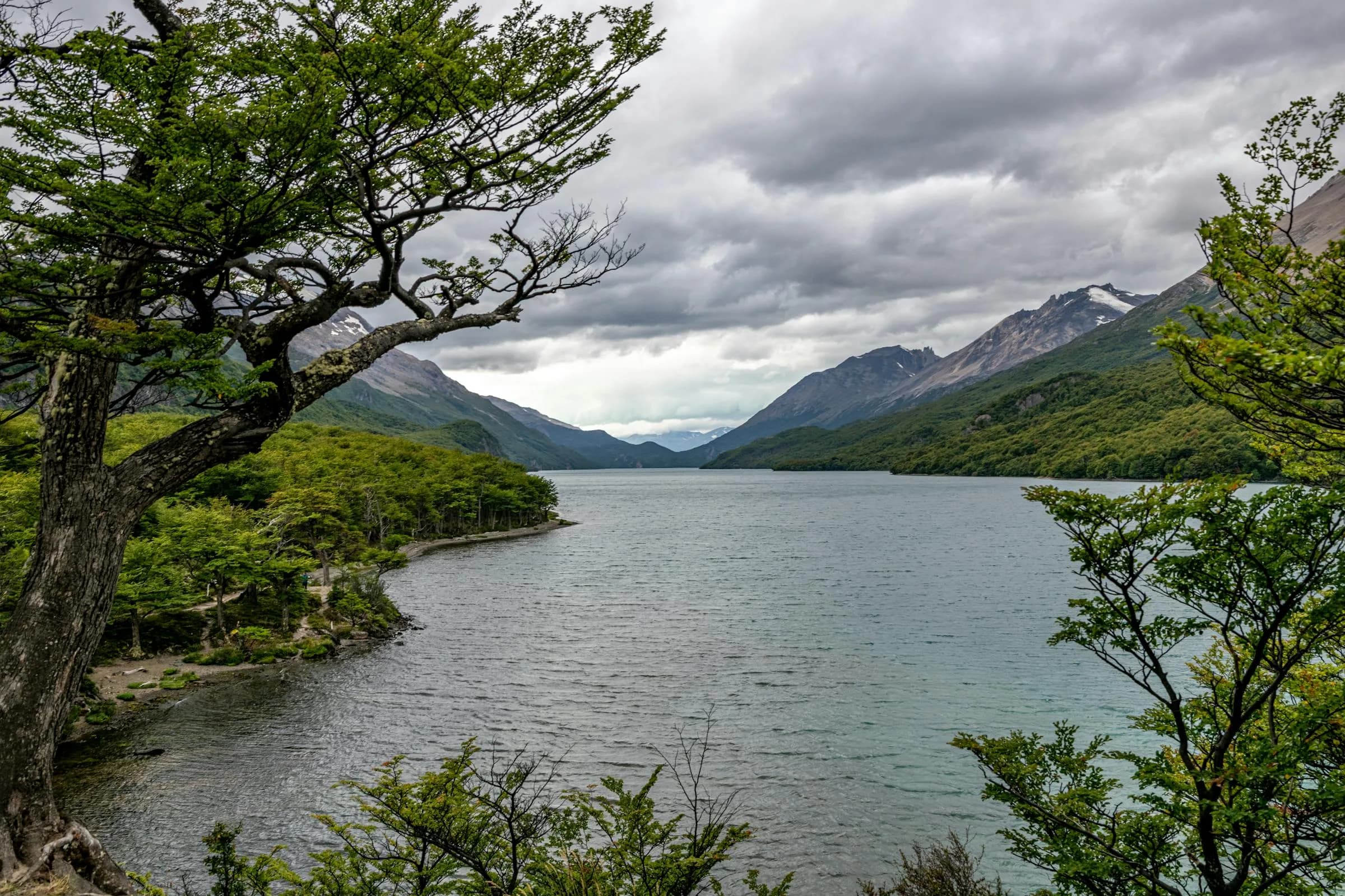
Patagonia (Neuquén, Río Negro, Chubut): The Andean foothills and steppe country of northern Patagonia offer a completely different setting — mountain forests of lenga and coihue beech, crystal rivers, and snowcapped peaks. Stag hunting here is more physically demanding, with steep terrain and variable weather, but the setting is spectacular. The Lanín National Park region around San Martín de los Andes and Junín de los Andes is the epicentre. Trophy quality matches La Pampa, and the landscape is unforgettable.
For a first Argentine red stag hunt, I recommend La Pampa or Buenos Aires province. The terrain is walkable, the stag density is high, and the estancia hospitality is world-class.
When is red stag season in Argentina?
Argentina's red stag hunting season runs from approximately March through July, covering the Southern Hemisphere's autumn and early winter. The timing centres on the roar — the Argentine term for the rut — which is the defining event of the season.
March (pre-roar and early roar): Stags begin separating from bachelor groups in early March. Necks swell as testosterone levels climb. The first roaring is heard in the second or third week of March — deep, guttural bellows that carry across the pampas at dawn and dusk. By late March, the roar is building in intensity. This is an excellent time to hunt: stags are in full antler, increasingly vocal, but not yet fully committed to harems, which means they are still moving across large areas and can be ambushed on travel routes between feeding and bedding areas. Temperatures: 15-25°C days, 5-10°C nights.
April (peak roar): This is the window. The roar peaks in April across most of Argentina, typically the first three weeks. Mature stags are holding harems of 5-15 hinds, roaring continuously, sparring with rivals, and responding to calls. A roaring stag will walk toward a well-placed caller at 50-100 metres — something no red stag will do outside the rut. Hunting during the peak roar is a sensory overload: you hear stags in every direction, see fresh rubs and wallows everywhere, and the air smells of musk and churned earth. Days are still mild (12-22°C) with increasingly crisp mornings (2-8°C). This is when I recommend most hunters come.
May-July (post-roar): The rut winds down through May. Stags are exhausted, having lost 15-20% of their body weight during the roar. They retreat to thick cover to recover. Hunting becomes more of a spot-and-stalk affair in feeding areas at dawn and dusk. Some hunters prefer this period for the quieter, more technical pursuit. June and July bring colder weather (0-12°C days, -5°C nights in La Pampa) and shorter days. Antlers are still carried through June; most stags shed in July-August.
For the full red stag experience — roaring, calling, the visceral intensity of the rut — book the first two weeks of April.
What caliber for red stag?
Red stag are large-bodied deer with thick necks (especially during the rut), heavy shoulder bones, and a deep chest. A mature Argentine stag in rut weighs 220-280 kg. Caliber selection should reflect this — these are not whitetails.
Minimum: .30-06 Springfield with 180-grain premium bullets. The .30-06 has taken more red stag worldwide than any other caliber, and it remains an excellent choice in Argentina where shot distances are typically 100-250 metres. Use bonded or monolithic bullets: Nosler Partition, Barnes TTSX, Swift A-Frame.
Recommended: .300 Winchester Magnum with 180-200 grain premium bullets. The .300 Win Mag gives you a meaningful ballistic advantage at the longer distances that La Pampa's open terrain can present — 250-350 metre shots are not uncommon when a stag is roaring on the far side of a clearing. The additional energy (3,500 ft-lbs at the muzzle vs. 2,900 for the .30-06) provides better performance on quartering shots through heavy rut-swollen necks.
Also excellent: 7mm Remington Magnum (160-175 grain), .308 Winchester (180 grain bonded), .338 Winchester Magnum (225-250 grain), and the Scandinavian favourite 6.5x55 Swedish Mauser with 156-grain Norma Oryx (adequate but at its limit on large stags).
Not recommended: Anything below .270 caliber. Red stag are thick-skinned, heavy-boned animals, and lightweight bullets designed for deer under 100 kg are inadequate.
Practical note: Most Argentine estancias have quality rifles available for guest use — typically Remington 700 or Tikka T3x in .300 Win Mag, zeroed and maintained. If you prefer not to navigate the RENAR firearms import process, borrowing an estancia rifle is a perfectly sound option.
How does the RENAR firearms import process work?
Argentina's firearms import for visiting hunters is administered by RENAR (Registro Nacional de Armas) — the national firearms registry — and requires advance paperwork that your outfitter or host should coordinate.
Timeline: Start the process 60-90 days before your trip. RENAR applications can take 30-45 business days to process. Late applications risk delays or denial.
Required documents: Valid passport (6+ months validity), home-country firearms licence or permit, detailed firearm description (make, model, caliber, serial number), ammunition quantity declaration (typically 60-100 rounds maximum), and a letter of invitation from your Argentine outfitter.
Process: Your outfitter submits the RENAR application on your behalf. Once approved, you receive a RENAR permit number that must be presented at Argentine customs on arrival. At Ezeiza Airport (EZE), you clear customs with your firearm in a locked hard case. The process takes 30-60 minutes with an approved permit.
Cost: RENAR permit fees are approximately $150-$200 USD.
Alternative: As noted above, many quality estancias provide well-maintained rifles for guest use. On a Huntica Hosted trip, we handle all RENAR paperwork if you bring your own rifle and can arrange an estancia rifle if you prefer to travel without firearms. Either way, you are covered.
See our international firearm import guide for the full step-by-step process.
How are red stag trophies scored?
Red stag antlers are scored using the Safari Club International (SCI) method or the CIC (Conseil International de la Chasse) method. Both evaluate antler size, symmetry, and character, but the scoring approaches differ significantly.
SCI scoring: Measures the total length of both main beams plus the length of every tine, plus four circumference measurements per antler. All measurements are added together. No deductions for asymmetry — SCI rewards total antler mass regardless of symmetry. This is the most commonly used system in Argentina.
SCI benchmarks for Argentine red stag:
- SCI minimum entry: 225 inches combined.
- Average mature stag (quality estancia): 300-340 SCI. This represents a 10-14 point stag with main beams of 90-100 cm. A genuine, impressive trophy by any global standard.
- Good stag: 340-380 SCI. Heavy beams, long tines, typically 12-16 points per side. Coronas (crown tines at the top) are well-developed. These animals are 6-8 years old.
- Exceptional stag: 380-420+ SCI. These are the stags that make Argentina famous — massive antlers with 14-18 points per side, main beams exceeding 110 cm, and thick, palmated crowns. A 400+ SCI stag is a world-class trophy by any measure.
CIC scoring: Used primarily by European hunters. CIC evaluates antler weight (dried skull and antlers weighed after 90 days), beam length, tine length, circumference, and adds beauty points for colour, pearling, and crown development. Deductions apply for asymmetry. CIC Gold Medal: 210+ points. CIC Silver: 190-209. CIC Bronze: 170-189.
Field judging: Count the points first — look for long brow tines (first tines, also called "beys"), strong bez tines (second tines), a trez tine (third tine), and a well-developed crown with 3+ tines at the top. Then assess beam length: if the main beam extends well past the ear tips (ear tips are roughly 25 cm in red stag), the stag is likely 90+ cm per beam. Finally, check mass — heavy, rough-textured beams with deep pearling indicate maturity. Your PH will guide you, but developing your own eye makes the hunt richer.
What does a red stag hunt cost in Argentina?
Argentine red stag hunts offer strong value relative to other world-class red stag destinations — particularly compared to New Zealand and Eastern Europe — while providing consistently higher trophy quality.
Daily rates: $400-$800 USD per day per hunter at quality estancias. This typically includes accommodation (estancia lodge or hunting house), all meals and drinks (Argentine wine and asado are part of the experience), guide/PH services, field vehicles, and trophy preparation. A 5-7 day hunt is standard. Daily rate subtotal: $2,000-$5,600.
Trophy fees: Red stag trophy fees in Argentina range from $2,500-$6,000 USD depending on the estancia, the quality of the ground, and whether the operation uses tiered pricing by antler score. Some operations charge a flat fee (typically $3,000-$4,000 for any mature stag); others use tiers: under 300 SCI at $2,500, 300-350 SCI at $3,500, 350-400 SCI at $5,000, and 400+ SCI at $6,000+.
Combining with dove shooting: Many hunters add 1-2 days of high-volume dove shooting in Córdoba province — the dove capital of the world. Córdoba is a 1-hour flight from Buenos Aires, and daily rates for dove shooting run $400-$600 per day including guide, bird boys, ammunition (1,000-2,000 rounds per day is normal), and meals. A classic Argentine combination: 5 days red stag in La Pampa + 2 days dove in Córdoba.
Total trip cost (self-booked): For a 7-day hunt including red stag, flights from Europe or the US, daily rates, and trophy fee: $6,000-$12,000 USD per hunter before taxidermy and shipping.
With Huntica hosting: A Huntica Hosted red stag hunt is quoted as one all-in figure per hunter, depending on group size, trophy expectations, and whether dove shooting is included. A Huntica Bespoke private trip for 1-2 hunters sits at the upper range. See our hunting safari costs breakdown for how these numbers stack up across destinations.
What is not included: International flights ($800-$1,500 from the US, €700-€1,400 from Europe to Buenos Aires), taxidermy and trophy shipping ($1,500-$4,000 to Europe/US), RENAR firearms import permit ($150-$200), travel insurance (€200-€500), and gratuities (10% of daily rate + trophy fee for guide; $20-$30/day for camp staff).
Can I combine red stag with dove shooting?
Yes — and you should. Argentina is the only country in the world where you can hunt a 350+ SCI red stag during the roar and shoot 1,000 doves in a single afternoon, all within the same trip.
Córdoba dove shooting is a phenomenon unlike anything else in wingshooting. The eared dove (Zenaida auriculata) population in Córdoba province is estimated at 30-50 million birds. Agricultural grain production (soybeans, corn, sorghum, sunflower) supports these numbers, and there is no closed season and no bag limit. On a typical shooting day, a competent wingshooter fires 1,000-2,000 rounds and may take 500-1,000 birds. The birds fly fast — 60-80 km/h — in continuous waves from roost to feeding fields, providing non-stop shooting from 08:00 to 18:00 with a break for a long Argentine lunch.
Logistics: Fly Buenos Aires to Córdoba (1 hour) on Aerolíneas Argentinas or FlyBondi. Dove lodges in the Córdoba countryside are 1-2 hours from the airport. Quality lodges include Pica Zuro, David Denies, and several Huntica-vetted operations. Daily rate: $400-$600 including guide, bird boys, all ammunition, and meals. Ammunition costs are a significant component — 2,000 rounds of 20-gauge at $0.15-$0.25 per shell adds up.
Typical combination itinerary: Fly into Buenos Aires (EZE), transfer to La Pampa (5 hours) or fly to Santa Rosa airport (1 hour). Hunt red stag for 5 days during the roar. Transfer to Córdoba (flight or 6-hour drive). Shoot doves for 2 days. Fly home from Córdoba or return via Buenos Aires. Total trip: 9-10 days.
On a Huntica Hosted trip, we coordinate the entire combination — estancia, dove lodge, internal transfers, and firearms logistics across provinces.
What does a hosted red stag hunt look like with Huntica?
A red stag hunt with Huntica during the roar is a sensory experience built around calling, stalking, and the rhythm of the Argentine estancia.
You arrive at Buenos Aires Ezeiza Airport and transfer to the estancia — either by road (4-6 hours to La Pampa) or by internal flight to Santa Rosa or Tandil. The estancia lodge is typically a beautifully maintained ranch house: thick adobe walls, hardwood floors, open fires, and a kitchen running all day. Argentine hospitality is generous — empanadas on arrival, Malbec with lunch, a three-hour asado in the evening.
Hunting starts before dawn. At 05:00, you walk out into the pampas in near-darkness, listening. The first roar cuts through the cold morning air — a deep, primal bellow that rises and falls over 3-4 seconds. Then another. Then five or six stags answering from different directions. By first light, you are glassing caldén edges and clearings, locating stags by sound and then by sight. A roaring stag throws his head back, shows his full rack, and his breath steams in the cold air. It is one of the great sights in hunting.
The approach depends on the terrain. In La Pampa's open caldén woodland, stalks are 200-400 metres through scattered trees and waist-high grass. Your PH may call — using a roar tube to provoke the stag into approaching or holding position while you close the distance. During the peak roar, a dominant stag will often walk toward the caller, stiff-legged and furious, presenting a broadside shot at 100-150 metres. Other times, you stalk to a caldén tree, set up shooting sticks, and wait for the stag to step clear of his harem at 200-250 metres.
Evenings on the estancia are as much a part of the experience as the hunt itself. Argentine asado — whole rib racks slow-cooked over hardwood coals for 3-4 hours — is not a meal, it is a ritual. Wine flows. Stories build. Friendships form. By day 3, the group feels like it has known each other for years. That is the part of a Huntica Hosted trip that no brochure captures and no self-booked hunt replicates.
What the hosting layer adds: I have hunted these estancias. I know which guides can call a stag and which cannot. I know which concessions hold 350+ animals and which top out at 300. When the roar is early or late — and it shifts by 1-2 weeks depending on moon phase and weather — I adjust the schedule. When a hunter misses and loses confidence, I manage the recovery. That is what we host where we hunt looks like in the Argentine field.
Frequently Asked Questions
Do I need a visa to hunt in Argentina?
Citizens of the US, EU, UK, Canada, Australia, and most Scandinavian countries do not need a visa for Argentina for stays under 90 days. You receive a free entry stamp on arrival at Ezeiza Airport. Your passport must be valid for at least 6 months. US citizens pay a reciprocity fee online before travel (approximately $160). Check with the Argentine consulate for your specific nationality.
How far in advance should I book?
Book 6-12 months ahead for peak roar dates (late March through mid-April). The best estancias and guides fill early — quality ground with 350+ class stags is finite, and repeat clients book year to year. Off-peak dates (May-July) are easier to secure with 3-6 months notice.
Can I hunt red stag with a bow?
Yes. Bow hunting red stag during the roar is exceptional — calling a rutting stag to within 30 metres is realistic during peak roar. Use a compound bow with 70+ lbs draw weight and heavy, fixed-blade broadheads. Arrow weight should exceed 450 grains. Ground blinds near wallows and travel corridors are also productive. Several Argentine estancias specialize in bow hunting and have stands and blinds in place.
What other species can I hunt in Argentina?
Argentina offers blackbuck antelope (year-round, SCI minimums regularly exceeded), wild boar (excellent populations in La Pampa, year-round), axis deer (introduced, Buenos Aires province), water buffalo (Corrientes province, northeast), and fallow deer (limited populations). The combination of red stag + blackbuck + boar on a single La Pampa estancia is popular and cost-effective — blackbuck trophy fees run $1,500-$2,500 and boar $500-$1,000.
Is the red stag hunting in Argentina free-range?
This varies by estancia. Some operations are fully free-range on unfenced land — stags move freely across boundaries and the population is self-sustaining. Others operate on high-fenced properties of 3,000-15,000 hectares where the deer are wild and self-sustaining but contained. On Huntica trips, we are transparent about fence status: we hunt on ground where the stags are genuinely wild-behaving, with enough acreage that the fence plays no role in the hunting experience. Ask us directly — we will tell you exactly what the ground looks like.
What is the weather like during the roar?
March-April in central Argentina is early autumn. Expect daytime temperatures of 12-25°C, dropping to 2-8°C at night. Rain is possible but infrequent — La Pampa receives about 600 mm annually, most of it in summer (December-February). Mornings are cold and still — ideal for hearing and calling stags. Wind picks up midday and can make afternoon hunting challenging. Pack layers: a light down jacket for dawn, a breathable mid-layer, and a waterproof shell.
How do I get my red stag trophy home?
Argentine taxidermists handle the initial prep — caping, salting, and drying. Shoulder mounts are typically done in Argentina ($800-$1,800 for red stag) or shipped raw to your home-country taxidermist. Shipping via sea freight to Europe takes 3-5 months; to the US, 4-6 months. Cost for a crate with one red stag shoulder mount and 2-3 smaller trophies: $2,000-$4,000. Red deer are not CITES-listed — no special permits beyond standard veterinary export documentation. On a Huntica trip, we manage the full process. See our trophy shipping guide for details.
Tell us where you want to go
If the roar has been on your list — or if it just landed there — the next step is a straight conversation about the ground, the season, and what a hosted red stag hunt actually looks like in the Argentine field. Tell us where you want to go, and we will build it from there. No brochures. Just a conversation between people who have been on the ground and know what it takes.