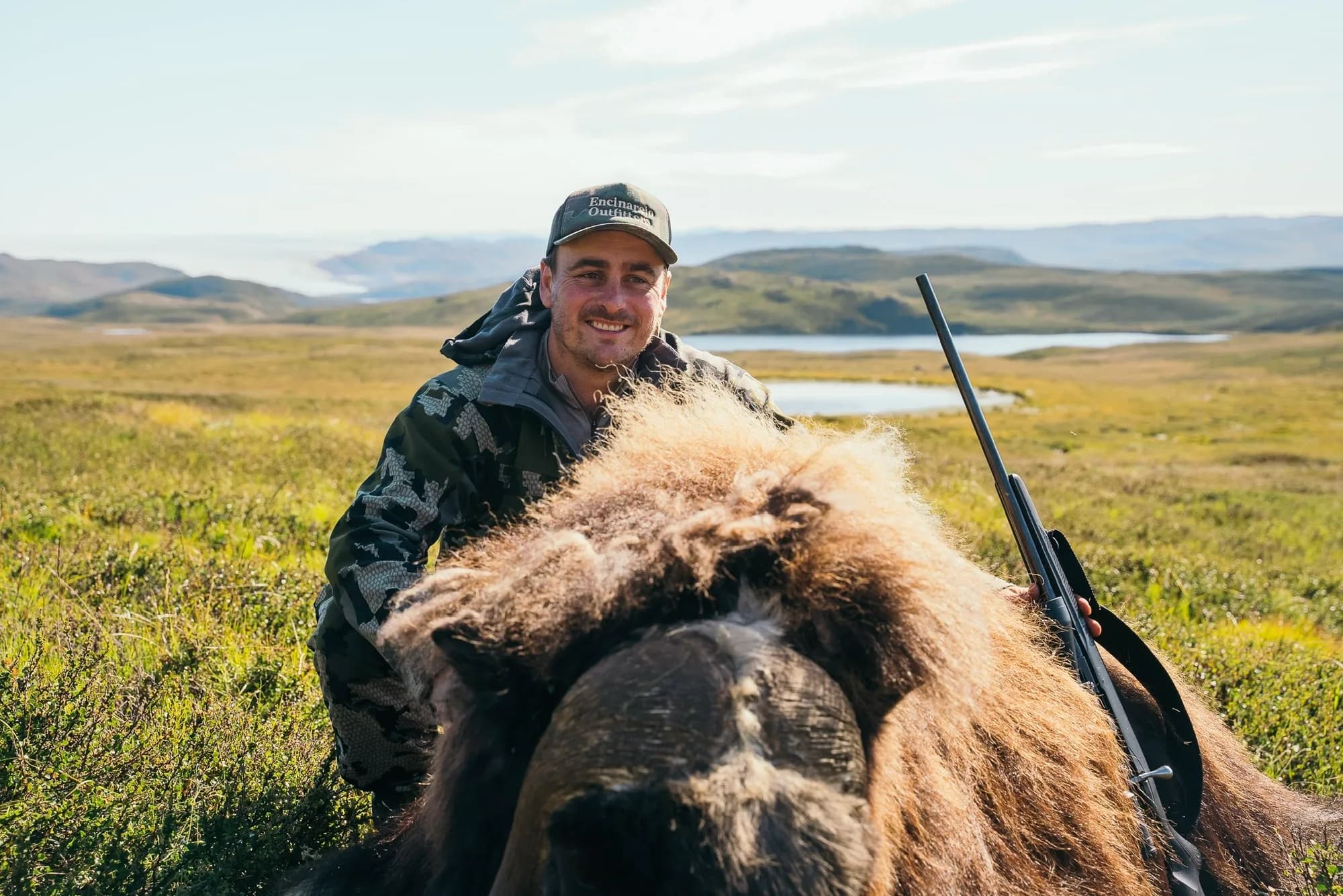
Muskox hunting in Greenland is an Arctic expedition pursuit of Ovibos moschatus — a 350-400 kg Ice Age survivor that has roamed Arctic tundra for over 100,000 years. Greenland holds the world's largest huntable muskox population, estimated at 20,000-25,000 animals concentrated around Kangerlussuaq and the Nuuk backcountry. The season runs July through September, with most hunters arriving in August when the tundra is dry, the bulls are pre-rut, and Arctic daylight stretches 18-20 hours.
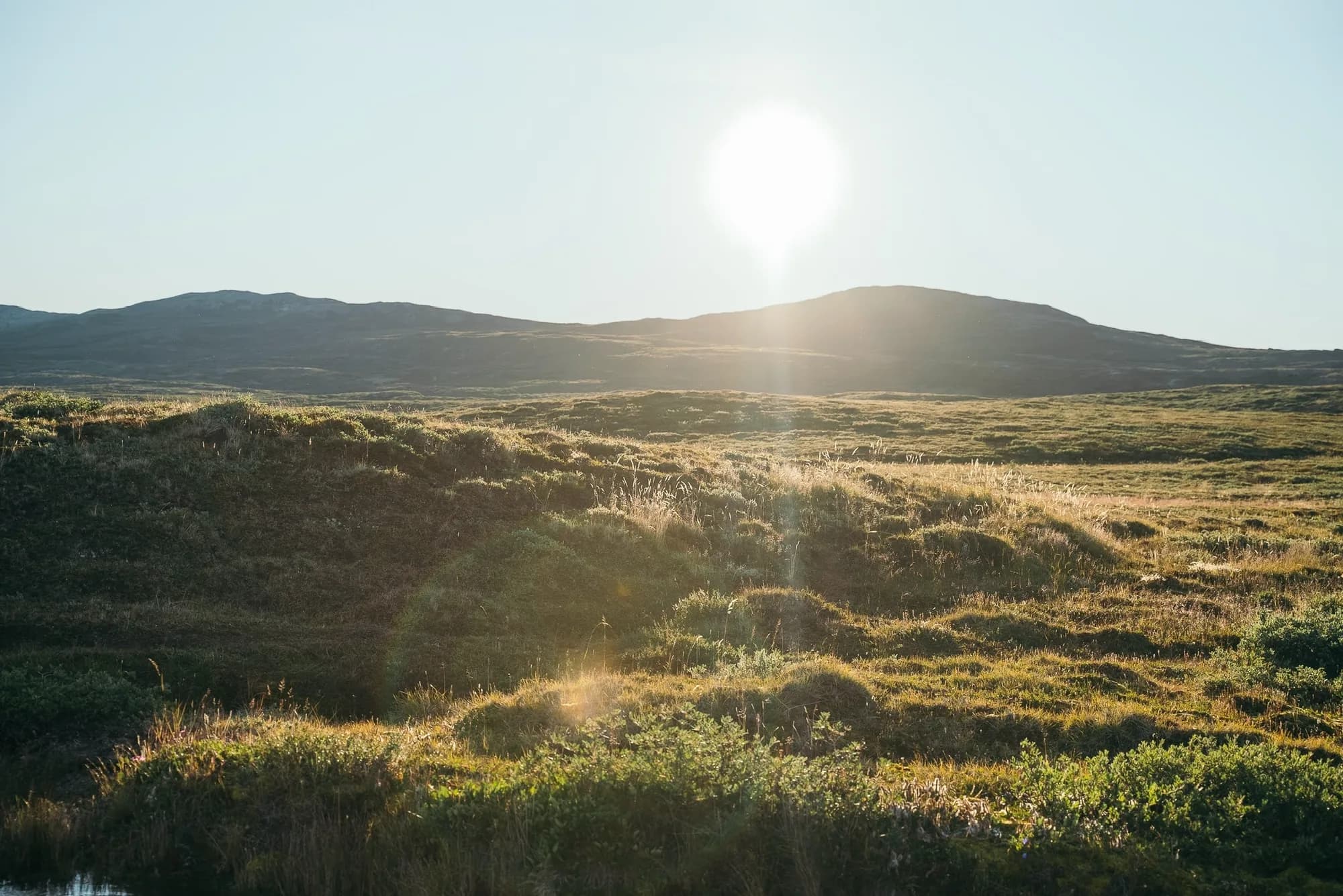
This is not a standard hunt. This is wilderness at its rawest — no roads, no fences, no cell signal. My father was raised hunting Greenland's fjords and open tundra, and the land around Kangerlussuaq is part of my family's heritage. When I guide a hunter into the interior, we are walking country that has not changed in ten thousand years. The muskox herds we glass from the ridgelines are behaving exactly as they did when the Inuit first arrived.
What makes muskox hunting unique?
Muskox hunting is the most remote, expedition-style hunt available in the Northern Hemisphere. No other huntable species demands this level of logistical commitment — flying to Greenland via Copenhagen on Air Greenland, chartering a bush plane or boat to reach hunting ground, and operating from a tent camp in treeless Arctic terrain where the nearest settlement may be 80-150 kilometres away.
The animal itself is extraordinary. Muskox are the only surviving members of the genus Ovibos. They survived the Pleistocene alongside woolly mammoths and sabre-toothed cats. A mature bull weighs 350-400 kg, stands 1.5 metres at the shoulder, and carries a distinctive boss — a heavy helmet of fused horn that covers the skull — from which curved horns sweep downward and then flare outward. The qiviut undercoat beneath their guard hair is finer than cashmere and insulates to -40°C. They are built for the Arctic in a way no other large mammal can match.
The hunting is physical but not technical. Muskox are herd animals and rely on defensive formation rather than flight. The challenge is the approach — crossing vast open tundra with no cover, reading wind that shifts constantly, and closing to 150-250 metres on terrain where the animals can see you from a kilometre away.
Where to hunt muskox in Greenland
Greenland is the world's premier muskox hunting destination, holding roughly 20,000-25,000 animals across the western and eastern coasts. The two primary hunting regions offer different experiences.
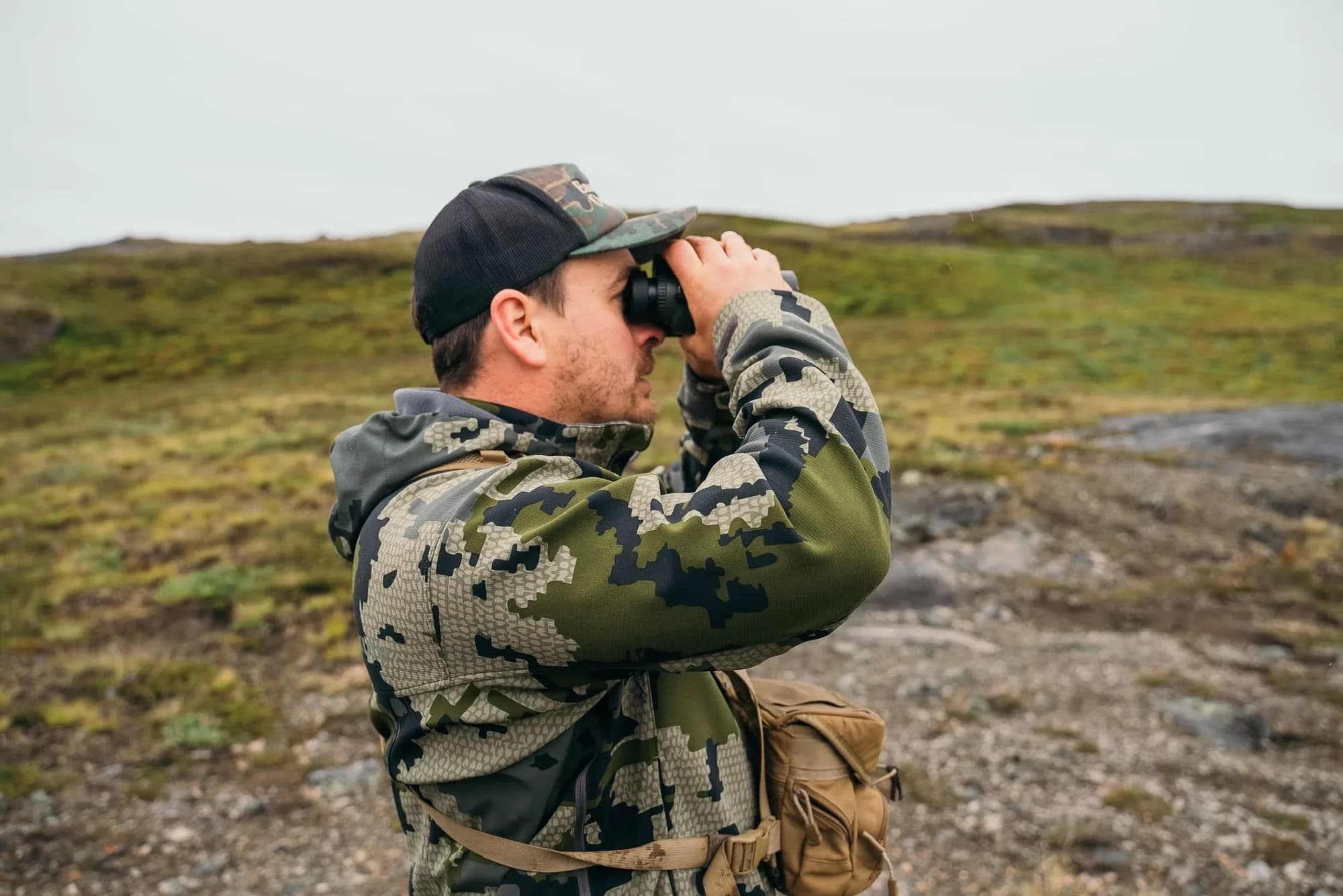
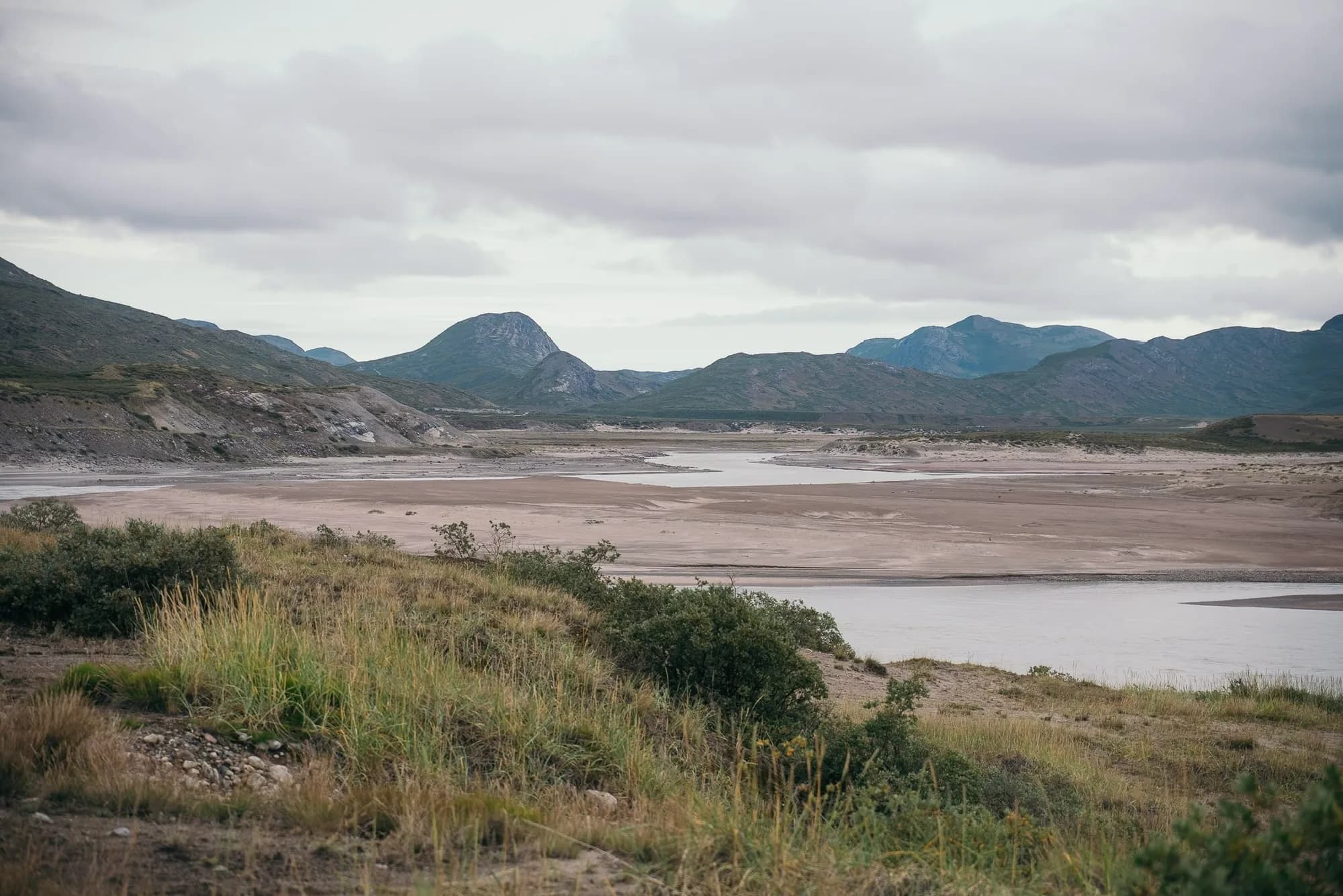
Kangerlussuaq (Sondrestrom): This is the heartland. The Kangerlussuaq area in western Greenland holds the densest muskox populations on Earth — an estimated 8,000-12,000 animals across the inland plateau between the Greenland ice sheet and the Davis Strait coast. The terrain is rolling Arctic tundra dissected by river valleys, glacial moraines, and sparse dwarf willow scrub. The former US Air Force base at Kangerlussuaq provides the main access point, with Air Greenland flights from Copenhagen (4.5 hours direct). From Kangerlussuaq, hunting areas are accessed by boat along the fjord system or by overland trek with pack support. Most hunts operate 30-80 kilometres from town.
Nuuk region: The capital region's backcountry holds strong muskox populations in the fjord systems south and east of Nuuk. Access is typically by boat from Nuuk harbour. The terrain is more mountainous than Kangerlussuaq, with steeper valleys and coastal influence. This region suits hunters who want to combine muskox with Arctic char fishing in world-class rivers like the Kapisillit.
Eastern Greenland (Scoresby Sund / Ittoqqortoormiit): The most remote option. Muskox populations here are smaller but the bulls can be exceptional. Access requires a charter flight from Akureyri, Iceland, or a coastal vessel. This is full expedition territory — 5-7 days minimum, high logistical cost, but an experience unlike anything else in hunting.
When is muskox hunting season?
The Greenlandic muskox season runs from July through September, set by the Naalakkersuisut (Government of Greenland) and administered through the municipal quota system. The timing is driven by practical Arctic realities as much as biology.
July (early season): Snow melt is finishing. Rivers and streams are running high, which can complicate cross-country travel. Mosquitoes and blackflies are at peak intensity — Arctic insects are legendary, and proper head nets and DEET are non-negotiable. Daylight is near-continuous: 22-24 hours of usable light at Kangerlussuaq's latitude (67°N). Bulls are in summer coat, feeding heavily on willow, sedge, and Arctic grasses. The tundra is green and lush. Temperatures range 5-15°C.
August (prime season): This is when I take most of my hunters. Insects taper off significantly after mid-August. Bulls are putting on pre-rut weight and becoming more territorial — you start seeing bachelor groups of 3-6 mature bulls separated from the mixed herds. Daylight drops to 16-18 hours. The tundra begins shifting from green to the burnt orange and gold of Arctic autumn. Night temperatures reach -2°C to 5°C. River crossings are more manageable. This is the window.
September (late season): The rut begins. Bulls join mixed herds and start competing for cows — sparring, posturing, and the thunderous head-on collisions that muskox are famous for. This is the most dramatic time to be on the ground, but weather becomes less predictable. Snow can arrive any day after mid-September. Temperatures range -5°C to 8°C. Daylight is 12-14 hours. Late September hunts carry higher weather risk but offer the spectacle of the rut.
What caliber for muskox?
Muskox are heavily built, thick-skinned animals with a dense undercoat and long guard hair that can visually distort the body outline and make shot placement challenging. A mature bull's chest is deep — roughly 60 cm from spine to brisket — and protected by heavy rib bones and a thick layer of muscle. Caliber selection should err on the heavy side.
Minimum: .30-06 Springfield with 200-220 grain premium bullets. This will work on a broadside shot with perfect placement, but it leaves little margin. I have seen .30-06 fail on quartering shots when the bullet does not carry enough energy through the shoulder.
Recommended: 9.3x62 Mauser. This is the classic Scandinavian big-game caliber and, in my view, the ideal muskox round. A 286-grain Nosler Partition or Swift A-Frame at 2,360 fps delivers deep penetration without excessive meat damage. The 9.3x62 has been the standard moose and bear caliber in Scandinavia for over a century, and it handles muskox beautifully. Recoil is manageable for most experienced hunters.
Ideal: .375 H&H Magnum. If you already own one, bring it. The .375 with 300-grain bonded bullets is simply the most reliable muskox caliber — plenty of penetration for any angle, adequate energy at 250 metres, and zero worry about whether the animal will go down. On an Arctic expedition where you may only get one shot opportunity after a 6-hour stalk across open tundra, reliability matters more than anything.
Also excellent: .338 Winchester Magnum (250-grain), .300 Winchester Magnum (200-grain bonded), .35 Whelen (250-grain).
Bullet selection: Controlled-expansion or monolithic only. Barnes TSX, Swift A-Frame, Nosler Partition, or Federal Trophy Bonded. Standard cup-and-core bullets break up on muskox shoulder bone. Bring 40 rounds — you will use 5-10 for zeroing and practice in camp, and you want reserves in case of a re-sight after rough transport.
How does shot placement work on muskox?
Shot placement on muskox requires understanding two things that differ from most other game: the visual distortion caused by the long guard hair, and the anatomy of the boss.
The heart/lung shot (broadside): The muskox's guard hair hangs 15-20 cm below the actual body line, making the animal appear much larger than the vital zone. Aim at the centre of the visible shoulder — where the front leg meets the body — and one-third up from the bottom of the body (not the bottom of the hair). This places the bullet through both lungs. A muskox hit here will typically stand for 5-15 seconds, then collapse. They rarely run.
Quartering away: Aim for the off-shoulder through the ribcage. The bullet must penetrate 50-60 cm to reach the opposite vitals. This is where the 9.3x62 or .375 H&H earns its keep — lighter calibers risk insufficient penetration at this angle.
Frontal shot: Unlike most game, the frontal shot on muskox is viable on mature bulls. The boss — the fused horn plate covering the skull — provides a clear aiming point. Place the bullet just below the boss, between the eyes, for a brain shot at ranges under 100 metres. This is a finishing shot, not a first shot. The target is roughly 8 cm wide.
Never shoot into the boss itself. The horn mass is dense enough to deflect or stop rifle bullets. Several well-documented cases exist of .300 Winchester Magnum rounds failing to penetrate a mature bull's boss.
Practical reality: Most muskox are taken at 100-200 metres. When a herd is located and the stalk is complete, the animals typically form a defensive line or semicircle facing outward. The bull you want will often be standing broadside or quartering. You will shoot from prone or a sitting position using a pack as a rest — no trees for shooting sticks on the tundra.
How are muskox trophies scored?
Muskox trophies are scored by measuring the horn length from base to tip along the outside curve, the width of each boss, and the tip-to-tip spread. Both Safari Club International (SCI) and Rowland Ward maintain records for muskox.
SCI scoring: The SCI method measures the length of each horn along the outer curve, the circumference at the base of each horn, and the greatest spread. These measurements are added for a combined score. SCI minimum entry: 75 inches combined.
Rowland Ward: Measures the greatest outside spread only. Minimum entry: 25 inches.
What makes a good muskox trophy:
- Average mature bull: Boss width of 10-12 inches across the forehead. Horn tips curving outward and upward. Spread of 22-25 inches. SCI score 80-90.
- Good bull: Heavy, thick boss with a visible helmet shape covering the top of the skull. Horn tips well-defined and sharp. Spread 25-27 inches. SCI 90-100.
- Exceptional bull: Complete boss fusion (no central furrow visible from the front — indicating 8+ years of age). Spread exceeding 27 inches. Horn tips ivory-tipped and sweeping outward. SCI 100+. These animals are old — 10-14 years — and not common.
Field judging: Look at the boss first. On a young bull (3-5 years), the bosses are separate with a clear hair gap between them. On a mature bull (6-8 years), the bosses begin fusing, with the gap narrowing. On an old bull (9+ years), the boss is a continuous plate with no gap — this is what you want. After the boss, check tip length and curvature. Tips that curve well below the eye line and then flare upward and outward indicate a mature, scorable animal.
What does a muskox hunt cost?
Muskox hunting in Greenland is expedition-level in both logistics and price. The remoteness of the hunting grounds, the cost of operating in the Arctic, and the limited annual quota all factor into the total.
Greenlandic hunting license: Approximately DKK 600-1,000 (€80-€135). This is issued through the local municipality (kommune) and requires proof of a valid hunting licence from your home country. The Naalakkersuisut administers a quota system that allocates approximately 3,000 muskox tags across Greenland annually — split between subsistence hunters (Greenlandic residents) and sport hunting licenses available to visiting hunters.
Guided hunt cost: €12,000-€20,000 per hunter for a 5-7 day muskox hunt from Kangerlussuaq. This typically includes: local guide services, camp setup and provisioning, internal transport (boat or overland vehicle to the hunting area), trophy preparation and initial treatment, one muskox tag, and field support. Eastern Greenland expeditions from Scoresby Sund run €18,000-€25,000 due to additional charter flight costs.
Flights: Copenhagen to Kangerlussuaq on Air Greenland: approximately €1,200-€2,000 return. From Europe to Copenhagen: €200-€600. From the US to Copenhagen via SAS, Scandinavian Airlines, or Lufthansa: $800-$1,500. Total flight cost from Europe: €1,400-€2,600. From the US: $2,000-$3,500.
With Huntica hosting: A Huntica Hosted muskox expedition is quoted as one all-in figure per hunter in a group of 3-4. A Huntica Bespoke private hunt for 1-2 hunters sits at the upper range. This includes all ground logistics, hosting, licensing assistance, trophy handling, and camp operations. Read our full breakdown of hunting costs for context across all destinations.
What is not included: International flights to Kangerlussuaq, travel insurance (mandatory — Arctic evacuation cover is essential), taxidermy beyond field prep, trophy shipping to your home country, and personal gear. Gratuities for local guides: €50-€100/day is appropriate.
What does a hosted muskox hunt look like with Huntica?
A muskox hunt with Huntica is a tent-based Arctic expedition — no lodges, no vehicles beyond the initial transport. This is walking, glassing, and living on the tundra.
We meet in Kangerlussuaq after your Air Greenland flight from Copenhagen. The first evening is spent at the old base facilities — zeroing rifles on the military range (still maintained for hunters and researchers), checking gear, and briefing on weather and herd locations. I will have spoken with local hunters in the days before your arrival to pinpoint where the herds are moving.
The next morning, we move to the hunting area. Depending on the zone, this means a boat ride up Kangerlussuaq Fjord (Søndre Strømfjord) — one of the longest fjords in the world at 190 kilometres — or an overland trek with pack support. Camp is simple: quality expedition tents, sleeping bags rated to -20°C, a cook tent, and everything carried or sledged in.
A typical hunting day starts at 04:00-05:00, glassing from high ground as the light comes up. Muskox herds are visible from distance on open tundra — dark shapes against green and brown ground. Once we locate a herd with a bull worth pursuing, the approach begins. This can take 2-6 hours depending on terrain and wind. We move slowly, using river channels, moraines, and subtle terrain folds for cover. The final 200-300 metres are often a crawl.
When the shot is made, the real work begins. Muskox are heavy — 350-400 kg — and we are kilometres from any road. The animal is caped and quartered in the field. Meat is packed out to camp or a pickup point. The qiviut wool is collected — it is extraordinarily valuable, worth €40-€80 per ounce raw, and we waste nothing.
Evenings in camp are some of the finest hours in hunting. Arctic light at 67° north turns the tundra gold and violet. We cook muskox loin over a gas stove — the meat is rich, lean, and closer to beef than venison. No one is checking a phone. No one is in a hurry. That is the story you take home.
What makes this different from booking through a local outfitter directly is the hosting layer. I know this ground. I know which guides are serious and which cut corners. I know where the big bulls hold in August versus September. And when weather shuts us down — which happens in the Arctic — I manage the pivot: adjust the plan by the hour, move camp if needed, extend a day if possible. That is what we host where we hunt means at the edge of the world.
Greenland hunting license and regulations
Hunting in Greenland is regulated by the Naalakkersuisut (Government of Greenland) under the Greenlandic Hunting Act. Understanding the licensing system is straightforward, but the details matter.
License requirement: All non-resident hunters need a Greenlandic sport hunting licence, obtained through the local municipality (kommune) where you intend to hunt. For the Kangerlussuaq area, this is Qeqqata Kommunia. For Nuuk, it is Kommuneqarfik Sermersooq.
Quota system: Greenland allocates approximately 3,000 muskox tags annually across all regions. This quota is split between subsistence hunting (Greenlandic residents) and sport hunting licenses. The sport hunting allocation varies by region and year — typically 100-300 tags for visiting hunters nationally. Tags are not unlimited, and popular areas like Kangerlussuaq can sell out. Book 6-12 months in advance.
Firearm regulations: Greenland permits rifles in calibers from .222 Remington upward for muskox (though anything under .30-06 is inadequate — see caliber section). Shotguns and handguns are not permitted for muskox. You must declare your firearm on arrival at Kangerlussuaq airport. A temporary firearm import permit is issued at the airport based on your home-country firearm licence. The process takes 15-30 minutes.
Bag limit: Typically one muskox per licence per season. Additional tags may be available in some areas if the quota has not been filled.
Mandatory requirements: A valid hunting licence from your home country is required. Hunters must be accompanied by an approved local guide in most areas. Trophy export requires a veterinary certificate from the Greenlandic authorities.
CITES: Muskox (Ovibos moschatus) is not listed on any CITES appendix. No CITES permits are required for trophy export to any destination. Standard veterinary export documentation is sufficient.
See our international firearm import guide for a complete walkthrough of bringing your rifle to Greenland.
Frequently Asked Questions
How physically demanding is a muskox hunt?
A muskox hunt in Greenland requires moderate to good fitness. You will walk 10-20 kilometres per day across uneven tundra — spongy moss, loose rock, river crossings (ankle to knee deep), and rolling hills with 200-400 metres of elevation change. There are no trails. The terrain is not steep like mountain hunting, but the distances and the ground surface make it tiring. If you can hike 15 kilometres with a daypack over rough ground, you are fit enough. Start walking 8-12 weeks before your trip, focusing on uneven terrain.
What is the success rate on muskox?
Success rates on guided muskox hunts in the Kangerlussuaq area run 90-98%. Muskox are herd animals that do not flee the way deer or antelope do — when threatened, they form a defensive circle or line. The challenge is finding and approaching the herd, not getting a shot once you have closed to range. Weather is the primary factor that affects success — high wind or sudden fog can shut down hunting for a day.
Can I combine muskox with other species in Greenland?
Greenland's primary game species are muskox and caribou (reindeer). In some areas, caribou tags are available alongside muskox, and the species share habitat. Arctic fox hunting is also available in certain seasons. World-class Arctic char fishing is possible in the rivers around Kangerlussuaq and Nuuk — many hunters add 1-2 fishing days to a muskox trip. There are no other large game species in Greenland.
What gear do I need for a Greenland muskox hunt?
Layered clothing system rated to -10°C minimum (temperatures can drop to -5°C at night in August). Waterproof outer layer — rain and river crossings are constant. Quality hiking boots with ankle support (not insulated winter boots for summer hunts). Gaiters for river crossings. Head net and DEET for insects (July-mid August). Polarized sunglasses for glassing. A quality sleeping bag rated to -20°C if tent-camping. Rifle sling and a bipod or pack rest — there are no trees for shooting sticks. Pack weight for a day hunt: 8-12 kg including water, lunch, and optics.
How do I get my muskox trophy home?
Muskox trophies are prepared in the field — the cape and skull are cleaned and salted. In Kangerlussuaq, the trophy is further processed for shipping. Most hunters ship via sea freight from Denmark (trophies are transported Kangerlussuaq to Copenhagen on Air Greenland cargo, then onward). Transit time to Europe: 2-4 months. To the US: 3-5 months. Shipping cost: €1,500-€3,000 depending on mount type and destination. On a Huntica trip, we coordinate the entire chain from field prep to your taxidermist. See our trophy shipping guide for the full process.
Is muskox meat good to eat?
Muskox meat is exceptional — lean, rich, and closer to grass-fed beef than any venison. The loin and backstrap are tender enough to grill medium-rare. The shoulder and leg cuts make outstanding stews and slow-roasts. In Greenland, muskox is a staple food — supermarkets in Nuuk sell it alongside reindeer and fish. A mature bull yields 120-160 kg of usable meat. On a Huntica expedition, we eat muskox in camp the day it is taken. Nothing is wasted — the meat, the qiviut wool, and the hide all have value. This is subsistence hunting with a trophy component, not the other way around.
What is the best time to book a muskox hunt?
Book 8-12 months in advance, especially for August dates in the Kangerlussuaq area. The sport hunting quota is limited to 100-300 tags nationally for visiting hunters, and the best guides book early. First-time muskox hunters should target the second or third week of August — insects are down, weather is relatively stable, and bulls are in prime condition before the September rut.
Tell us where you want to go
If you have been thinking about muskox — the Arctic tundra, the Ice Age herds, the kind of hunt that puts you at the edge of the world with nothing but open sky and ancient ground — the next step is a conversation. Tell us where you want to go, and I will walk you through what a hosted expedition looks like on the ground where my family has hunted for generations. This is hunting at its most elemental. Come see it.