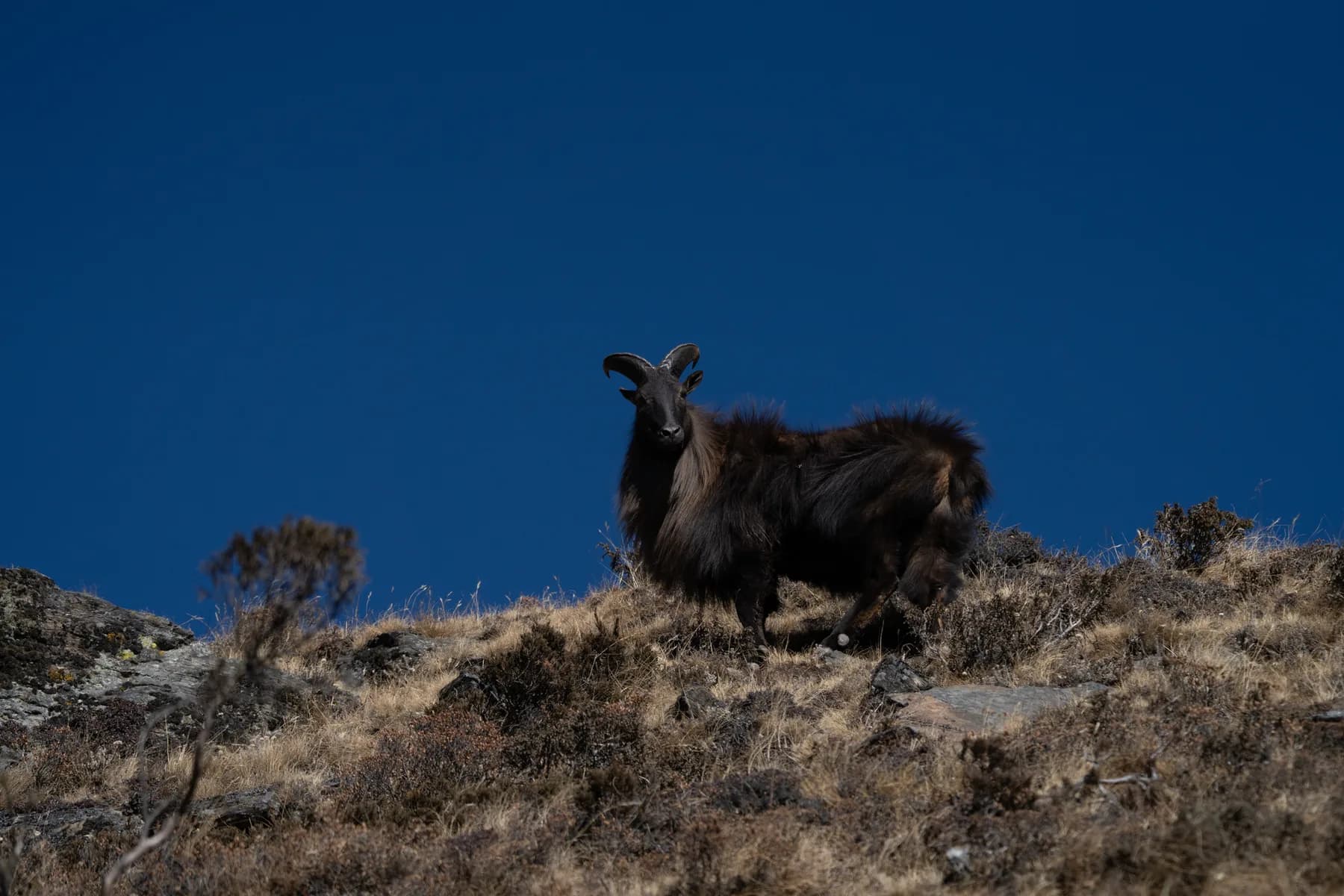
Himalayan tahr hunting in New Zealand is a high-altitude, physically demanding pursuit of Hemitragus jemlahicus across the Southern Alps of the South Island — one of the most spectacular mountain hunting landscapes on Earth. Tahr were introduced to New Zealand from Nepal in 1904 when the Duke of Bedford gifted a small herd to the government, and they thrived in the alpine zone between 1,000 and 2,200 metres. Today, New Zealand holds the only free-range, huntable population of Himalayan tahr outside of Nepal and northern India, estimated at 30,000-35,000 animals across the central South Island ranges.
This is a hard hunt. I say that plainly because it matters. Tahr live in steep, broken rock country above the bushline, where a wrong step has real consequences and the weather changes in 20 minutes. The reward is proportional — a mature bull tahr in full winter mane, standing on a rock face against a backdrop of snowcapped peaks and glacial valleys, is one of the most dramatic sights in world hunting. If you want a mountain hunt that tests everything — your fitness, your marksmanship at distance, your nerve on exposed ground — tahr in the Southern Alps is it.
What makes tahr hunting special?
Tahr occupy a unique place in mountain hunting because they combine the technical difficulty of true alpine pursuit with the visual drama of an animal that looks unlike anything else you will hunt. A mature bull in winter coat carries a thick, flowing mane of golden-brown hair from shoulders to mid-body that can reach 30 cm in length — earning them the name "the lion of the mountains" among New Zealand hunters.
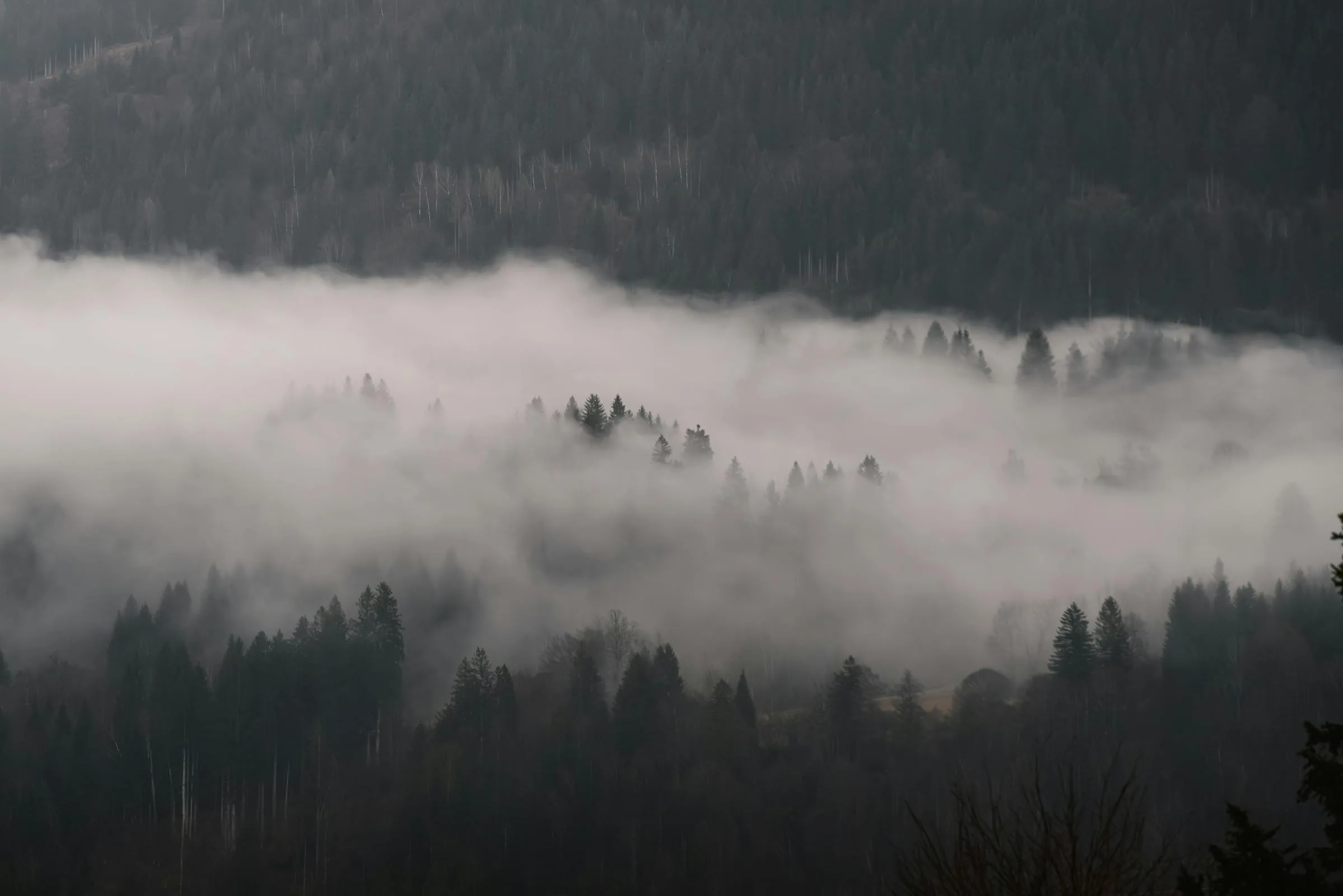
The Southern Alps setting is extraordinary. The tahr's range spans from Mount Cook / Aoraki — New Zealand's highest peak at 3,724 metres — south through the Two Thumb Range, the Liebig Range, the Gammack Range, and the ranges above the Rangitata, Rakaia, and Waimakariri rivers. This is glacially carved terrain: steep tussock faces, bluffs and rock bands, scree slopes at 35-45 degrees, and ridgelines where the drop on either side is measured in hundreds of metres. The hunting takes place between 1,200 and 2,000 metres elevation, in terrain where helicopter access is often the only practical way in and out.
What separates tahr from other mountain game — Alpine chamois, ibex, mountain goat — is the shot distance. Tahr country is open and steep. The animals can see you from a kilometre away on an opposing face. Closing to under 200 metres is often impossible without a multi-hour approach through dead ground. Shots at 250-400 metres are common, and 500+ metre shots happen. This demands a flat-shooting rifle, a solid rest, and genuine skill at long-range shooting under field conditions — not just at the range.
Where to hunt tahr in New Zealand
Tahr are concentrated in the central Southern Alps of New Zealand's South Island, in a band approximately 200 km long and 50 km wide running from the Whitcombe River in the north to the Dobson River in the south. Within this range, several areas are particularly productive.
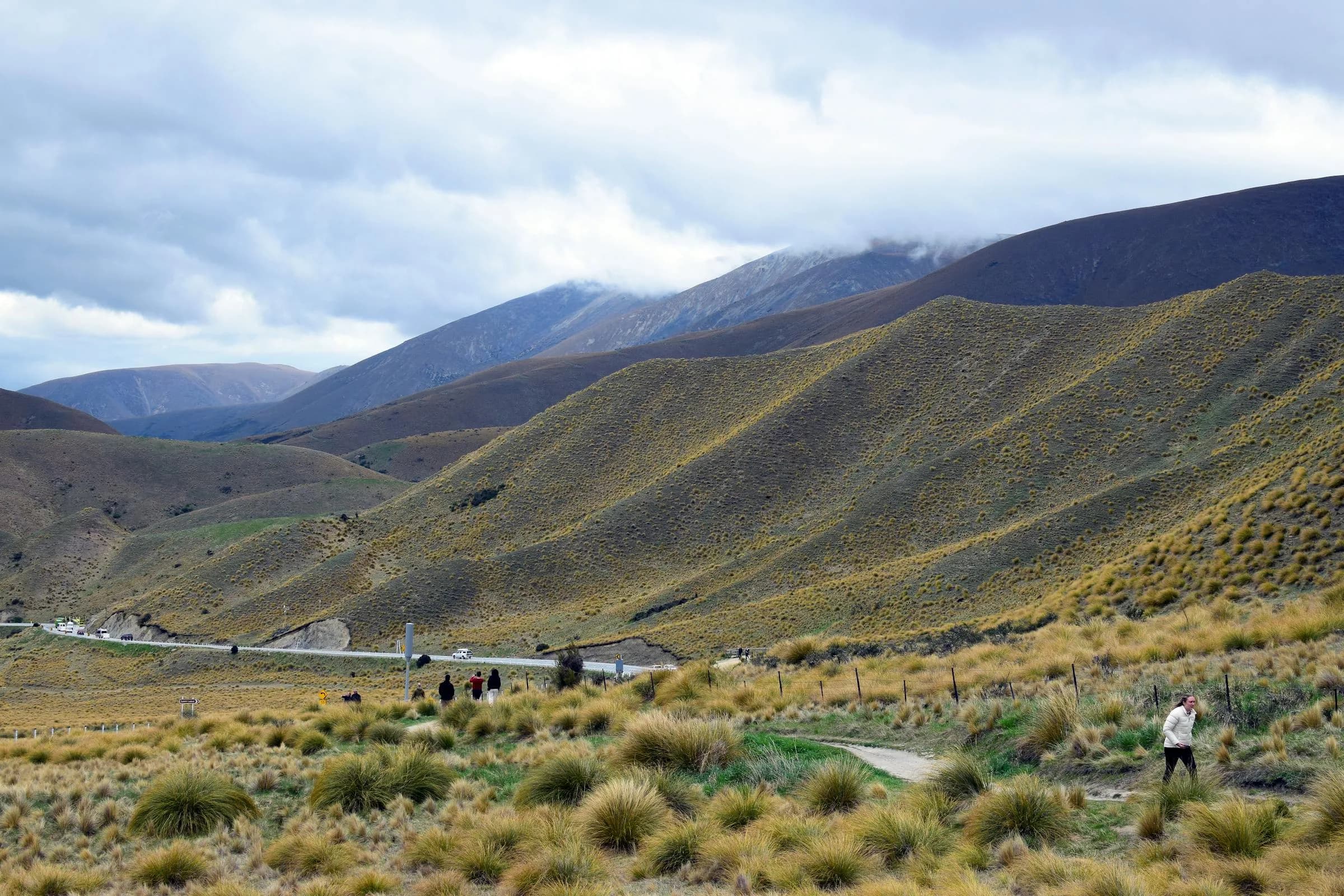
The Two Thumb Range: East of Mount Cook and the Mackenzie Basin. This range offers classic tahr country — long tussock faces rising to rocky peaks, with excellent glassing terrain and approachable basins. Access is typically by helicopter from Tekapo or Twizel. The Two Thumb holds strong bull populations and is one of the most popular tahr hunting areas for guided clients.
The Liebig Range and Gammack Range: North of the Two Thumb, between the Godley and Macaulay rivers. More remote, steeper terrain, and generally less hunting pressure. These ranges produce excellent bulls and offer a true backcountry experience with spike camps at 1,200-1,500 metres.
The Rangitata headwaters: West of the Two Thumb, accessed via the Rangitata River valley from Geraldine or Peel Forest. Steep gorge country with tahr on the faces above. Walk-in access is possible from some valley floors, making this an option for hunters who want to earn it on foot rather than fly.
Westland (West Coast): The western side of the divide — above the Whataroa, Wanganui, and Hokitika rivers — holds tahr populations in extremely steep, rainforest-to-alpine terrain. Access is helicopter-only. The bush is dense below 1,000 metres (podocarp rainforest receiving 5,000-8,000 mm of rain annually), but above the bushline, the tahr faces are as good as anywhere. Weather is more challenging on the West Coast — be prepared for rain.
Public vs. private land: Most tahr hunting in New Zealand takes place on public conservation land administered by the Department of Conservation (DOC). No hunting permit is required for tahr on public land — any holder of a New Zealand firearms licence can hunt them. Private land hunts exist on high-country stations in Canterbury and Mackenzie, typically with better access and lower pressure but at higher cost.
When is tahr hunting season?
Tahr hunting in New Zealand has no closed season on public land — they can be hunted year-round. However, the timing you choose determines the trophy quality, the mane condition, and the difficulty of the terrain.
April-June (early winter — pre-rut): The mane is growing in and bulls are moving from summer high-altitude range toward winter country at lower elevations. Mane length is moderate — noticeable but not at peak. Weather is transitioning: clear autumn days alternate with the first winter storms. Snow begins appearing above 1,500 metres. This period offers good hunting with improving mane and bulls grouping in accessible terrain. Temperatures at hunting altitude: 0-10°C days, -5 to 2°C nights.
May-June (the rut): The tahr rut peaks in May and extends into early June. Bulls become aggressive, vocal, and territorial. They join nanny groups and compete for mating access — sparring, posturing, and chasing rivals along cliff faces. Rutting bulls are less cautious and more visible during daylight, making them easier to locate (though not easier to reach). The mane is at or near peak length. This is the prime window. But it comes with a catch: winter weather. Snow can close access to hunting faces, and storms can pin you in camp for 1-3 days. Flexibility is essential.
July-August (mid-winter): Full winter conditions. Snow covers ground above 1,200-1,400 metres. Tahr push lower onto faces where snow has slid or melted, concentrating them in visible bands. The mane is at maximum length and density. Trophy quality is highest. But so is the difficulty — access is limited, avalanche risk is real on steep faces above 30 degrees, and helicopter operations are weather-dependent. This is expert-level tahr hunting. Rewarding, but not for a first trip.
September-March (spring/summer): Mane condition declines as bulls shed winter coat through September-October. By December, bulls are in short summer coat with minimal mane — still huntable, but the trophy is significantly less impressive. Summer hunting is easier in terms of access and weather, and can work for hunters focused on horn size rather than mane. Horn length does not change with season.
For a first tahr hunt, target late May through mid-June. The rut improves your chances of finding bulls, the mane is prime, and the weather — while unpredictable — is generally more manageable than mid-winter.
What caliber for tahr?
Tahr hunting demands a flat-shooting rifle accurate to 400 metres under field conditions. The combination of steep terrain, long sight lines, and limited approach options means that 200-400 metre shots are standard and longer shots occur regularly. This is not the place for short-range brush calibers.
Minimum: .300 Winchester Magnum with 180-grain premium bullets. The .300 Win Mag is the most popular tahr caliber among New Zealand professional hunters and for good reason — it shoots flat enough for 400-metre shots, carries adequate energy at distance, and is available everywhere. Zero at 200 metres and know your drop to 500.
Recommended: .300 Winchester Short Magnum, .300 Weatherby Magnum, 7mm Remington Magnum (160-175 grain), or 6.5 PRC (143-147 grain). The 7mm Rem Mag with 162-grain ELD-X is an outstanding tahr round — flat trajectory, excellent wind resistance, and adequate terminal performance on a 100-130 kg animal. The 6.5 PRC has become increasingly popular for its exceptional long-range ballistics and moderate recoil, though shot placement must be precise given the lighter bullet weight.
Also effective: .28 Nosler, .270 WSM, .280 Ackley Improved. Any cartridge that shoots flat, resists wind, and groups sub-MOA at 300 metres from a field position will work.
Not recommended: .30-06 Springfield (adequate at close range but drops significantly past 300 metres compared to magnums), .308 Winchester (same limitation), anything below .270 caliber with hunting-weight bullets.
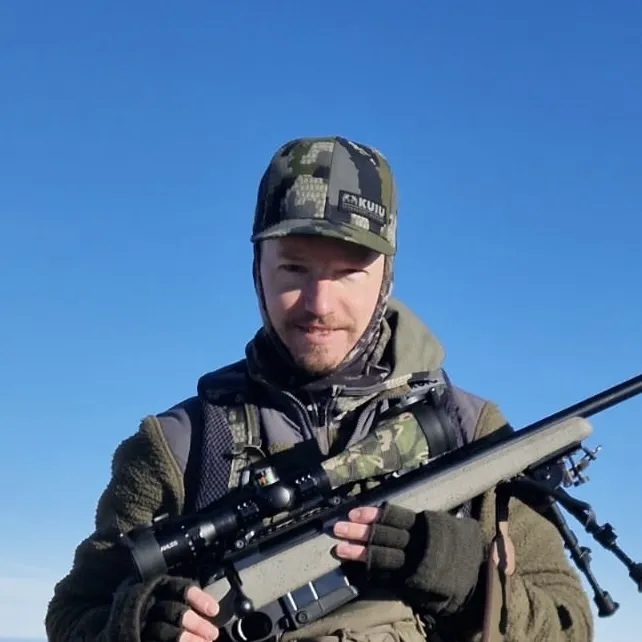
Rifle setup: A lightweight mountain rifle (3-3.5 kg scoped) with a quality 3-15x or 4-16x scope is ideal. Bring a bipod — Harris or Atlas — as most shots are taken from prone or sitting positions on tussock slopes. A suppressor is legal in New Zealand and strongly recommended — it reduces recoil, protects hearing, and minimizes disturbance to nearby animals. Many New Zealand guides use suppressed rifles as standard.
Marksmanship preparation: Before a tahr hunt, you should be comfortable shooting from field positions (prone, sitting, kneeling) at 300-400 metres with a consistent first-round hit on a 25 cm target. Practice on slopes — shooting uphill and downhill changes point of impact significantly. If you cannot consistently hit at 300 metres from a bipod, invest in a long-range shooting course before your trip. This is not optional — a wounded tahr on a cliff face is a nightmare for everyone.
How do you identify a trophy bull tahr?
Distinguishing a mature bull from a nanny or young bull at distance is essential, and tahr are one of the more challenging species to judge in the field.
Bull vs. nanny: Adult bulls are noticeably larger — 100-130 kg vs. 35-50 kg for nannies. In winter coat, bulls carry the distinctive flowing mane across the shoulders and forequarters. Nannies have a shorter, less dramatic coat. Horns differ: bull horns curve backward in a smooth arc, reaching 28-35 cm on mature animals. Nanny horns are slimmer, straighter, and shorter (20-25 cm). At distance, the mane is the primary identifier — if the animal has a visible mane flowing below the shoulder line, it is a bull.
Young bull vs. mature bull: Young bulls (2-4 years) have a developing mane that reaches the elbow but lacks the full body coverage of a mature bull. Their horns are smooth and thin at the base. A mature bull (5-8 years) has a mane that covers the shoulders, chest, and extends to mid-body. Horns are thicker at the base, with visible ridging on the lower third. An old bull (9+ years) has the heaviest horns — 30-35 cm with pronounced ridging and blunted tips from fighting — and a mane that may extend past mid-body.
Trophy scoring: Tahr trophies are scored by horn length measured along the outside curve from base to tip. SCI minimum entry: 12 inches (30.5 cm). Douglas Score (used in New Zealand): measures horn length, circumference, and adds points for tip-to-tip spread. A Douglas Score of 30+ is considered a good bull; 34+ is exceptional.
Horn length benchmarks:
- Average mature bull: 11-12 inches (28-30 cm). A solid, representative trophy.
- Good bull: 12-13 inches (30-33 cm). Well-developed ridging, thick bases.
- Exceptional bull: 13-14+ inches (33-36 cm). Old animal, heavy horns, often with battle damage. These bulls are 8-12 years old and have survived multiple ruts.
Mane quality matters. Many hunters consider the mane — its length, colour (golden to dark chocolate-brown), and condition — as important as horn size. A bull with a 12-inch horn and a spectacular full mane is a more impressive wall mount than a 13-inch bull in summer coat.
What does a tahr hunt cost?
Tahr hunting in New Zealand is a premium mountain hunt priced to reflect the helicopter access, guide expertise, and logistical complexity of operating in the Southern Alps.
Guided hunt cost: NZD $12,000-$25,000 (approximately €6,500-€14,000 / $7,500-$16,000 USD) for a 5-7 day guided tahr hunt. This typically includes: professional guide, helicopter access (in and out of hunting area, plus camp shifts if needed), spike camp accommodation (tents, food, cooking), one tahr trophy, and trophy preparation. Some outfitters include a chamois as part of the package.
Helicopter costs: This is the single largest variable. Helicopter time in the Southern Alps runs NZD $2,500-$4,000 per hour. A typical tahr hunt requires 2-4 hours of helicopter time (access in, camp shifts, extraction). Some outfitters include helicopter in the package price; others charge it separately. Clarify this before booking.
Combining with chamois: New Zealand also holds excellent populations of Alpine chamois (Rupicapra rupicapra), introduced from Austria in 1907. Chamois share tahr habitat in the Southern Alps, and it is common to take a chamois during a tahr hunt at minimal additional cost — $1,000-$3,000 for an additional chamois trophy fee. If mountain hunting in New Zealand interests you, taking both species in a single trip makes strong practical and financial sense.
With Huntica hosting: A Huntica Hosted tahr hunt is quoted as one all-in figure per hunter, including guide services, helicopter access, hosting, camp, and one tahr. A Huntica Bespoke private expedition for 1-2 hunters sits at the higher end. See our hunting costs breakdown for context.
Flights: Auckland or Christchurch are the gateway airports. From Europe: €1,200-€2,500 return (typically via Singapore, Dubai, or Hong Kong). From the US: $1,500-$2,500 return (via Auckland on Air New Zealand or Qantas). Internal flights Christchurch to Queenstown, Tekapo, or Twizel are short and inexpensive ($100-$200 NZD).
What is not included: International flights, travel insurance (mandatory — mountain rescue helicopter cover is essential), taxidermy beyond field cape, trophy shipping, personal gear, and gratuities. Tip for your guide: NZD $100-$200/day is appropriate for good service.
What about the New Zealand firearms permit?
New Zealand has one of the most straightforward firearms import processes for visiting hunters. The system is efficient, well-established, and rarely causes issues.
Process: Apply for a Visitor's Firearms Licence through the New Zealand Police online portal (firearms.police.govt.nz) at least 30 days before arrival. The application requires: passport details, home-country firearms licence, details of each firearm (make, model, caliber, serial number), purpose of visit (hunting), and a letter from your guide or outfitter confirming the hunting arrangement.
Approval: Typically processed within 5-15 business days. The licence is emailed as a PDF that you print and carry with your passport.
On arrival: Present your Visitor's Firearms Licence at New Zealand customs. The firearm is inspected and serial numbers verified. Processing takes 15-30 minutes. Ammunition can be brought in (up to 200 rounds) or purchased in New Zealand — all common calibers are available at Hunting & Fishing stores in Christchurch, Queenstown, and other South Island towns.
Cost: NZD $25 (approximately €15). Valid for one year.
Suppressors: Legal in New Zealand for visiting hunters. If you want to bring your own suppressor, include it on your Visitor's Firearms Licence application with serial number.
On a Huntica trip, we walk you through the application before you leave home and confirm the licence is approved before you book flights. The process is genuinely simple — New Zealand wants international hunters on the ground.
See our international firearm import guide for the complete walkthrough.
How fit do I need to be for tahr hunting?
This is the most physically demanding hunt Huntica offers. I am direct about this because under-preparation leads to a poor experience for everyone — the hunter, the guide, and the animals.
What the terrain demands: Tahr hunting involves climbing 500-1,000 metres of elevation gain per day on slopes of 30-45 degrees. The surface is tussock grass (slippery when wet), scree (loose rock that slides under every step), and exposed rock. Some approaches require scrambling — hands and feet on rock — and traversing narrow ledges above significant drops. You will carry a 10-15 kg pack (rifle, optics, water, food, emergency gear) for 6-10 hours per day.
Minimum fitness standard: You should be able to hike 15 km with a 12 kg pack over steep terrain in 6-8 hours without being destroyed. You should be comfortable on exposed ground — if genuine heights cause you anxiety, tahr hunting will be miserable. Knee strength matters — the descents are harder than the ascents, and loose scree on a 40-degree slope at 1,500 metres with a pack is unforgiving on weak knees.
Preparation (12-16 weeks before): Walk/hike 4-5 days per week with progressively increasing pack weight and elevation. Incorporate stair climbing or hill repeats. Add squats, lunges, and single-leg step-ups for knee stability. Practice shooting from field positions after physical exertion — your heart rate at 160 bpm changes everything about trigger control.
Walk-in vs. helicopter access: Helicopter access reduces the approach to the hunting zone but does not reduce the difficulty of the actual hunting — you still climb, glass, stalk, and descend on the same steep faces. Walk-in hunts from valley floors add 3-6 hours of approach each way and suit experienced mountain hunters with strong fitness.
Be honest with yourself and with us. If your fitness is not where it needs to be, we will tell you — and we may suggest a different hunt or a longer timeline to prepare. A hunter who cannot keep up in tahr country is a safety risk to themselves and their guide. This is not about gatekeeping — it is about making sure the experience matches the expectation.
What does a hosted tahr hunt look like with Huntica?
A tahr hunt with Huntica is a spike-camp mountain expedition in some of the most dramatic terrain in the Southern Hemisphere.
We meet in Christchurch or Queenstown, depending on the hunting area. The evening before is spent checking gear, confirming rifle zero at a local range, and reviewing weather forecasts and DOC updates on the hunting area. I will have spoken with our New Zealand guides in the days before to confirm snow conditions, tahr sightings, and access routes.
The next morning, we drive to the helicopter staging point — typically a high-country station near Tekapo, Twizel, or the Rangitata valley. The helicopter flight into camp takes 15-25 minutes and is, by itself, worth the trip — glacial rivers, snowcapped peaks, and vertical faces scrolling below you as you climb to 1,200-1,500 metres. Camp is set on a tussock bench or in a sheltered basin: quality four-season tents, sleeping mats, and a cook setup. Views in every direction.
Hunting days start at first light — 06:00-06:30 in winter. We glass opposing faces from camp or nearby high points, looking for the dark shapes and golden manes of bull tahr against tussock and rock. Tahr tend to feed on open faces in the early morning and move to bluffs and ledges as the day warms. When a bull is located, the assessment begins: Is he mature? Can we approach? What is the wind doing? Is there a route that keeps us out of sight?
The stalk can take 2-6 hours. You move along ridgelines, drop into gullies, traverse across faces, and finally reach a shooting position — prone behind a rock, bipod deployed, rangefinder confirming 280 metres. You control your breathing. You wait for the bull to step clear of a bluff. The shot breaks and echoes across the valley.
The aftermath is its own challenge. The bull is on a steep face. You climb to him, take photos, and begin the cape and pack-out — carrying 30-40 kg of meat, head, and cape down to a helicopter pickup point. It is exhausting, satisfying work.
Evenings in camp are stripped down and genuine. Freeze-dried meals rehydrated over a gas stove, tea in tin mugs, and mountain silence. No phone signal. No schedule except weather and light. On a clear night at 1,500 metres in the Southern Alps, the Milky Way is brighter than you have ever seen it.
What the hosting layer adds: I coordinate between the helicopter operator, the guide, and the weather window to maximize your time on productive ground. When weather shuts us down — and it will, for at least part of any week in the Alps — I manage the wait, adjust the plan by the hour, and know when to push and when to sit. I have hunted with these guides, on these faces, in these conditions. That is what we host where we hunt means at altitude.
Frequently Asked Questions
Can I combine tahr with other hunting in New Zealand?
Yes. The most natural combination is tahr + chamois — both live in the Southern Alps and can often be hunted from the same camp. Add 1-2 days and $1,000-$3,000 in trophy fee. New Zealand also offers red stag (March-August, excellent quality on the North and South Islands), fallow deer (widespread), sika deer (North Island, Kaimanawa Range), and wild boar. A comprehensive 10-14 day New Zealand trip combining tahr, chamois, and red stag is one of the great multi-species hunts in the world.
What is the success rate on tahr?
Guided tahr hunts with experienced Southern Alps guides run 85-95% success rates over a 5-7 day hunt. Weather is the primary factor — a 2-3 day storm can consume half your hunting days. Extending to 7 days provides a buffer. The animals themselves are not hard to find on good ground — finding a mature bull, reaching him, and making the shot at distance are the variables.
Is tahr hunting ethical given they are an introduced species?
Tahr are classified as a game animal under New Zealand's Game Animal Council. They are also subject to DOC control operations in some areas where their browsing impacts native alpine vegetation. The hunting community and DOC share a complex but functional relationship: recreational and guided hunting removes animals, reduces population pressure on native flora, and generates economic activity for rural South Island communities. The Tahr Plan (DOC's management framework) sets population targets by area. Hunting tahr is both legal and ecologically supported.
Do I need hunting experience for a tahr hunt?
You need competent rifle skills and mountain fitness — this is not a beginner hunt. If you have never hunted before, start with a plains game safari or a less demanding mountain species. If you are an experienced hunter but new to mountain hunting, be honest about your fitness and shooting ability at long range. A guided tahr hunt with a patient, experienced guide can work for a competent shooter who is genuinely fit, even without prior mountain hunting experience. Discuss your background with us — we will tell you straight.
What happens if weather shuts us down?
It happens. The Southern Alps generate their own weather, and a nor'west front can bring rain, wind, and cloud that makes hunting impossible and helicopter operations unsafe. Good guides have backup plans — shifting to a different aspect, dropping to lower elevation, or hunting valleys where cloud ceiling is higher. On a Huntica trip, we build 1-2 buffer days into the schedule and coordinate directly with helicopter operators for the earliest access when weather clears. Patience is a mountain hunting skill.
How do I get my tahr trophy home?
The guide capes the bull in the field and packs out the cape and skull. In Christchurch or another South Island town, the trophy is processed by a taxidermist or dip-and-pack facility. New Zealand tahr are not CITES-listed. Export requires a standard MAF (Ministry for Primary Industries) veterinary certificate. Shipping to Europe: 2-4 months by sea, $1,500-$3,000. To the US: 3-5 months, $2,000-$3,500. A tahr shoulder mount — with the full mane displayed — is one of the most striking wall mounts in hunting. On a Huntica trip, we handle the full chain from field to your taxidermist. See our trophy shipping guide.
Tell us where you want to go
If tahr has been in the back of your mind — the idea of a mountain hunt that actually tests you, in country that looks like it was built for the purpose — the next step is a conversation. Tell us where you want to go, and I will walk you through what a hosted tahr expedition looks like: the ground, the fitness, the gear, the reality. Straight talk between mountain hunters. No brochures.