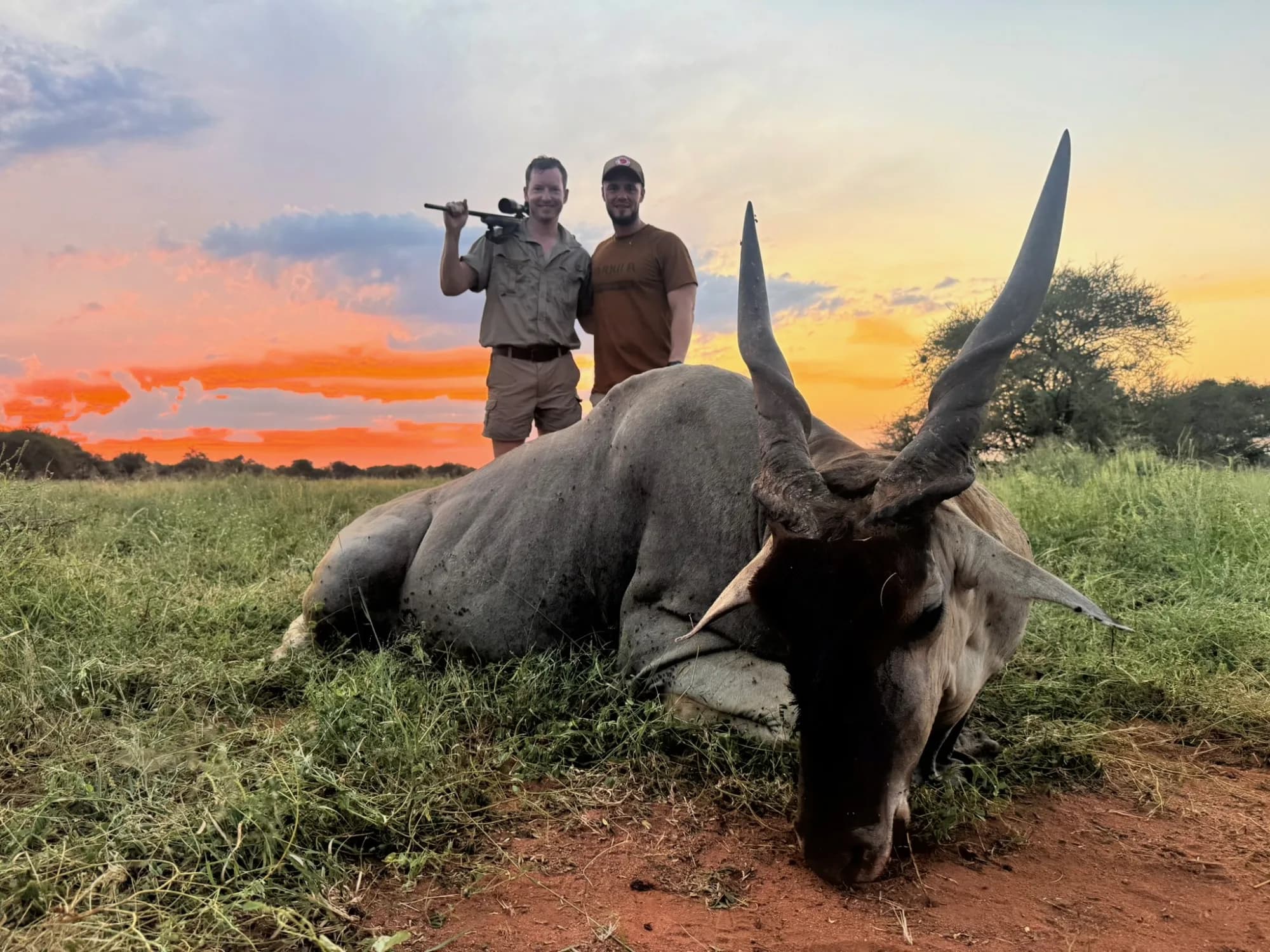
People come to us with the wrong question all the time. They ask "where should I hunt?" as if it's one decision, when really it's four stacked on top of each other: what species you want, when you can travel, how hard you want to work for it, and who's coming with you. Get those four straight and the destination usually picks itself.
This is a different question from "which outfitter should I book?" That's about vetting the operator on the ground — licensing, references, whether anyone trustworthy is actually standing next to you when it matters. We've written about that separately in how to choose a hunting outfitter. This guide is about what comes first: deciding where "there" even is. Species, season, terrain, logistics, and trip type — the five filters that narrow seven countries down to one.
I host across South Africa and Spain personally, and between our founders we've walked most of Huntica's Approved Grounds ourselves. Here's how I'd walk a friend through picking between them.
Start with the species, not the country
Most hunters already know this, even if they haven't said it out loud yet. You don't wake up wanting "to go to Argentina." You wake up wanting to hear a red stag roar across a valley at dawn, or to stand over a muskox on tundra that hasn't changed since the Ice Age, or to finally close on a kudu bull that's been a photo on your desktop for two years. The species is the actual want. The country is just where that want happens to live.
So before you look at a map, answer this: what's the animal that's been living in your head?
- Spiral horns and African bushveld (kudu, sable, gemsbok, impala, buffalo) → South Africa
- The roar of a rutting stag → Argentina or New Zealand, depending on the rest of your answers below
- Mountain hunting with a real physical edge (tahr, chamois) → New Zealand's Southern Alps
- A driven hunt with deep tradition (montería, wild boar, Iberian red deer, Spanish ibex) → Spain
- True Arctic frontier (muskox) → Greenland
- Big timber and backcountry scale (moose, elk, mountain goat, black bear) → Canada
- Classic Western hunting or a corporate group trip (elk, mule deer, pronghorn, wingshooting) → USA
If two species are pulling you in different directions — say you want both kudu and a mountain hunt — that's a real conversation, not a problem. Some hunters build a two-country year specifically because the seasons don't compete (more on that below). If you want the full species-by-species detail on any of these, our guides on kudu, muskox, and tahr go deep on what a hunt for each one actually looks like in the field.
Then let season narrow it further
Once you know the species, the season is usually fixed for you — but the timing within that season is where the real decision sits, and it changes both your trophy and your experience.
Huntica's seven grounds split across both hemispheres, which is the single most useful fact for planning a year around hunting rather than around whatever week happens to be free. South Africa, Argentina, and New Zealand run their primary seasons roughly March through October — the Southern Hemisphere's autumn into spring. Spain, Greenland, and most of North America run the opposite direction. That's not trivia. It means a hunter chasing the roar can do Argentina in late March and New Zealand in April in the same year without the trips ever fighting over dates, and a hunter who wants South African plains game and a Spanish montería can genuinely have both "winters" in one calendar year.
Here's the short version by destination:
| Destination | Season window | Prime weeks | Why then |
|---|---|---|---|
| South Africa | Roughly March–October | May–August | Kudu and impala rut; dry bush opens up visibility |
| Spain | Roughly October–February (ibex, montería) | November–January | Montería season and the ibex rut |
| Greenland | July–September | August | Insects fade, bulls pack on weight, tundra dries out |
| Canada | Roughly August–November (species/province dependent) | Late Sept–mid-Oct (moose) | Moose rut; varies by province |
| Argentina | Red stag: March–August; dove: year-round | March–April (roar); May–August (wingshooting) | The roar, then the austral winter |
| New Zealand | Roar: late March–April; tahr/chamois: no closed season | April–August | Coat condition and the tahr rut |
| USA | Varies by state, mostly August–January | Sept (rut) through Nov (rifle) | State agencies set dates individually |
We've laid out the full month-by-month version — including what drives the timing in each destination and how to plan a multi-country year — in the hunting season calendar. If a specific week matters to you (the Argentine roar, a particular Spanish montería estate, peak muskox weeks in Greenland), that's the conversation to start first. Prime weeks fill months ahead of the general window.
Match the destination to the difficulty and terrain you actually want
This is the filter people skip, and it's the one that determines whether you come home exhausted-but-thrilled or just exhausted. Not every destination asks the same thing of your body, and not every hunter wants the same thing asked of them.
Easier physical demand, still a genuine hunt:
- South Africa (Magersfontein, Northern Cape) — easy to moderate, mixed bushveld and rocky outcrops. Hunting happens out the back door of the lodge, no long daily drive eating into field time. Where most first-timers land, for good reason.
- Spain (Sierra de Andújar) — easy to moderate, depending on species. Lowland ground for red deer, fallow deer, and wild boar is comfortable; ibex and chamois pull you into genuine mountain country.
- Argentina — easy to moderate. Red stag on private estancia ground, and wingshooting is a stand-and-shoot proposition, not a physical grind.
Moderate to challenging:
- Canada — moderate to challenging depending on species; wilderness lodges, backcountry camps, real distances by float plane or horseback.
- USA — moderate to challenging depending on terrain; Western elk and mule deer country asks more of you than a Midwest wingshooting trip.
Genuinely demanding:
- Greenland — classified as challenging. Arctic tundra hunting by spot and stalk, and the frontier feel is part of the appeal, not a side effect.
- New Zealand — moderate to very challenging depending on species. Red stag on lodge ground is approachable; Himalayan tahr and Alpine chamois in the Southern Alps are mountain hunts in the true sense, often with helicopter access into backcountry huts.
Be honest with yourself here, not aspirational. A hunter who hasn't hiked with a pack in years and books a tahr hunt expecting a South African-style week is setting up a bad trip. The reverse is also true — an experienced mountain hunter who plays it safe will come home wondering what the fuss was about. Match the terrain to where you actually are, not where you'd like to be.
Factor in the travel and the logistics
Distance and access matter more than people plan for, and they compound with everything above.
- South Africa and Spain are the most accessible from Europe and the Gulf — direct or one-stop flights, well-served airports, shorter total travel time.
- Argentina and the USA sit in the middle — manageable from North America, longer hauls from Europe or the Gulf, but nothing exotic once you're there.
- New Zealand and Canada ask for more travel commitment — longer flights, and in Canada's case often a further internal leg to remote lodges or backcountry camps.
- Greenland is its own category: a deliberate expedition, routing through Copenhagen to Kangerlussuaq, with a short, tightly bounded season worth locking in early.
None of this should be a dealbreaker on its own — it's an input, not a veto. But if you've only got a week to spare, that rules out some grounds before species even enters the conversation. Our international hunting trip checklist walks through the twelve-month runway — firearm paperwork, permits, trophy shipping — that applies regardless of destination.
Match the destination to your trip type
This is the filter that's easy to forget and genuinely changes the right answer.
First-timer. You want a destination that's forgiving on terrain, has a strong success rate, and gives you a full experience without demanding mountain fitness on day one. South Africa is where we send most first-time international hunters — the lodge sits inside the hunting ground, the species list is broad, and the difficulty curve is gentle. If Africa is genuinely your first international hunt, read what to expect on your first African safari before you book anything.
Seasoned hunter chasing something harder. If you've already got a few plains game trips behind you, New Zealand's tahr and chamois or Greenland's muskox are where the real challenge lives. These aren't destinations we push on a first trip — they're where an experienced hunter goes to be tested again.
Group hunt. Argentina handles larger groups naturally — estancia hospitality and wingshooting scale well socially, and the ideal group size runs 4-8 hunters. South Africa also flexes comfortably for groups up to 8, and Canada works well for parties up to 6. If the trip is a corporate retreat or a group of colleagues rather than close friends, that's specifically what Huntica Brotherhood is built for.
Solo or a tight pair. Greenland, with ideal groups of 2-6 on genuine wilderness ground, and New Zealand's more remote backcountry hunts both suit a smaller, quieter trip well. A Huntica Bespoke private trip is the natural fit here — no rotating through a larger group's schedule.
A non-hunting companion is coming. This changes the calculus more than people expect. South Africa and Spain both handle this well — lodges built for hospitality, game drives, and side excursions alongside the hunting, and daily rhythms with real downtime. Greenland and remote New Zealand backcountry camps are a harder sell for a companion who isn't hunting. We wrote a full guide on this because the question comes up constantly: bringing a non-hunter — what companions actually do on a hosted hunt.
The seven grounds, at a glance
| Destination | Signature species | Season window | Difficulty | Best suited to |
|---|---|---|---|---|
| South Africa | Kudu, sable, roan, buffalo, plains game variety | March–October | Easy to moderate | First-timers, groups, companions welcome |
| Spain | Iberian red deer, wild boar, Spanish ibex, chamois | October–February core; species-dependent | Easy to moderate (mountain species harder) | Entry-level European hunting, couples, mixed groups |
| Greenland | Muskox | July–September | Challenging | Seasoned hunters wanting a true frontier trip |
| Canada | Moose, elk, black bear, mountain goat | August–November, species/province dependent | Moderate to challenging | Backcountry-minded hunters, small groups |
| Argentina | Red stag, dove, duck, perdiz | Red stag March–August; dove year-round | Easy to moderate | Groups, the roar, high-volume wingshooting |
| New Zealand | Red stag, Himalayan tahr, Alpine chamois | Roar late March–April; tahr/chamois no closed season | Moderate to very challenging | Seasoned mountain hunters, bucket-list trips |
| USA | Elk, mule deer, pronghorn, upland birds | Mostly August–January, state-dependent | Moderate to challenging | Western hunts, corporate Brotherhood groups |
Two hunts, one year
Once you've run through species, season, terrain, and trip type, you might find you don't have one answer — you have two, and they don't conflict. That's more common than people expect once the calendar is laid out flat, and the hunting season calendar is the tool for building that year out properly.
Whatever you land on, the destination decision and the outfitter decision aren't the same conversation — a strong species-season-terrain match on the wrong ground still falls flat if there's no one you trust actually standing there with you. Once you know where, our guide on choosing a hunting outfitter covers who takes you there.
Frequently Asked Questions
What's the best hunting destination for a first-time international hunter?
South Africa, specifically the Eastern Cape or Northern Cape plains game grounds. The lodge sits inside the hunting area, the difficulty is easy to moderate, the species list is broad enough to build a full week around, and success rates on well-managed ground run high. It's the destination we recommend most often for a first trip because it delivers a genuine hunting experience without demanding mountain-hunter fitness or Arctic-expedition logistics. See our first African safari guide for the full walkthrough.
How do I choose between Argentina and New Zealand for a red stag hunt?
Both countries roar at almost the same time — late March into April — so the choice comes down to what's around the stag. Argentina offers easier terrain, estancia hospitality, and legendary high-volume wingshooting on the same trip. New Zealand offers a more dramatic mountain setting and the option to pair red stag with Himalayan tahr or Alpine chamois. Want dove or duck shooting too? Argentina wins. Want mountain hunting alongside the roar? New Zealand does.
Can I hunt in two hemispheres in the same year?
Yes, and it's one of the more useful things about how Huntica's seven grounds are spread. South Africa, Argentina, and New Zealand run their primary seasons roughly March through October; Spain, Greenland, and most of North America run the opposite direction. A single calendar year can genuinely include a Southern Hemisphere hunt and a Northern Hemisphere hunt without the dates ever competing. The hunting season calendar breaks down exactly how that fits together.
Which destination is easiest on a non-hunting companion?
South Africa and Spain, by a clear margin. Both have lodges built around hospitality as much as hunting — game drives, pools, local excursions, and a daily rhythm with real downtime for someone who isn't in the field every session. Greenland and the more remote New Zealand backcountry camps are harder for a non-hunting companion, simply because the terrain and logistics are built around the hunt itself. Our guide on bringing a non-hunter on a hosted trip covers what companions actually do day to day.
How much does it cost to hunt at these destinations?
Costs vary by destination, species list, group size, and trip length. Huntica hunts are quoted to order, by the hour — one written all-in figure per hunter before anything is booked. For the full breakdown — daily rates, trophy fees, logistics — read our guide to what a hunting safari actually costs, or tell us where you want to go for the real numbers on your trip.
Should I pick the destination first or the outfitter first?
Destination first, always. The species, season, terrain, and trip type you want will only exist on certain ground — there's no outfitter, however good, who can put a muskox in South Africa or a kudu in Greenland. Once you know where you're headed, then the outfitter question becomes critical, because the same destination can be a great trip or a forgettable one depending on who's running it and whether anyone you trust is actually there. That's the subject of our companion guide, how to choose a hunting outfitter.
Tell us where you want to go
If you've worked through the species, the season, and the terrain and you're still weighing two grounds against each other, that's exactly the conversation worth having before you book anything. Tell us where you want to go, and we'll talk through which of our seven grounds actually fits what you're after — no brochures, no pressure, just a straight conversation between hunters about where your next story starts.